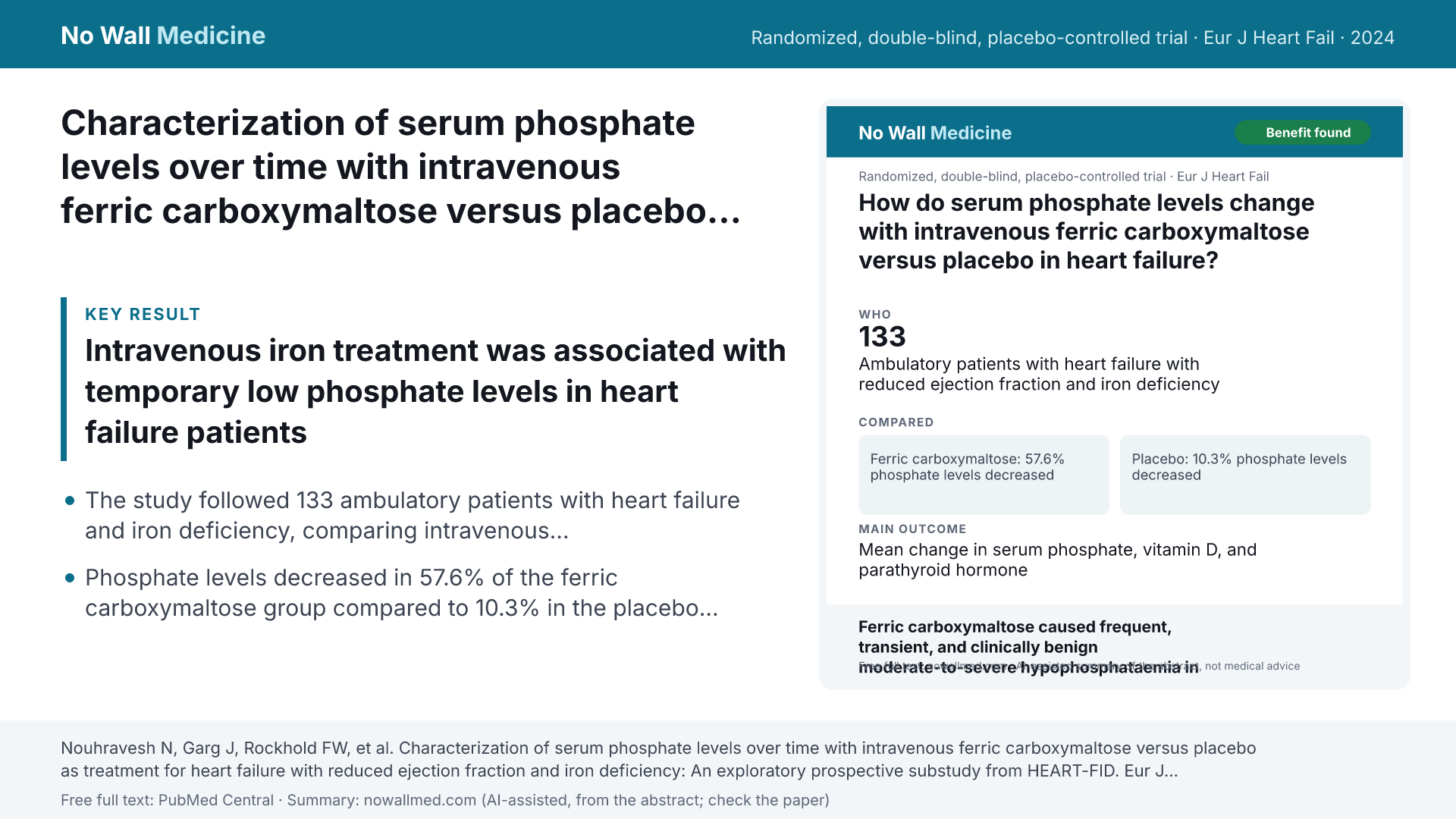
Intravenous iron treatment was associated with temporary low phosphate levels in heart failure patients
Characterization of serum phosphate levels over time with intravenous ferric carboxymaltose versus placebo as treatment for heart failure with reduced ejection fraction and iron deficiency: An exploratory prospective substudy from HEART-FID
Randomized, double-blind, placebo-controlled trialBenefit found
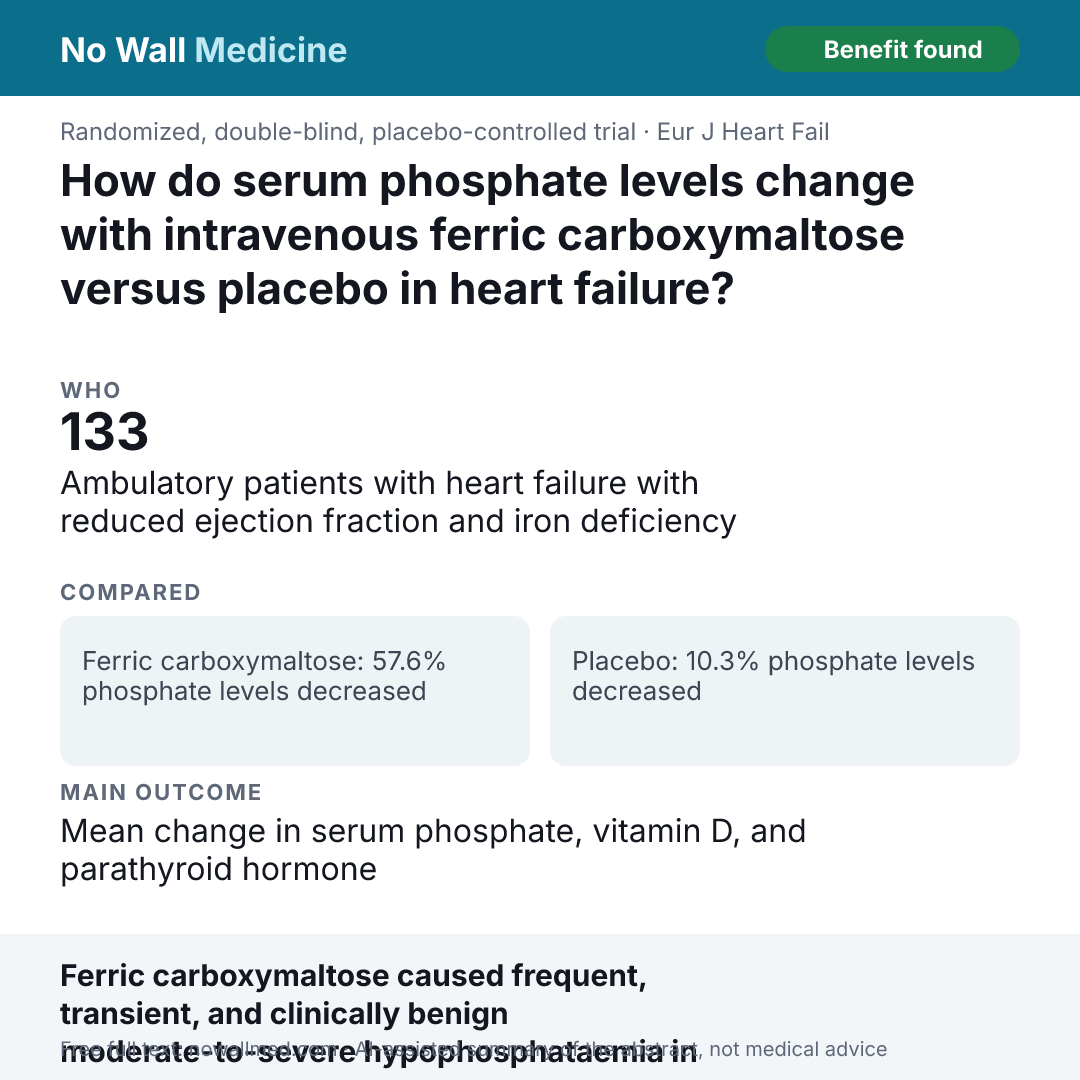
How do serum phosphate levels change with intravenous ferric carboxymaltose versus placebo in heart failure?
Who
133
Ambulatory patients with heart failure with reduced ejection fraction and iron deficiency
Compared
Ferric carboxymaltose: 57.6% phosphate levels decreased
Placebo: 10.3% phosphate levels decreased
Main outcome
Mean change in serum phosphate, vitamin D, and parathyroid hormone
Bottom line: Ferric carboxymaltose caused frequent, transient, and clinically benign moderate-to-severe hypophosphataemia in patients with heart failure.
Eur J Heart Fail · 2024-06-19 · Save PNG
Clinical question: How do serum phosphate levels change with intravenous ferric carboxymaltose versus placebo in heart failure?
Key points
- The study followed 133 ambulatory patients with heart failure and iron deficiency, comparing intravenous ferric carboxymaltose to a placebo over 6 months.
- Phosphate levels decreased in 57.6% of the ferric carboxymaltose group compared to 10.3% in the placebo group, with 51% experiencing moderate-to-severe hypophosphataemia.
- These changes in phosphate, vitamin D, and parathyroid hormone levels returned to baseline by day 91 and were not linked to serious adverse events.
Headline and key points written with AI from the paper’s abstract, with every number checked against it. Read the paper before relying on them.
Was this summary helpful?
Subject terms
Headline, design, result, key points, caveat and citation as plain text.
Cite this article
Nouhravesh N, Garg J, Rockhold FW, et al. Characterization of serum phosphate levels over time with intravenous ferric carboxymaltose versus placebo as treatment for heart failure with reduced ejection fraction and iron deficiency: An exploratory prospective substudy from HEART-FID. Eur J Heart Fail. 2025;27(5):872-880. doi:10.1002/ejhf.3348
Spotted a mistake? Suggest a correction