Chatbot Intervention and Cancer Risk Knowledge in Adolescents and Young Adults With Cancer Predisposition: A Randomized Clinical Trial
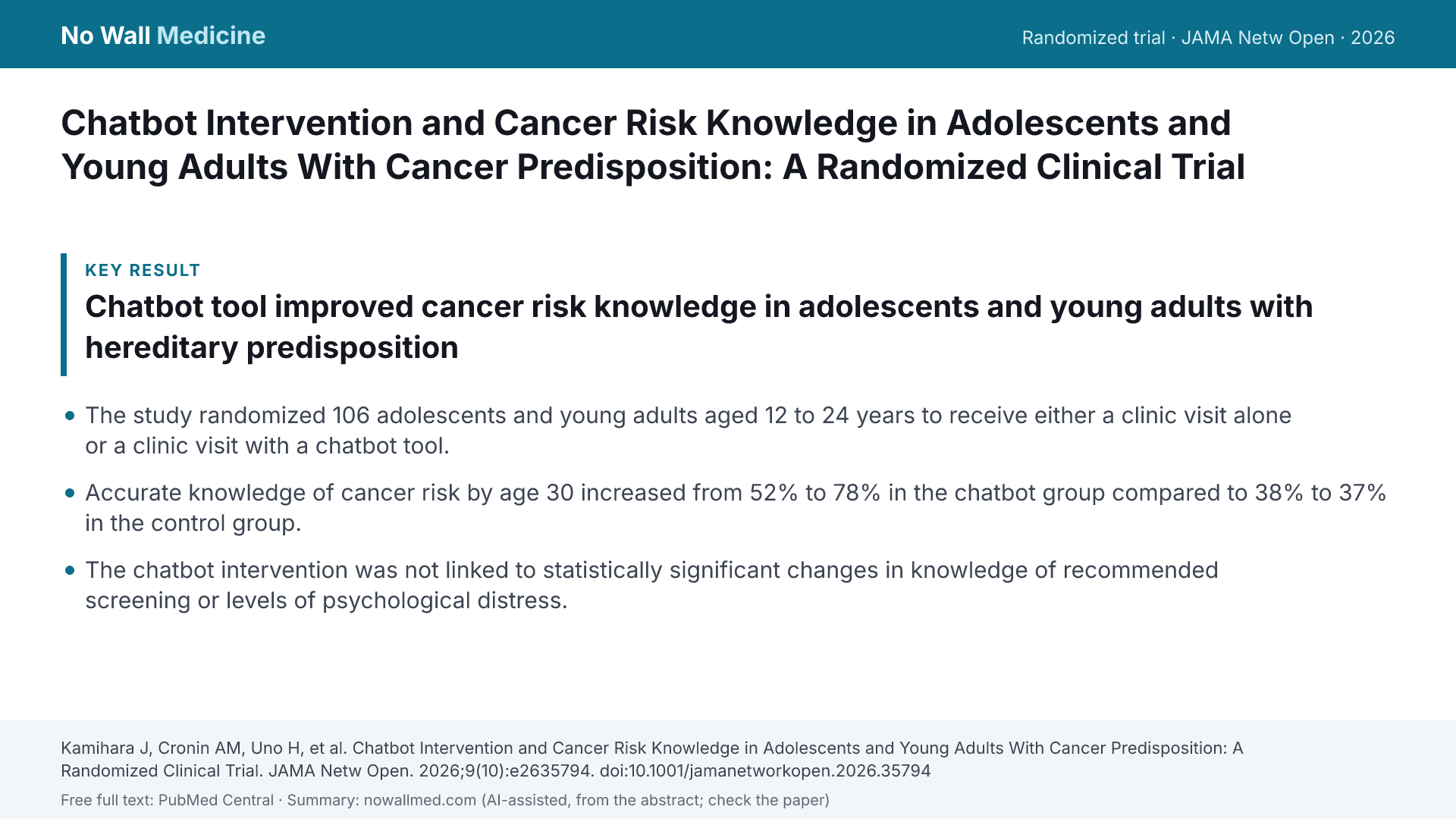
Key result: Chatbot tool improved cancer risk knowledge in adolescents and young adults with hereditary predisposition
Key points
- The study randomized 106 adolescents and young adults aged 12 to 24 years to receive either a clinic visit alone or a clinic visit with a chatbot tool.
- Accurate knowledge of cancer risk by age 30 increased from 52% to 78% in the chatbot group compared to 38% to 37% in the control group.
- The chatbot intervention was not linked to statistically significant changes in knowledge of recommended screening or levels of psychological distress.
Why it matters: Models to support the understanding of cancer risk have not been developed for adolescents and young adults with hereditary cancer predisposition.
Discussion prompts
- Would these patients look like yours? Who was left out?
- Is the main outcome one that matters to patients?
- Is the difference large enough to change what you do?
Cite: Kamihara J, Cronin AM, Uno H, et al. Chatbot Intervention and Cancer Risk Knowledge in Adolescents and Young Adults With Cancer Predisposition: A Randomized Clinical Trial. JAMA Netw Open. 2026;9(10):e2635794. doi:10.1001/jamanetworkopen.2026.35794
Free full text: PubMed Central · Summary and visual abstract: nowallmed.com/a/chatbot-intervention-and-cancer-risk-knowledge-in-adolescents-and-194lzoy/ (AI-assisted from the abstract; check the paper before relying on it).