Evening chronotype was associated with higher diabetes, cancer, and depression risks in observational studies
Chronotype Differences in Energy Intake, Cardiometabolic Risk Parameters, Cancer, and Depression: A Systematic Review with Meta-Analysis of Observational Studies
Systematic review with meta-analysis of observational studiesHarm found
How does chronotype associate with energy intake and health status?
Who
377797
377,797 subjects from 39 observational studies
Compared
evening subjects: higher blood glucose, glycated hemoglobin, LDL cholesterol, and triglycerides
morning subjects
Main outcome
energy intake and health status indicators
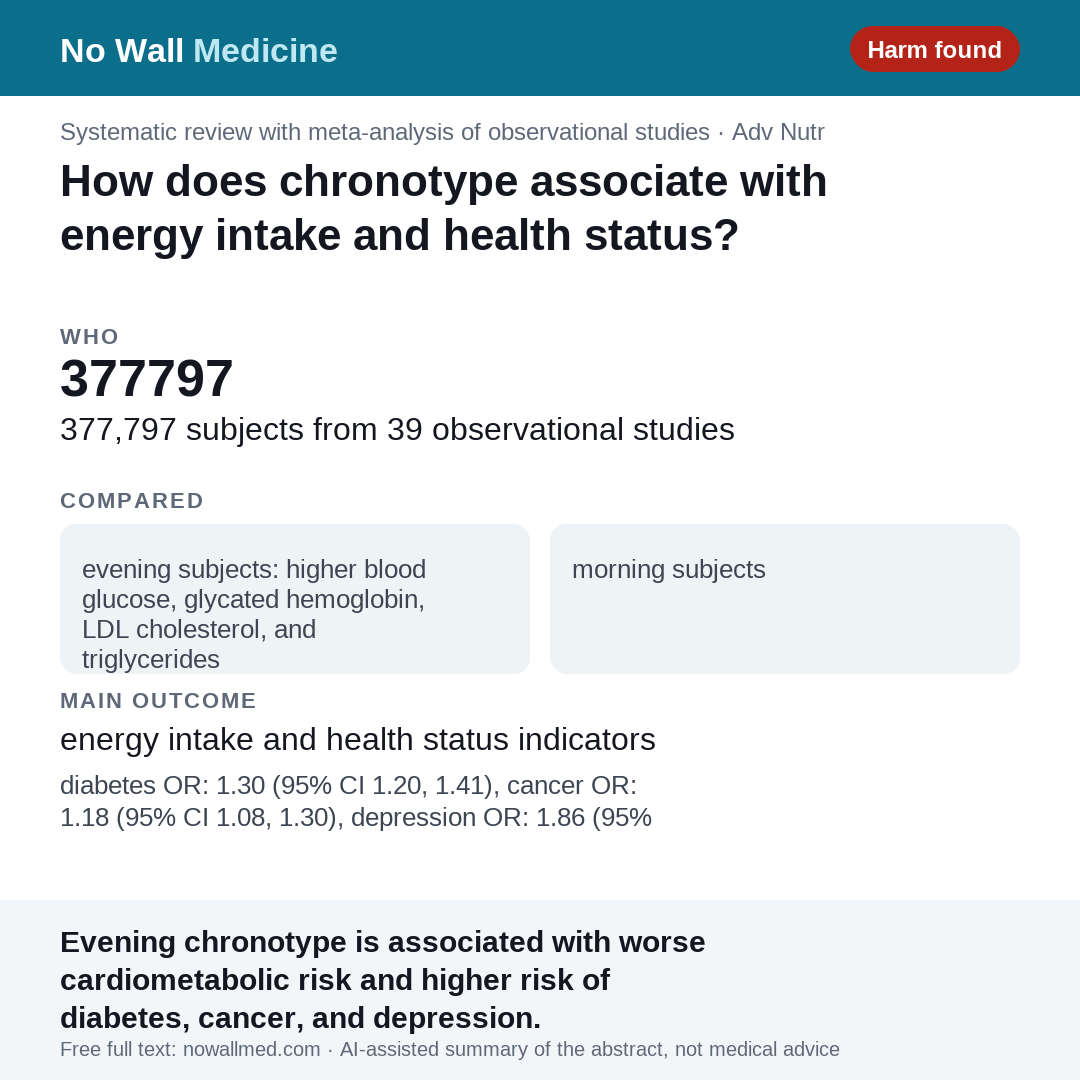
Result: diabetes OR: 1.30 (95% CI 1.20, 1.41), cancer OR: 1.18 (95% CI 1.08, 1.30), depression OR: 1.86 (95% CI 1.20, 2.88)
Bottom line: Evening chronotype is associated with worse cardiometabolic risk and higher risk of diabetes, cancer, and depression.
Adv Nutr · 2021-09-23Download image
Clinical question: How does chronotype associate with energy intake and health status?
Why it matters: It was unknown how an individual's internal circadian clock preference relates to energy intake and various health outcomes.
Key points
- Researchers analyzed 39 observational studies involving 377,797 subjects to compare morning and evening activity-rest preferences.
- Evening types were associated with higher risks of diabetes (OR: 1.30), cancer (OR: 1.18), and depression (OR: 1.86).
- Evening types were linked to higher blood glucose (MD: 7.82), glycated hemoglobin (MD: 7.64), LDL cholesterol (MD: 13.69), and triglycerides (MD: 12.62).
Headline and key points written with AI from the paper’s abstract, with every number checked against it. Read the paper before relying on them.
Was this summary helpful?
Subject terms
Cite this article
Lotti S, Pagliai G, Colombini B, Sofi F, Dinu M. Chronotype Differences in Energy Intake, Cardiometabolic Risk Parameters, Cancer, and Depression: A Systematic Review with Meta-Analysis of Observational Studies. Adv Nutr. 2021. doi:10.1093/advances/nmab115
Spotted a mistake? Suggest a correction
Top studies every Monday
The week’s key trials and guidelines in your specialties, plus any topics you follow. By email, free.
Get the weekly digest