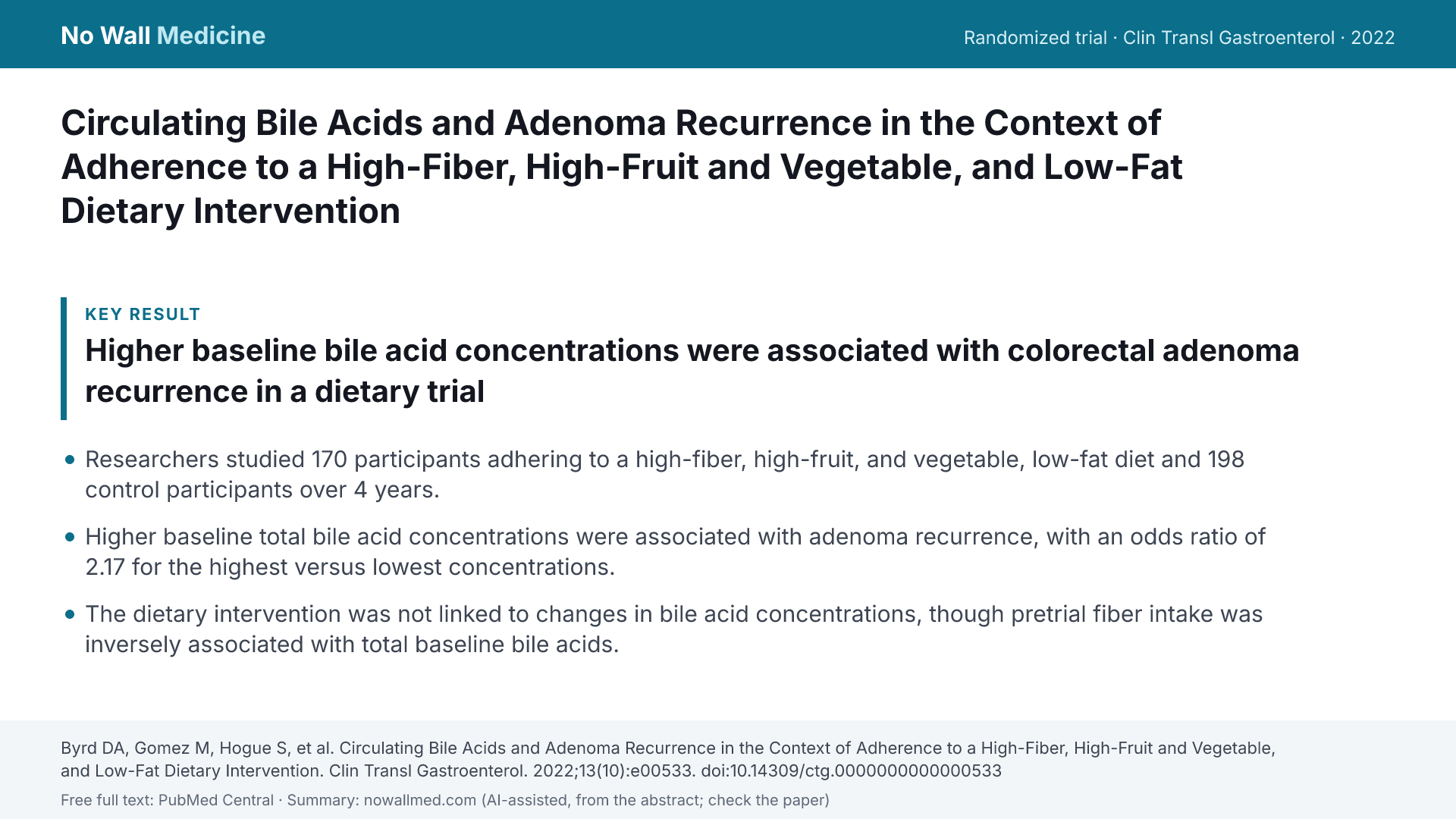
Higher baseline bile acid concentrations were associated with colorectal adenoma recurrence in a dietary trial
Circulating Bile Acids and Adenoma Recurrence in the Context of Adherence to a High-Fiber, High-Fruit and Vegetable, and Low-Fat Dietary Intervention
Why it matters: It was unknown if dietary interventions targeting fiber and fat intake could change bile acid concentrations or if these concentrations are linked to the recurrence of polyps.
Key points
- Researchers studied 170 participants adhering to a high-fiber, high-fruit, and vegetable, low-fat diet and 198 control participants over 4 years.
- Higher baseline total bile acid concentrations were associated with adenoma recurrence, with an odds ratio of 2.17 for the highest versus lowest concentrations.
- The dietary intervention was not linked to changes in bile acid concentrations, though pretrial fiber intake was inversely associated with total baseline bile acids.
Headline and key points written with AI from the paper’s abstract, with every number checked against it. Read the paper before relying on them.
Was this summary helpful?
Subject terms
Cite this article
Byrd DA, Gomez M, Hogue S, et al. Circulating Bile Acids and Adenoma Recurrence in the Context of Adherence to a High-Fiber, High-Fruit and Vegetable, and Low-Fat Dietary Intervention. Clin Transl Gastroenterol. 2022. doi:10.14309/ctg.0000000000000533
Spotted a mistake? Suggest a correction