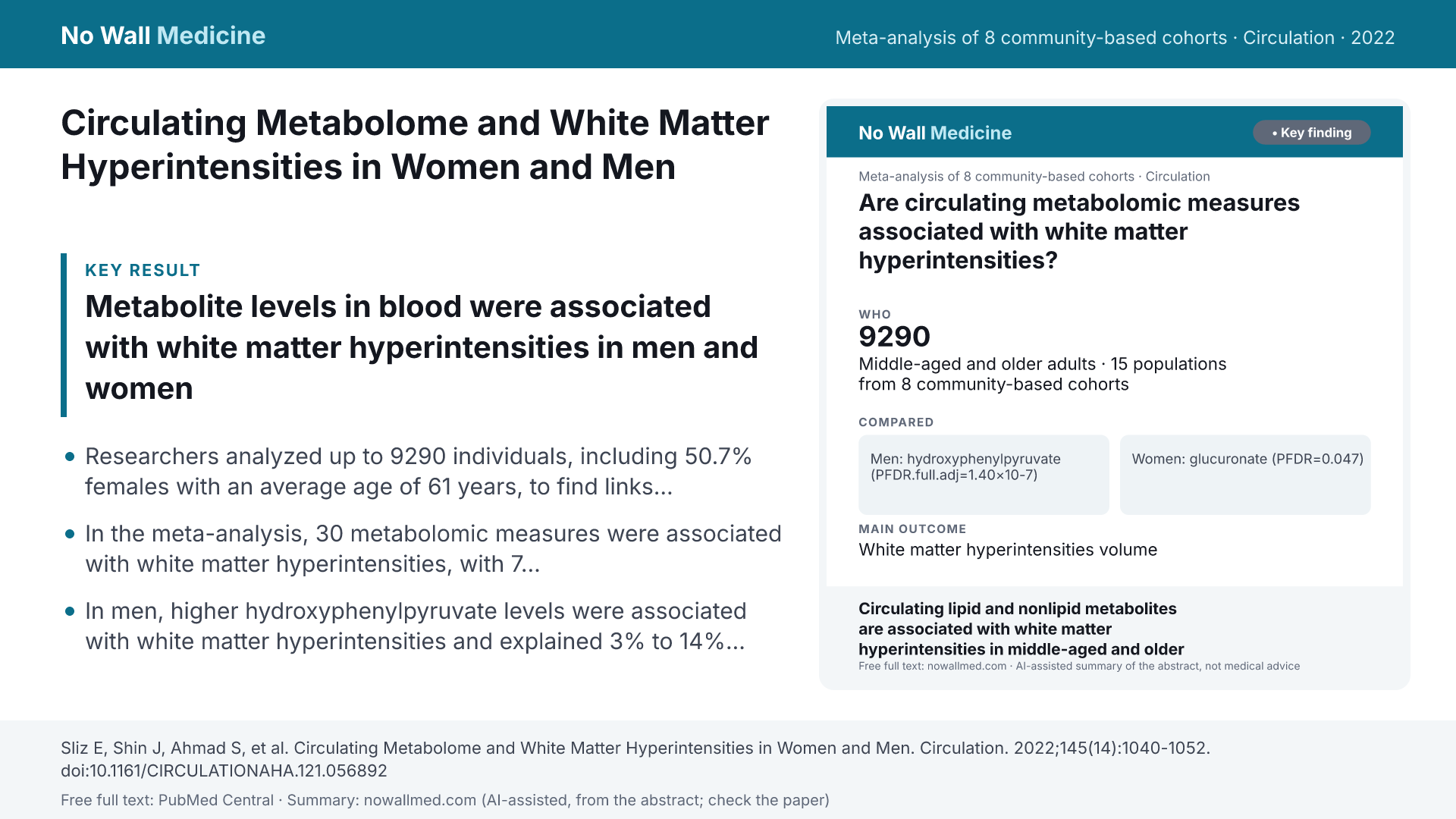
Metabolite levels in blood were associated with white matter hyperintensities in men and women
Circulating Metabolome and White Matter Hyperintensities in Women and Men
Meta-analysis of 8 community-based cohortsKey finding
Are circulating metabolomic measures associated with white matter hyperintensities?
Who
9290
Middle-aged and older adults · 15 populations from 8 community-based cohorts
Compared
Men: hydroxyphenylpyruvate (PFDR.full.adj=1.40×10⁻⁷)
Women: glucuronate (PFDR=0.047)
Main outcome
White matter hyperintensities volume
Bottom line: Circulating lipid and nonlipid metabolites are associated with white matter hyperintensities in middle-aged and older adults.
Circulation · 2022-01-20Download image
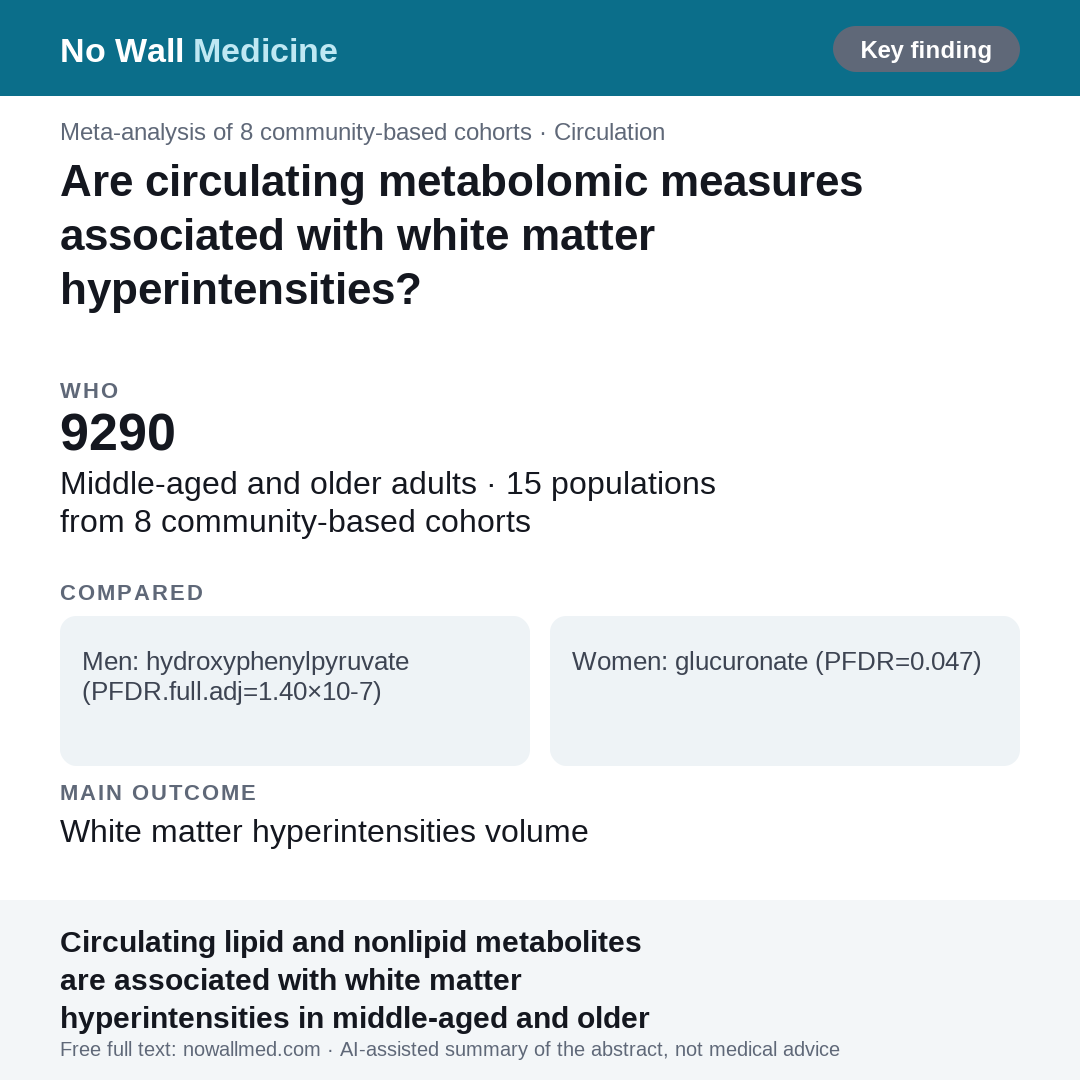
Clinical question: Are circulating metabolomic measures associated with white matter hyperintensities?
Key points
- Researchers analyzed up to 9290 individuals, including 50.7% females with an average age of 61 years, to find links between blood metabolites and brain white matter hyperintensities.
- In the meta-analysis, 30 metabolomic measures were associated with white matter hyperintensities, with 7 remaining significant after adjusting for factors like diabetes and smoking.
- In men, higher hydroxyphenylpyruvate levels were associated with white matter hyperintensities and explained 3% to 14% of the variance.
Headline and key points written with AI from the paper’s abstract, with every number checked against it. Read the paper before relying on them.
Was this summary helpful?
Subject terms
Headline, design, result, key points, caveat and citation as plain text.
Cite this article
Sliz E, Shin J, Ahmad S, et al. Circulating Metabolome and White Matter Hyperintensities in Women and Men. Circulation. 2022. doi:10.1161/CIRCULATIONAHA.121.056892
Spotted a mistake? Suggest a correction