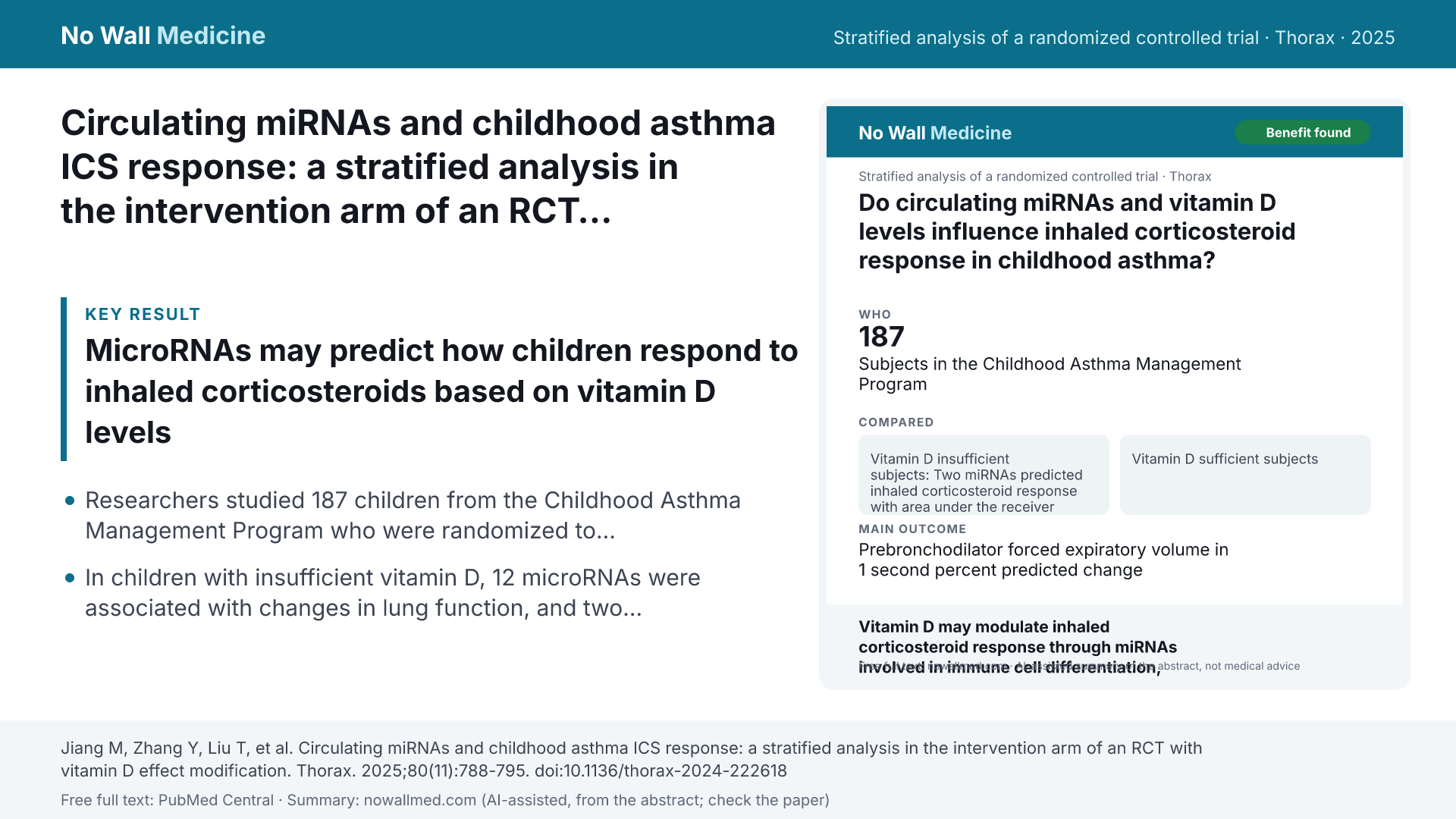
MicroRNAs may predict how children respond to inhaled corticosteroids based on vitamin D levels
Circulating miRNAs and childhood asthma ICS response: a stratified analysis in the intervention arm of an RCT with vitamin D effect modification
Stratified analysis of a randomized controlled trialBenefit found
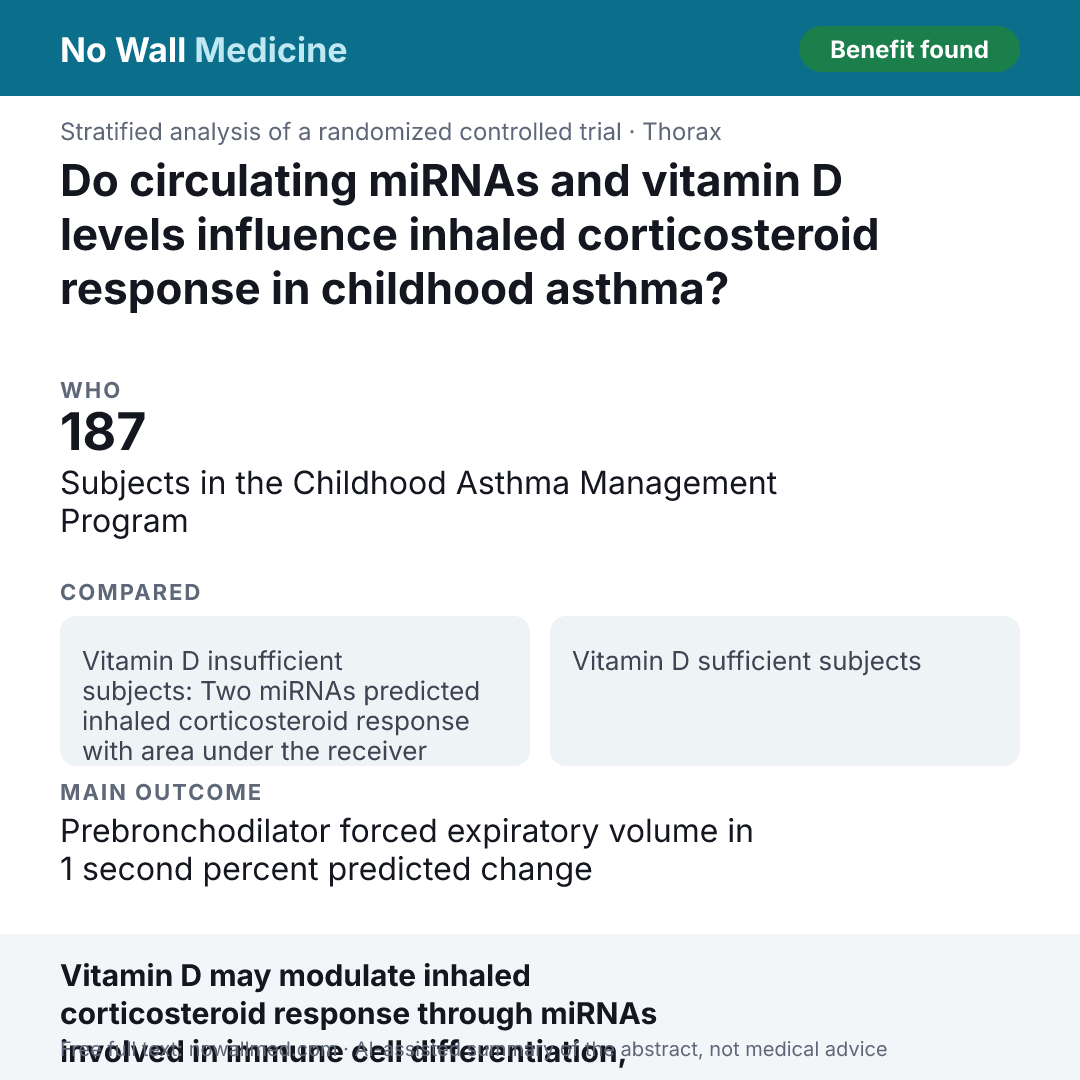
Do circulating miRNAs and vitamin D levels influence inhaled corticosteroid response in childhood asthma?
Who
187
Subjects in the Childhood Asthma Management Program
Compared
Vitamin D insufficient subjects: Two miRNAs predicted inhaled corticosteroid response with area under the receiver operating characteristic curve of 0.86
Vitamin D sufficient subjects
Main outcome
Prebronchodilator forced expiratory volume in 1 second percent predicted change
Bottom line: Vitamin D may modulate inhaled corticosteroid response through miRNAs involved in immune cell differentiation, especially in vitamin D insufficient individuals.
Thorax · 2025-10-15 · Save PNG
Clinical question: Do circulating miRNAs and vitamin D levels influence inhaled corticosteroid response in childhood asthma?
Key points
- Researchers studied 187 children from the Childhood Asthma Management Program who were randomized to inhaled corticosteroid treatment to measure lung function changes over 4 years.
- In children with insufficient vitamin D, 12 microRNAs were associated with changes in lung function, and two specific microRNAs predicted response with an area under the curve of 0.86.
- Microarray analysis of cell lines showed that certain microRNAs were enriched in pathways related to the production and differentiation of white blood cells.
Headline and key points written with AI from the paper’s abstract, with every number checked against it. Read the paper before relying on them.
Was this summary helpful?
Abstract
Background
miRNAs play a crucial role in the anti-inflammatory effects of inhaled corticosteroids (ICS) in asthma. Vitamin D can modulate the expression of several miRNAs and reduces asthma exacerbations, but its molecular interaction with ICS remains unclear. Objective
We hypothesised that vitamin D influences long-term ICS response through miRNA regulation. Methods
Baseline serum miRNAs were sequenced from 462 subjects in the Childhood Asthma Management Program (CAMP), with 187 randomised to ICS treatment included in this study. Linear regression assessed associations between miRNA expression and prebronchodilator forced expiratory volume in 1 s per cent predicted (FEV1%) change over 4 years, stratified by baseline vitamin D levels and tested in interaction models. Microarray analysis of lymphoblastoid B cells (lymphoblastoid cell lines (LCLs)) from 22 CAMP subjects treated with dexamethasone (DEX), vitamin D or sham identified differentially expressed genes (DEGs). An miRNA target gene network was constructed, clustered and annotated by enrichment analysis. Top miRNAs were evaluated for ICS response prediction. Results
12 miRNAs were significantly associated with ICS-mediated FEV1% change in vitamin D insufficient subjects, and 11 miRNAs showed significant interaction with vitamin D (p≤0.05). Three miRNAs were approximately replicated in the Genetics of Asthma in Costa Rica Study. Microarray analysis identified 220 and 240 DEGs in DEX and vitamin D-treated LCLs, respectively. miRNAs hsa-miR-125a-5p, hsa-miR-181a-5p, hsa-miR-101-3p and hsa-miR-107 were enriched in haemopoiesis and leucocyte differentiation pathways (p≤0.05). Two miRNAs, hsa-miR-125a-5p and hsa-miR-181a-5p, predicted ICS response with an area under the receiver operating characteristic curve of 0.86 in the vitamin D insufficient group. Conclusions
Vitamin D may modulate ICS response through miRNAs involved in immune cell differentiation, which could serve as biomarkers for ICS response, particularly in vitamin D insufficient individuals.
Abstract reproduced under the article’s CC BY NC licence.
Subject terms
Headline, design, result, key points, caveat and citation as plain text.
Cite this article
Jiang M, Zhang Y, Liu T, et al. Circulating miRNAs and childhood asthma ICS response: a stratified analysis in the intervention arm of an RCT with vitamin D effect modification. Thorax. 2025;80(11):788-795. doi:10.1136/thorax-2024-222618
Spotted a mistake? Suggest a correction