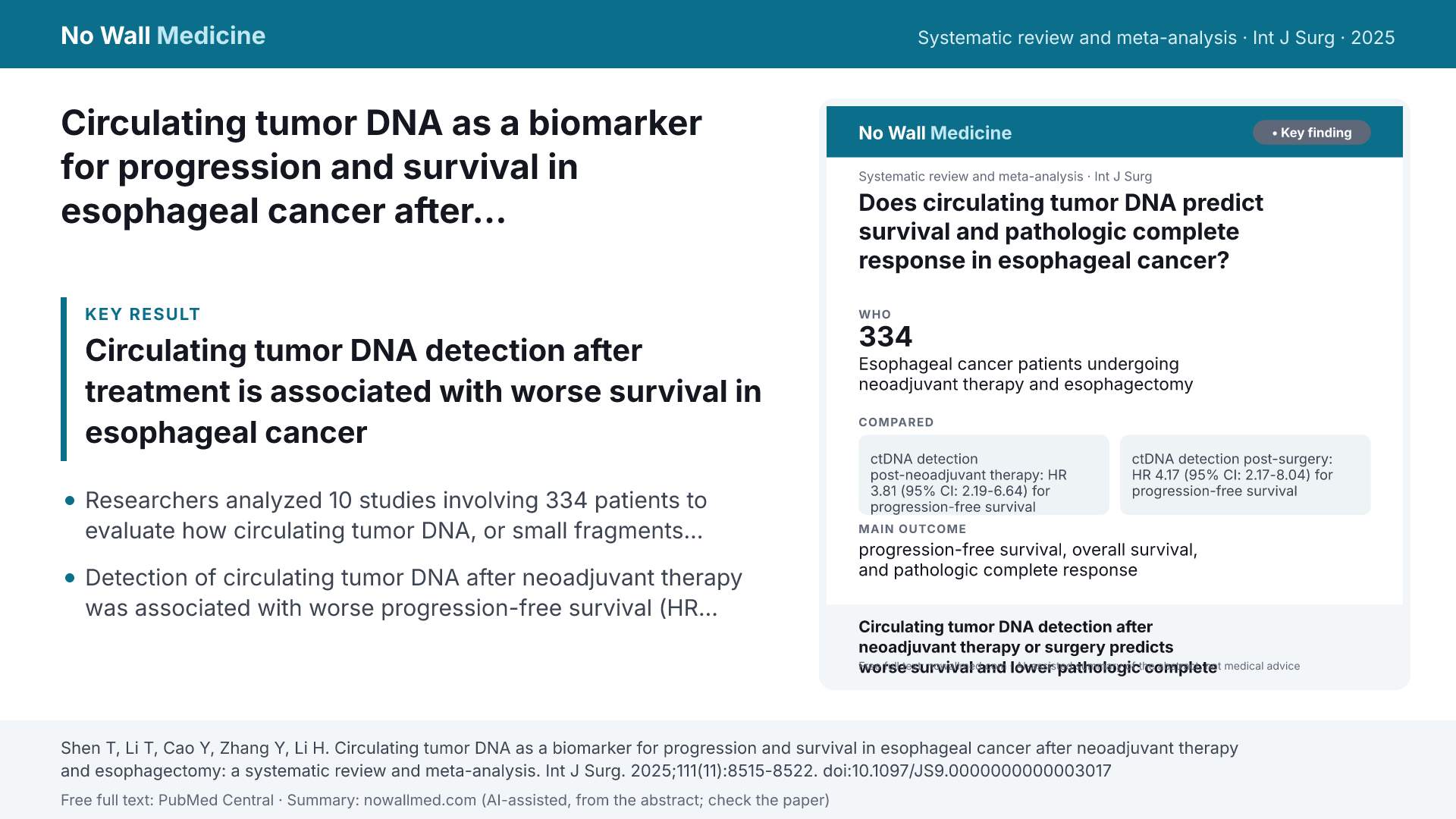
Circulating tumor DNA detection after treatment is associated with worse survival in esophageal cancer
Circulating tumor DNA as a biomarker for progression and survival in esophageal cancer after neoadjuvant therapy and esophagectomy: a systematic review and meta-analysis
Systematic review and meta-analysisKey finding
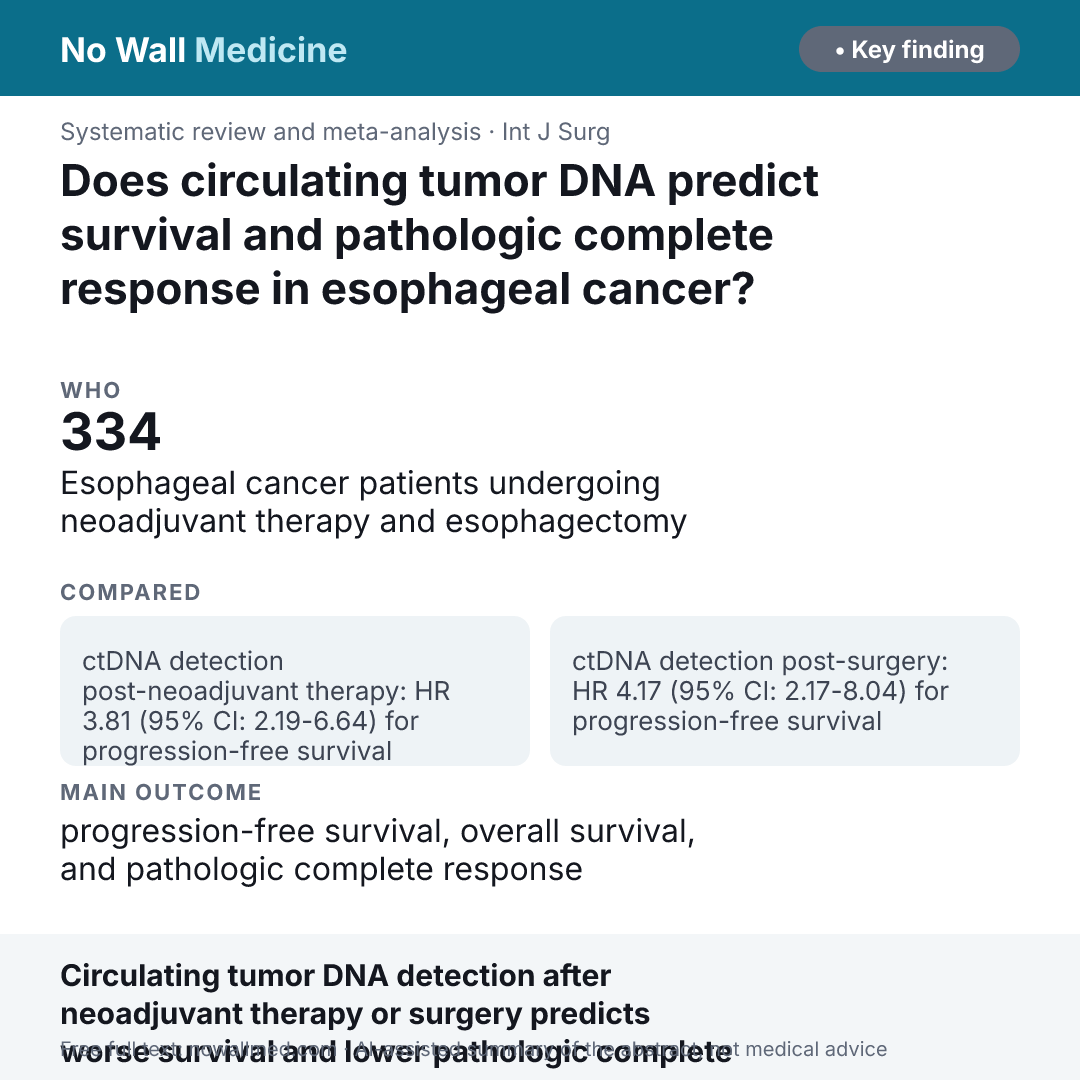
Does circulating tumor DNA predict survival and pathologic complete response in esophageal cancer?
Who
334
Esophageal cancer patients undergoing neoadjuvant therapy and esophagectomy
Compared
ctDNA detection post-neoadjuvant therapy: HR 3.81 (95% CI: 2.19-6.64) for progression-free survival
ctDNA detection post-surgery: HR 4.17 (95% CI: 2.17-8.04) for progression-free survival
Main outcome
progression-free survival, overall survival, and pathologic complete response
Result: HR 3.81 (95% CI: 2.19-6.64) for progression-free survival post-neoadjuvant therapy
Bottom line: Circulating tumor DNA detection after neoadjuvant therapy or surgery predicts worse survival and lower pathologic complete response rates.
Limitation: Further standardization of circulating tumor DNA detection methods is essential.
Int J Surg · 2025-08-12 · Save PNG
Clinical question: Does circulating tumor DNA predict survival and pathologic complete response in esophageal cancer?
Key points
- Researchers analyzed 10 studies involving 334 patients to evaluate how circulating tumor DNA, or small fragments of cancer DNA in the blood, predicts outcomes in esophageal cancer.
- Detection of circulating tumor DNA after neoadjuvant therapy was associated with worse progression-free survival (HR 3.81), worse overall survival (HR 3.00), and lower odds of pathologic complete response (OR 0.26).
- Detection of circulating tumor DNA after surgery was also associated with worse progression-free survival (HR 4.17) and worse overall survival (HR 4.00).
Headline and key points written with AI from the paper’s abstract, with every number checked against it. Read the paper before relying on them.
Was this summary helpful?
Subject terms
Headline, design, result, key points, caveat and citation as plain text.
Cite this article
Shen T, Li T, Cao Y, Zhang Y, Li H. Circulating tumor DNA as a biomarker for progression and survival in esophageal cancer after neoadjuvant therapy and esophagectomy: a systematic review and meta-analysis. Int J Surg. 2025;111(11):8515-8522. doi:10.1097/JS9.0000000000003017
Spotted a mistake? Suggest a correction