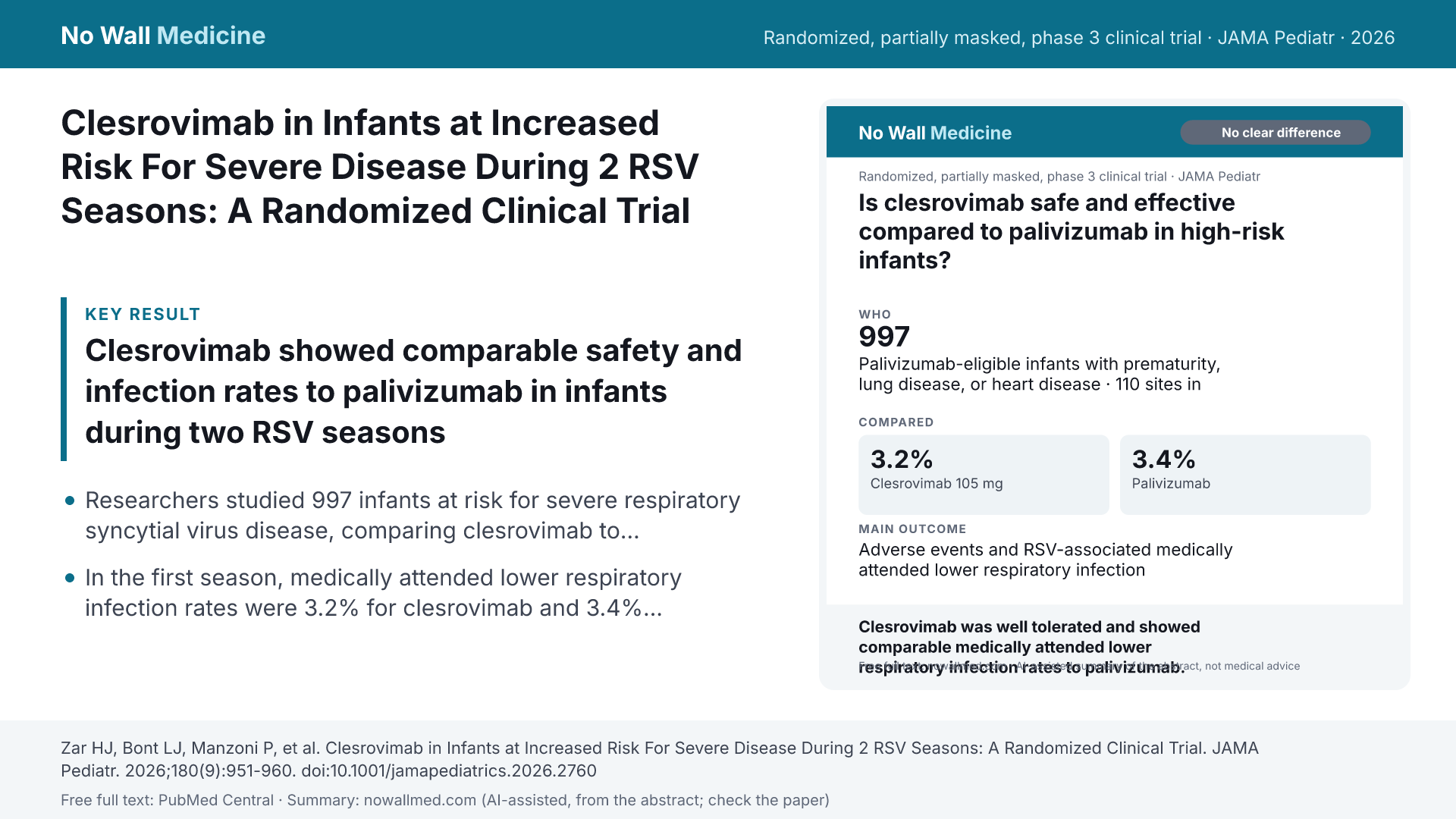
Clesrovimab in Infants at Increased Risk For Severe Disease During 2 RSV Seasons: A Randomized Clinical Trial
Key result: Clesrovimab showed comparable safety and infection rates to palivizumab in infants during two RSV seasons
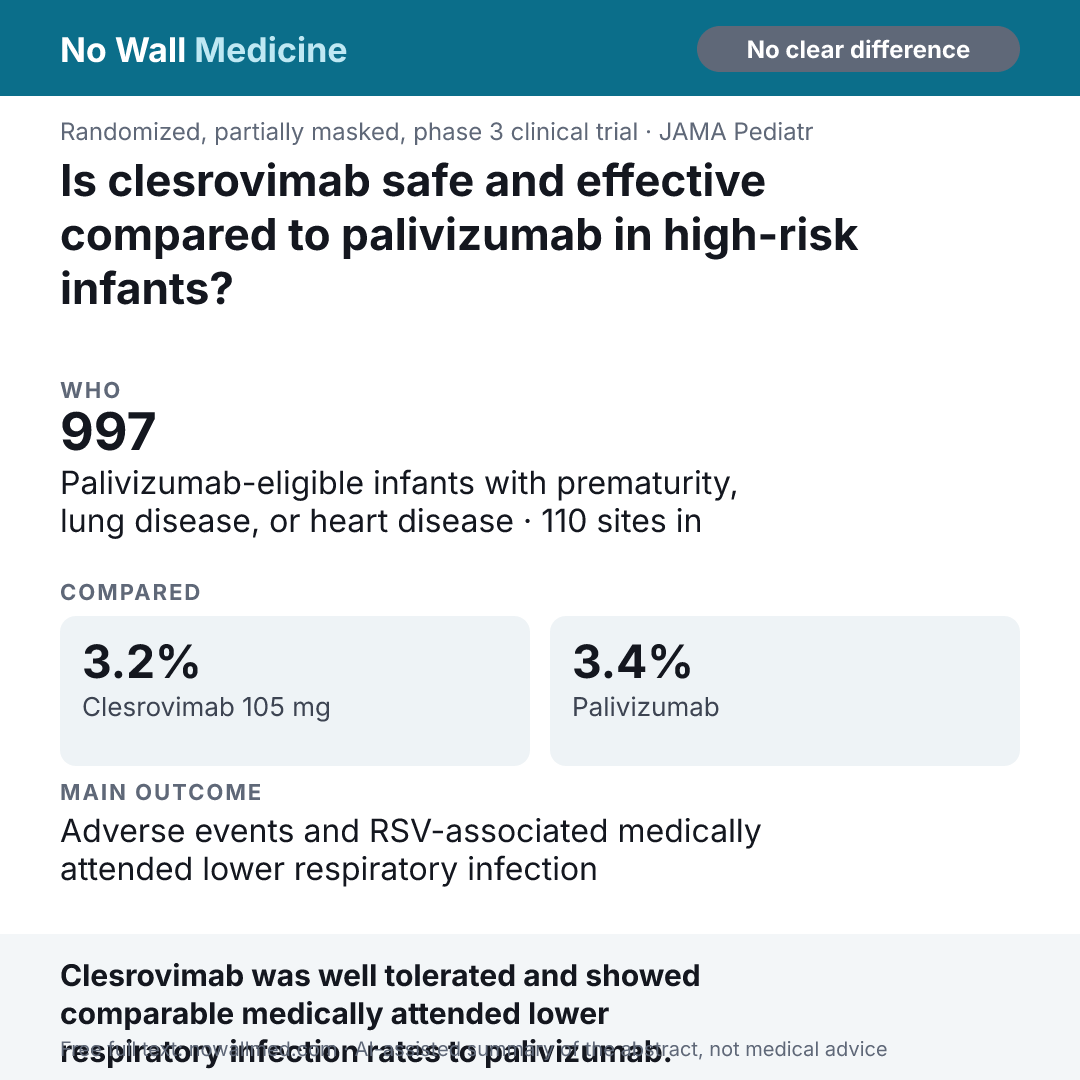
Randomized, partially masked, phase 3 clinical trialNo clear difference
Is clesrovimab safe and effective compared to palivizumab in high-risk infants?
Who
997
Palivizumab-eligible infants with prematurity, lung disease, or heart disease · 110 sites in 27 countries and territories
Compared
3.2%Clesrovimab 105 mg (95% CI, 1.8%-5.2%)
3.4%Palivizumab (95% CI, 2.0%-5.6%)
Main outcome
Adverse events and RSV-associated medically attended lower respiratory infection
Bottom line: Clesrovimab was well tolerated and showed comparable medically attended lower respiratory infection rates to palivizumab.
JAMA Pediatr · 2026-07-20 · Save PNG
Key points
- Researchers studied 997 infants at risk for severe respiratory syncytial virus disease, comparing clesrovimab to monthly palivizumab injections.
- In the first season, medically attended lower respiratory infection rates were 3.2% for clesrovimab and 3.4% for palivizumab.
- Clesrovimab was well tolerated in 276 infants who received an open-label 210 mg dose during their second respiratory syncytial virus season.
Why it matters: Data were needed regarding the performance of clesrovimab during a second respiratory syncytial virus season for children who remain at risk for severe disease.
Discussion prompts
- Would these patients look like yours? Who was left out?
- Is the main outcome one that matters to patients?
- Is the difference large enough to change what you do?
Cite: Zar HJ, Bont LJ, Manzoni P, et al. Clesrovimab in Infants at Increased Risk For Severe Disease During 2 RSV Seasons: A Randomized Clinical Trial. JAMA Pediatr. 2026;180(9):951-960. doi:10.1001/jamapediatrics.2026.2760
Free full text: PubMed Central · Summary and visual abstract: nowallmed.com/a/clesrovimab-in-infants-at-increased-risk-for-severe-disease-during-2-sq500b/ (AI-assisted from the abstract; check the paper before relying on it).