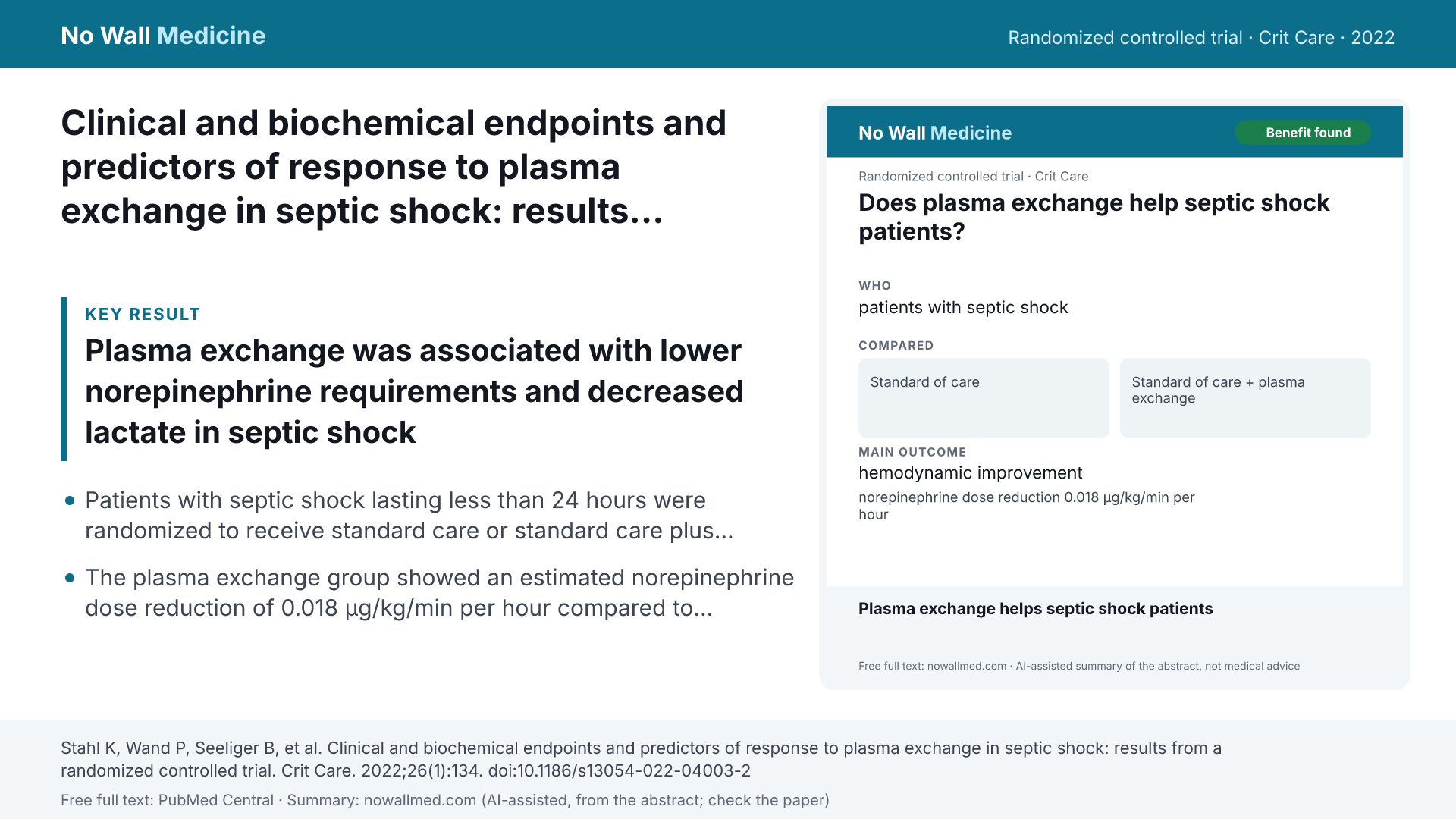
Plasma exchange was associated with lower norepinephrine requirements and decreased lactate in septic shock
Clinical and biochemical endpoints and predictors of response to plasma exchange in septic shock: results from a randomized controlled trial
Randomized controlled trialBenefit found
Does plasma exchange help septic shock patients?
Who
patients with septic shock
Compared
Standard of care
Standard of care + plasma exchange
Main outcome
hemodynamic improvement
Result: norepinephrine dose reduction 0.018 µg/kg/min per hour
Bottom line: Plasma exchange helps septic shock patients
Crit Care · 2022-05-12 · Save PNG
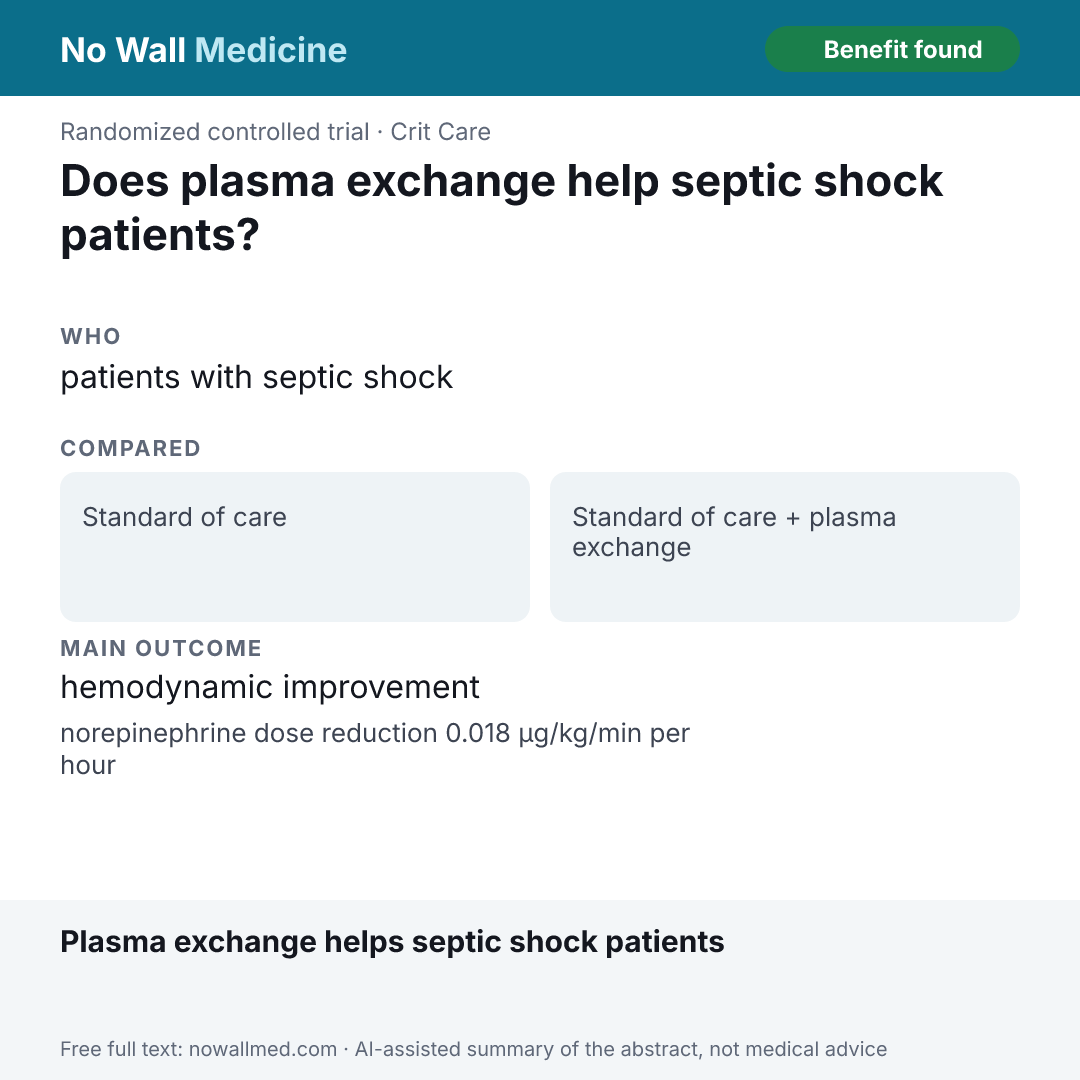
Clinical question: Does plasma exchange help septic shock patients?
Key points
- Patients with septic shock lasting less than 24 hours were randomized to receive standard care or standard care plus one single session of therapeutic plasma exchange.
- The plasma exchange group showed an estimated norepinephrine dose reduction of 0.018 µg/kg/min per hour compared to 0.005 µg/kg/min per hour in the standard care group.
- Therapeutic plasma exchange was associated with decreasing serum lactate levels and changes in biomarkers like procalcitonin and von Willebrand factor antigen.
Headline and key points written with AI from the paper’s abstract, with every number checked against it. Read the paper before relying on them.
Was this summary helpful?
Subject terms
Headline, design, result, key points, caveat and citation as plain text.
Cite this article
Stahl K, Wand P, Seeliger B, et al. Clinical and biochemical endpoints and predictors of response to plasma exchange in septic shock: results from a randomized controlled trial. Crit Care. 2022;26(1):134. doi:10.1186/s13054-022-04003-2
Spotted a mistake? Suggest a correction