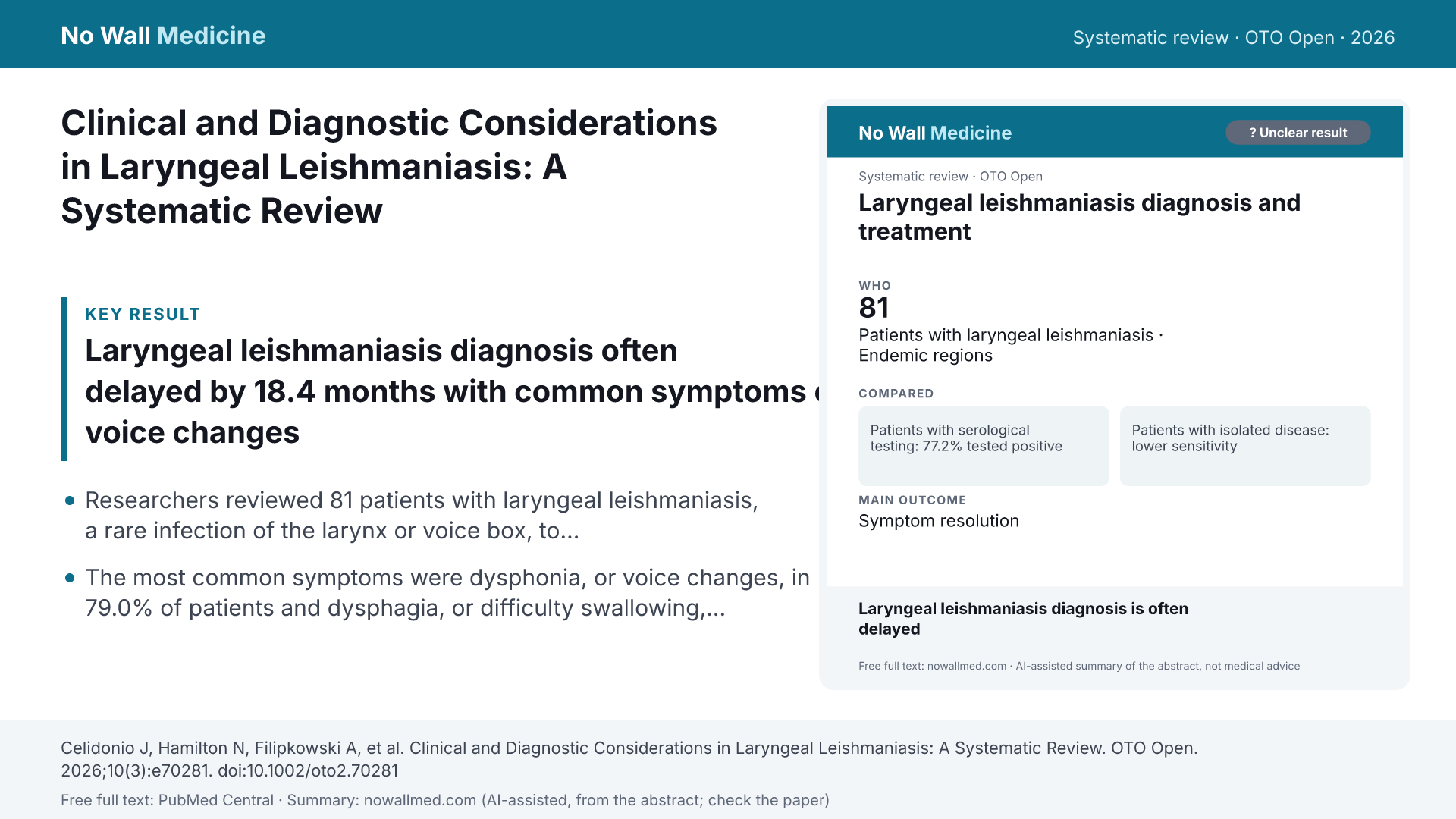
Laryngeal leishmaniasis diagnosis often delayed by 18.4 months with common symptoms of voice changes
Clinical and Diagnostic Considerations in Laryngeal Leishmaniasis: A Systematic Review
Systematic reviewUnclear result
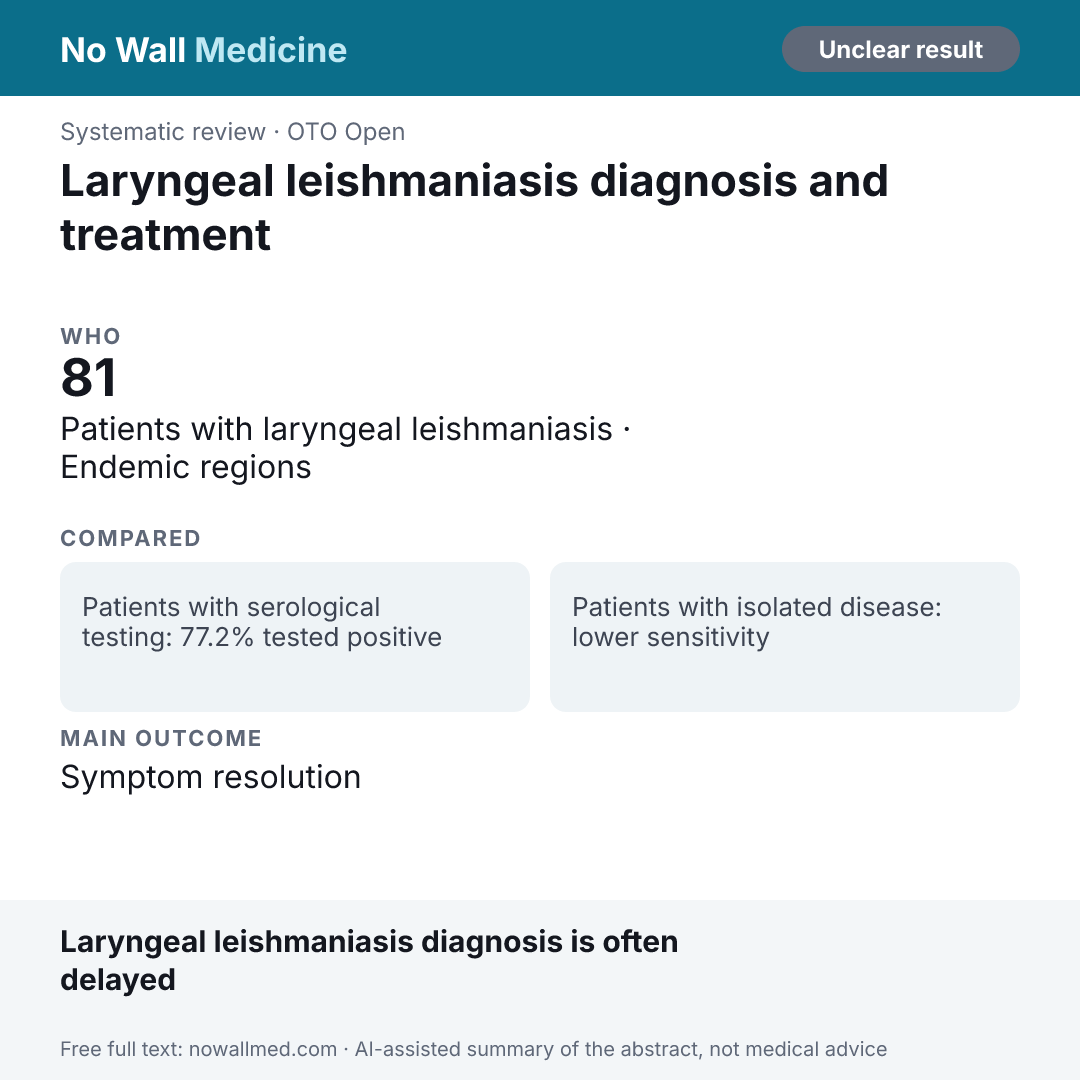
Laryngeal leishmaniasis diagnosis and treatment
Who
81
Patients with laryngeal leishmaniasis · Endemic regions
Compared
Patients with serological testing: 77.2% tested positive
Patients with isolated disease: lower sensitivity
Main outcome
Symptom resolution
Bottom line: Laryngeal leishmaniasis diagnosis is often delayed
OTO Open · 2026-07-30 · Save PNG
Why it matters: Laryngeal leishmaniasis is a rare infection that can cause life-threatening complications and is difficult to diagnose, especially in regions where the parasite is not common.
Key points
- Researchers reviewed 81 patients with laryngeal leishmaniasis, a rare infection of the larynx or voice box, to examine symptoms, diagnosis, and treatment.
- The most common symptoms were dysphonia, or voice changes, in 79.0% of patients and dysphagia, or difficulty swallowing, in 17.0% of patients.
- Most patients achieved symptom resolution at a mean follow-up of 12.7 months, and 77.2% of those receiving serological blood tests tested positive.
Headline and key points written with AI from the paper’s abstract, with every number checked against it. Read the paper before relying on them.
Was this summary helpful?
Headline, design, result, key points, caveat and citation as plain text.
Cite this article
Celidonio J, Hamilton N, Filipkowski A, et al. Clinical and Diagnostic Considerations in Laryngeal Leishmaniasis: A Systematic Review. OTO Open. 2026;10(3):e70281. doi:10.1002/oto2.70281
Spotted a mistake? Suggest a correction