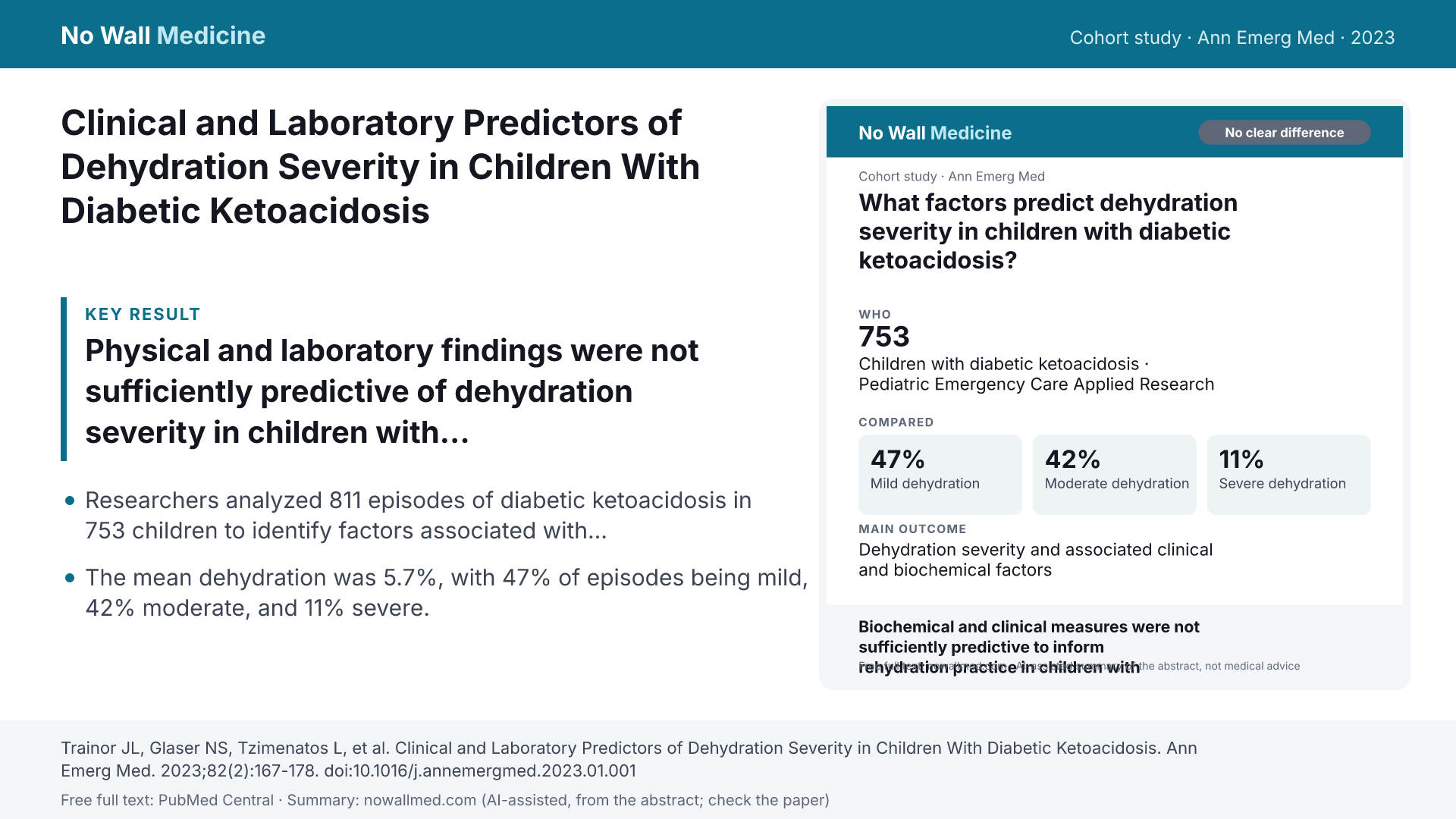
Clinical and Laboratory Predictors of Dehydration Severity in Children With Diabetic Ketoacidosis
Key result: Physical and laboratory findings were not sufficiently predictive of dehydration severity in children with diabetic ketoacidosis
Cohort studyNo clear difference
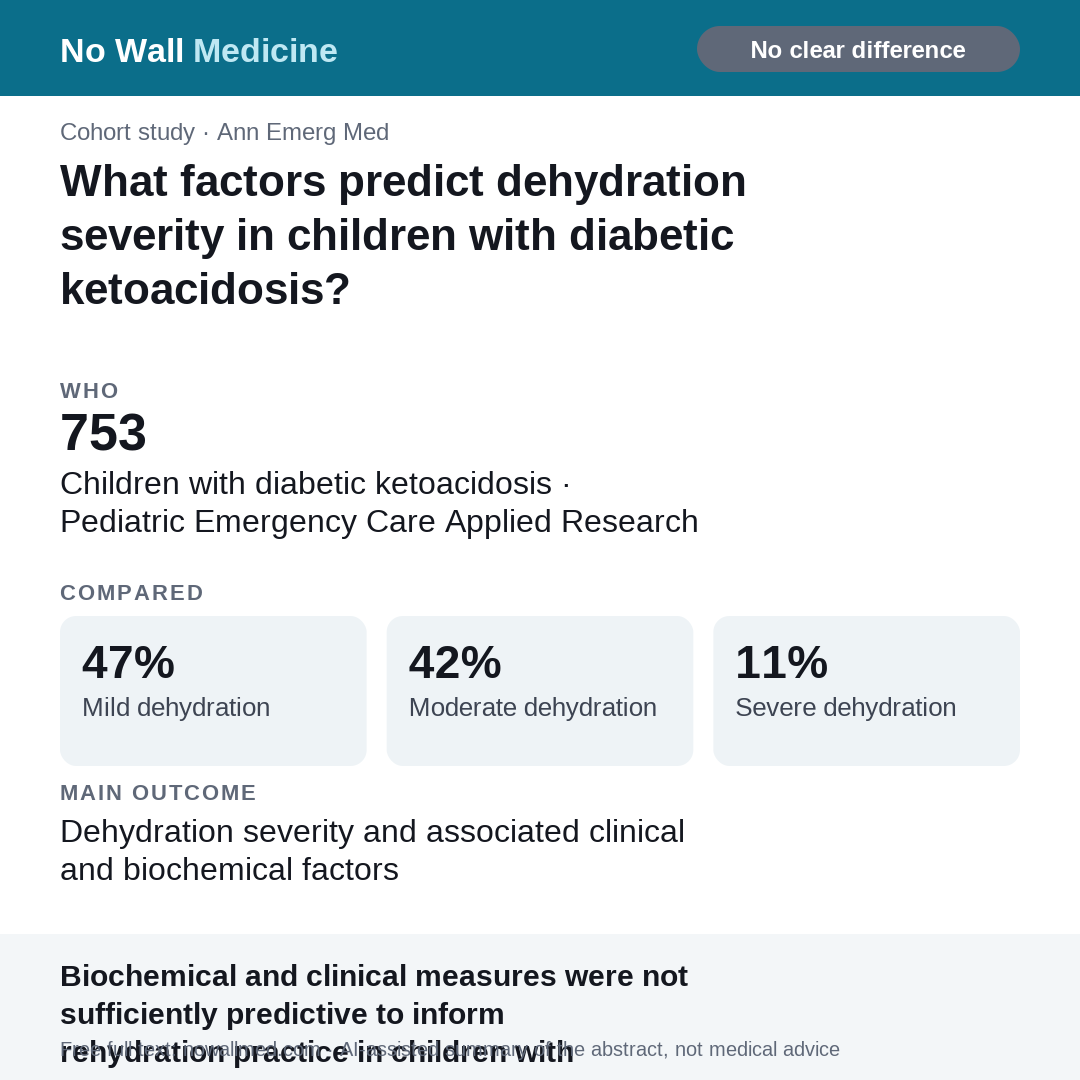
What factors predict dehydration severity in children with diabetic ketoacidosis?
Who
753
Children with diabetic ketoacidosis · Pediatric Emergency Care Applied Research Network
Compared
47%Mild dehydration (N=379)
42%Moderate dehydration (N=343)
11%Severe dehydration (N=89)
Main outcome
Dehydration severity and associated clinical and biochemical factors
Bottom line: Biochemical and clinical measures were not sufficiently predictive to inform rehydration practice in children with diabetic ketoacidosis.
Limitation: Substantial overlap in variables between dehydration groups.
Ann Emerg Med · 2023-04-05Download image
Key points
- Researchers analyzed 811 episodes of diabetic ketoacidosis in 753 children to identify factors associated with dehydration severity.
- The mean dehydration was 5.7%, with 47% of episodes being mild, 42% moderate, and 11% severe.
- More severe dehydration was associated with new onset of diabetes, higher blood urea nitrogen, lower pH, higher anion gap, and diastolic hypertension.
Discussion prompts
- Would these patients look like yours? Who was left out?
- Is the main outcome one that matters to patients?
- Is the difference large enough to change what you do?
Cite: Trainor JL, Glaser NS, Tzimenatos L, et al. Clinical and Laboratory Predictors of Dehydration Severity in Children With Diabetic Ketoacidosis. Ann Emerg Med. 2023;82(2):167-178. doi:10.1016/j.annemergmed.2023.01.001
Free full text: PubMed Central · Summary and visual abstract: nowallmed.com/a/clinical-and-laboratory-predictors-of-dehydration-severity-in-zd9i2d/ (AI-assisted from the abstract; check the paper before relying on it).