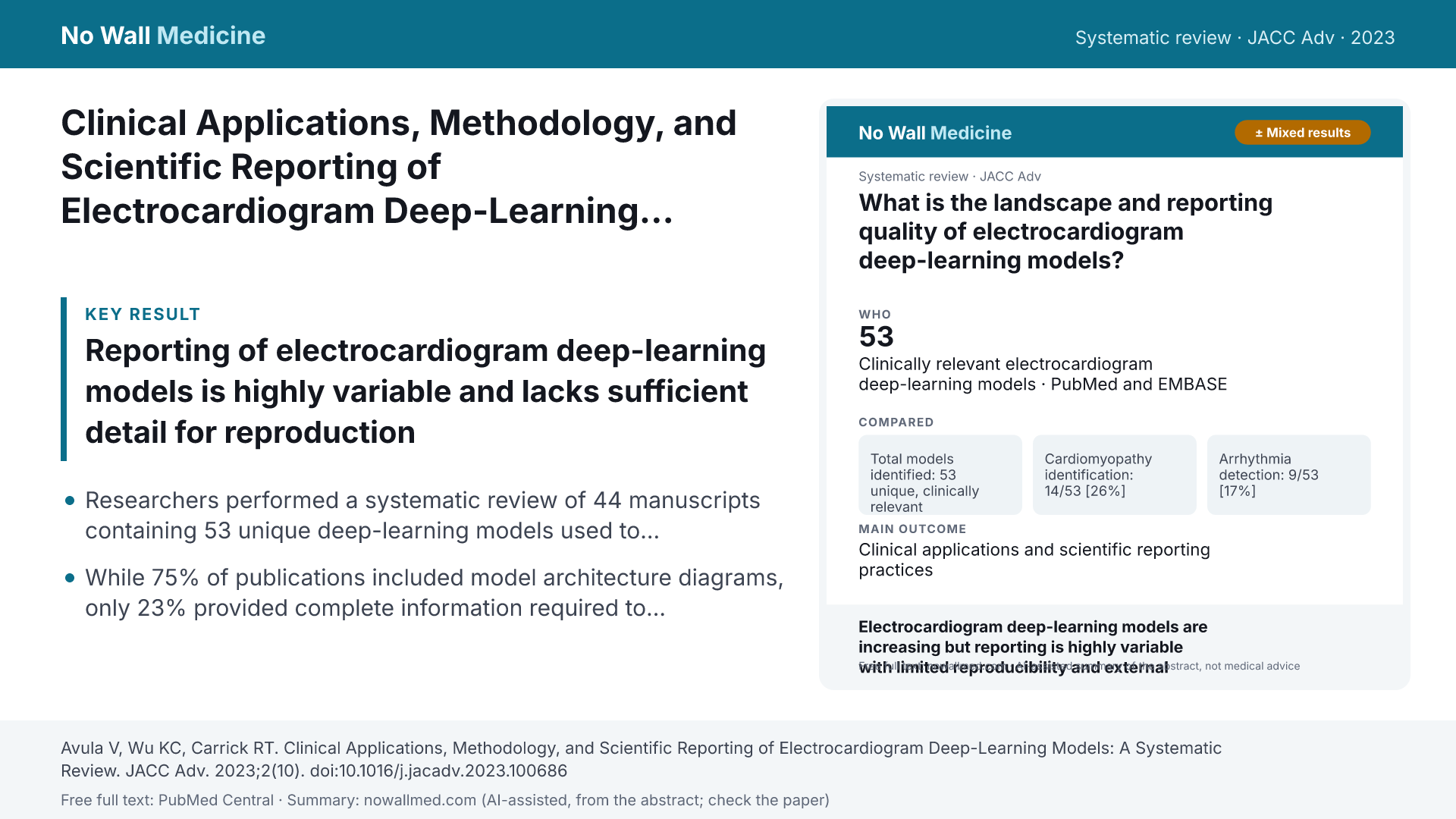
Reporting of electrocardiogram deep-learning models is highly variable and lacks sufficient detail for reproduction
Clinical Applications, Methodology, and Scientific Reporting of Electrocardiogram Deep-Learning Models: A Systematic Review
Systematic reviewMixed results
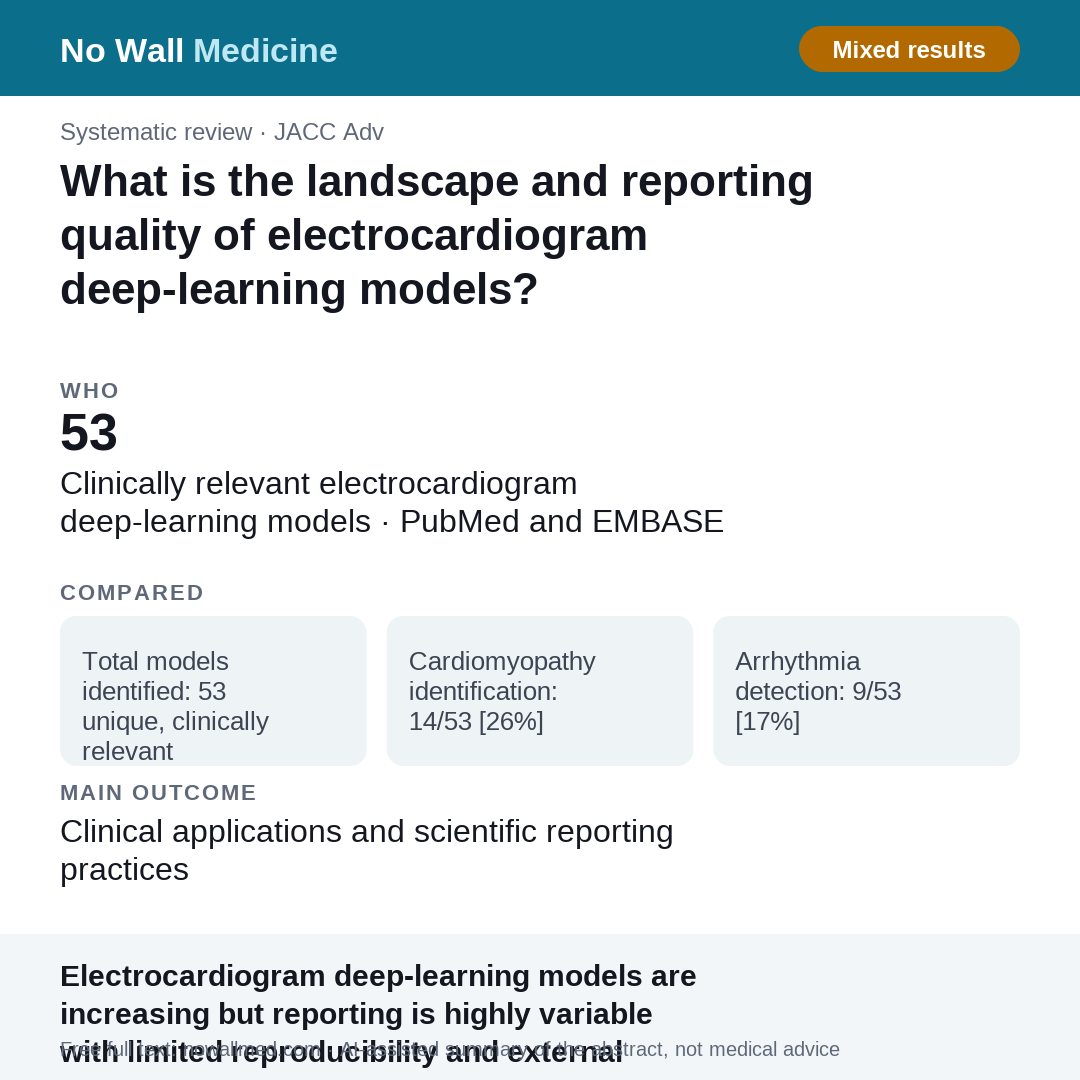
What is the landscape and reporting quality of electrocardiogram deep-learning models?
Who
53
Clinically relevant electrocardiogram deep-learning models · PubMed and EMBASE databases
Compared
Total models identified: 53 unique, clinically relevant electrocardiogram deep-learning models
Cardiomyopathy identification: 14/53 [26%]
Arrhythmia detection: 9/53 [17%]
Main outcome
Clinical applications and scientific reporting practices
Bottom line: Electrocardiogram deep-learning models are increasing but reporting is highly variable with limited reproducibility and external validation.
JACC Adv · 2023-11-08Download image
Clinical question: What is the landscape and reporting quality of electrocardiogram deep-learning models?
Why it matters: It is unknown how consistently deep-learning models for electrocardiogram analysis are reported and whether they provide enough detail for other researchers to reproduce or validate them.
Key points
- Researchers performed a systematic review of 44 manuscripts containing 53 unique deep-learning models used to analyze electrocardiogram data.
- While 75% of publications included model architecture diagrams, only 23% provided complete information required to reproduce the models.
- Only 34% of the 53 models were tested using external validation cohorts, and only 11% provided code or resources for implementation.
Headline and key points written with AI from the paper’s abstract, with every number checked against it. Read the paper before relying on them.
Was this summary helpful?
Cite this article
Avula V, Wu KC, Carrick RT. Clinical Applications, Methodology, and Scientific Reporting of Electrocardiogram Deep-Learning Models: A Systematic Review. JACC Adv. 2023. doi:10.1016/j.jacadv.2023.100686
Spotted a mistake? Suggest a correction
Top studies every Monday
The week’s key trials and guidelines in your specialties, plus any topics you follow. By email, free.
Get the weekly digest