Machine learning decision support did not change antibiotic timing or shock rates in children
Clinical Decision Support for Septic Shock in the Emergency Department: A Cluster Randomized Trial
Cluster randomized trialNo clear difference
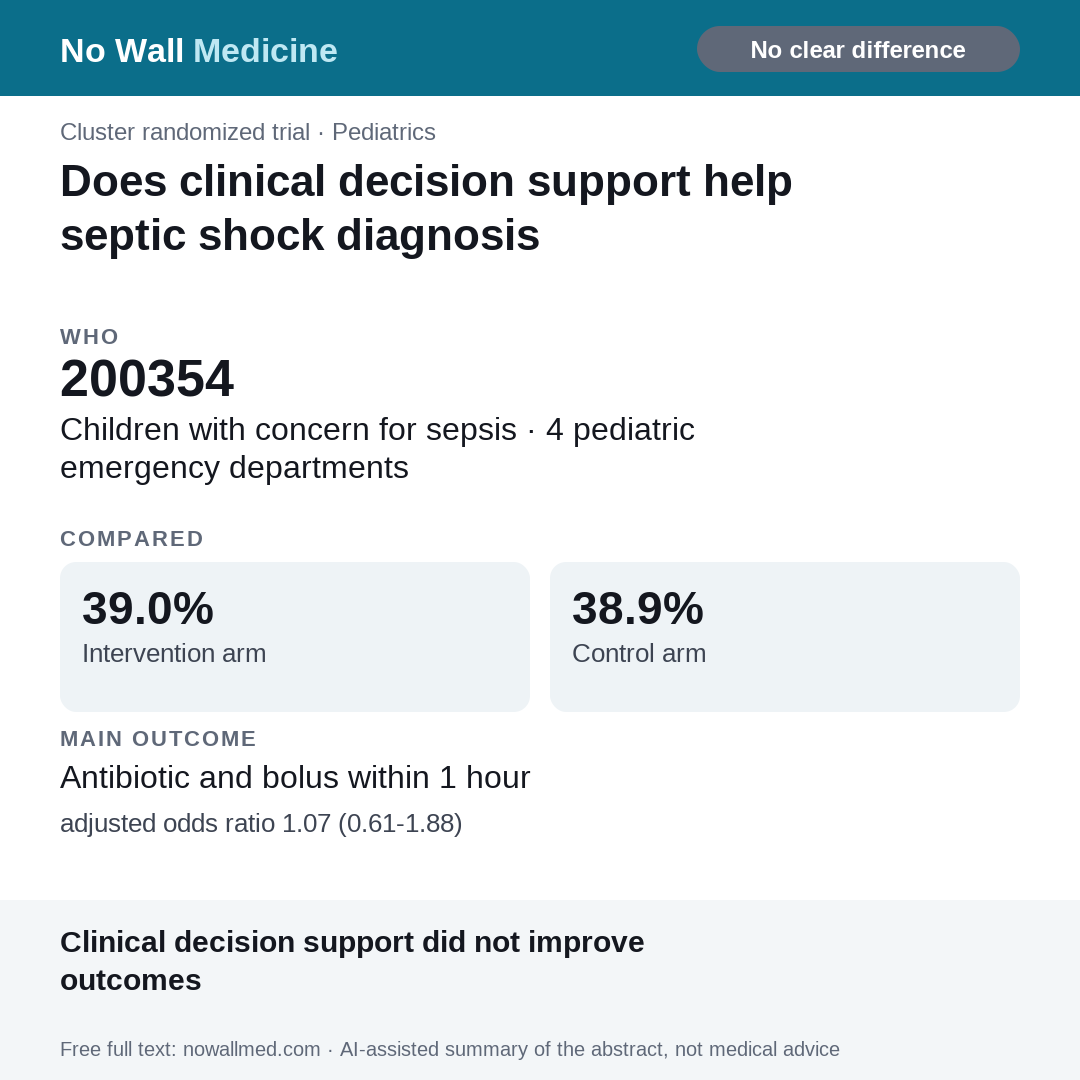
Does clinical decision support help septic shock diagnosis
Who
200354
Children with concern for sepsis · 4 pediatric emergency departments
Compared
39.0%Intervention arm
38.9%Control arm
Main outcome
Antibiotic and bolus within 1 hour
Result: adjusted odds ratio 1.07 (0.61-1.88)
Bottom line: Clinical decision support did not improve outcomes
Pediatrics · 2025-06-10Download image
Why it matters: Evidence is limited regarding whether machine-learning predictive models can increase the proportion of children receiving treatment before septic shock begins.
Key points
- Researchers conducted a cluster randomized trial involving 1331 pediatric emergency department encounters to test a machine-learning clinical decision support system.
- The proportion of patients receiving antibiotics and fluids within 1 hour was 39.0% in the intervention group compared to 38.9% in the control group.
- The system was not linked to differences in the timing of antibiotics or the occurrence of low blood pressure septic shock.
Headline and key points written with AI from the paper’s abstract, with every number checked against it. Read the paper before relying on them.
Was this summary helpful?
Subject terms
Cite this article
Scott HF, Sevick CJ, Colborn KL, Deakyne Davies SJ, Greer CH, Dafoe A. Clinical Decision Support for Septic Shock in the Emergency Department: A Cluster Randomized Trial. Pediatrics. 2025. doi:10.1542/peds.2024-069478
Spotted a mistake? Suggest a correction
Top studies every Monday
The week’s key trials and guidelines in your specialties, plus any topics you follow. By email, free.
Get the weekly digest