Clinical decision support systems increased medication intensification but did not improve blood pressure control
Clinical Decision Support System, Antihypertensive Treatment Intensification, and Blood Pressure Control: A Post Hoc Secondary Analysis of a Cluster Randomized Trial
Post hoc secondary analysis of a cluster randomized trialMixed results
Does clinical decision support system implementation improve antihypertensive treatment intensification and blood pressure control?
Who
4612
Adult patients with hypertension and uncontrolled blood pressure · Urban primary care practices in China
Compared
47.3%Clinical decision support system group (95% CI, 40.1%-54.6%)
11.6%Usual care group (95% CI, 8.9%-14.9%)
Main outcome
Treatment intensification rate and blood pressure control
Result: adjusted odds ratio 6.87 (95% CI 4.90-9.64)
Bottom line: Clinical decision support increased treatment intensification but did not improve overall blood pressure control.
Limitation: This was a post hoc secondary analysis of a cluster randomized clinical trial.
JAMA Netw Open · 2026-05-01Download image
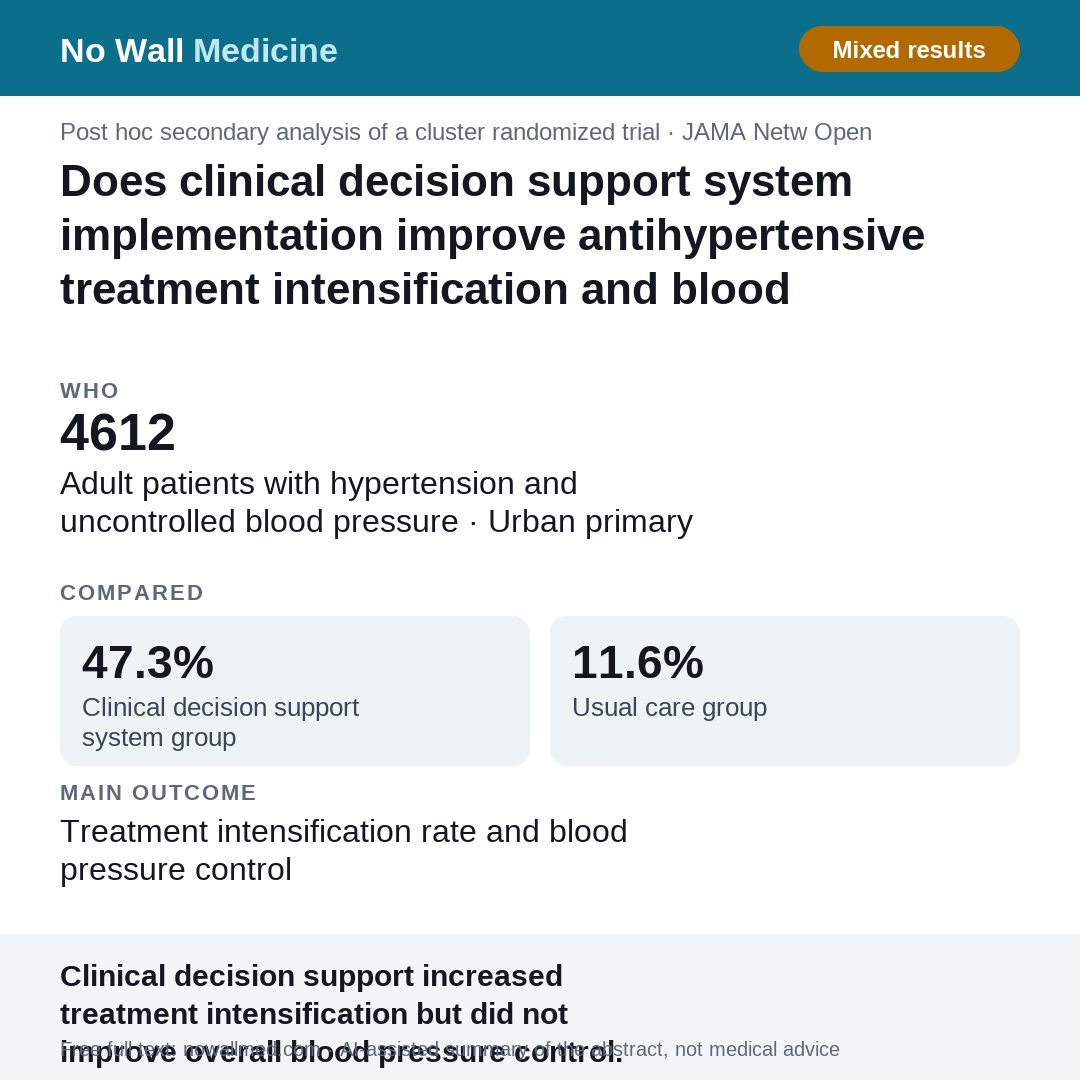
Clinical question: Does clinical decision support system implementation improve antihypertensive treatment intensification and blood pressure control?
Why it matters: It remains unclear how clinical decision support systems affect medication intensification and blood pressure control in primary care settings.
Key points
- Researchers analyzed 4612 adult patients with uncontrolled blood pressure across 93 urban primary care practices in China.
- The clinical decision support system group had higher treatment intensification rates of 47.3% compared to 11.6% in the usual care group.
- Implementation of the clinical decision support system was not associated with improvements in overall blood pressure control.
Headline and key points written with AI from the paper’s abstract, with every number checked against it. Read the paper before relying on them.
Topics
Spotted a mistake? Suggest a correction