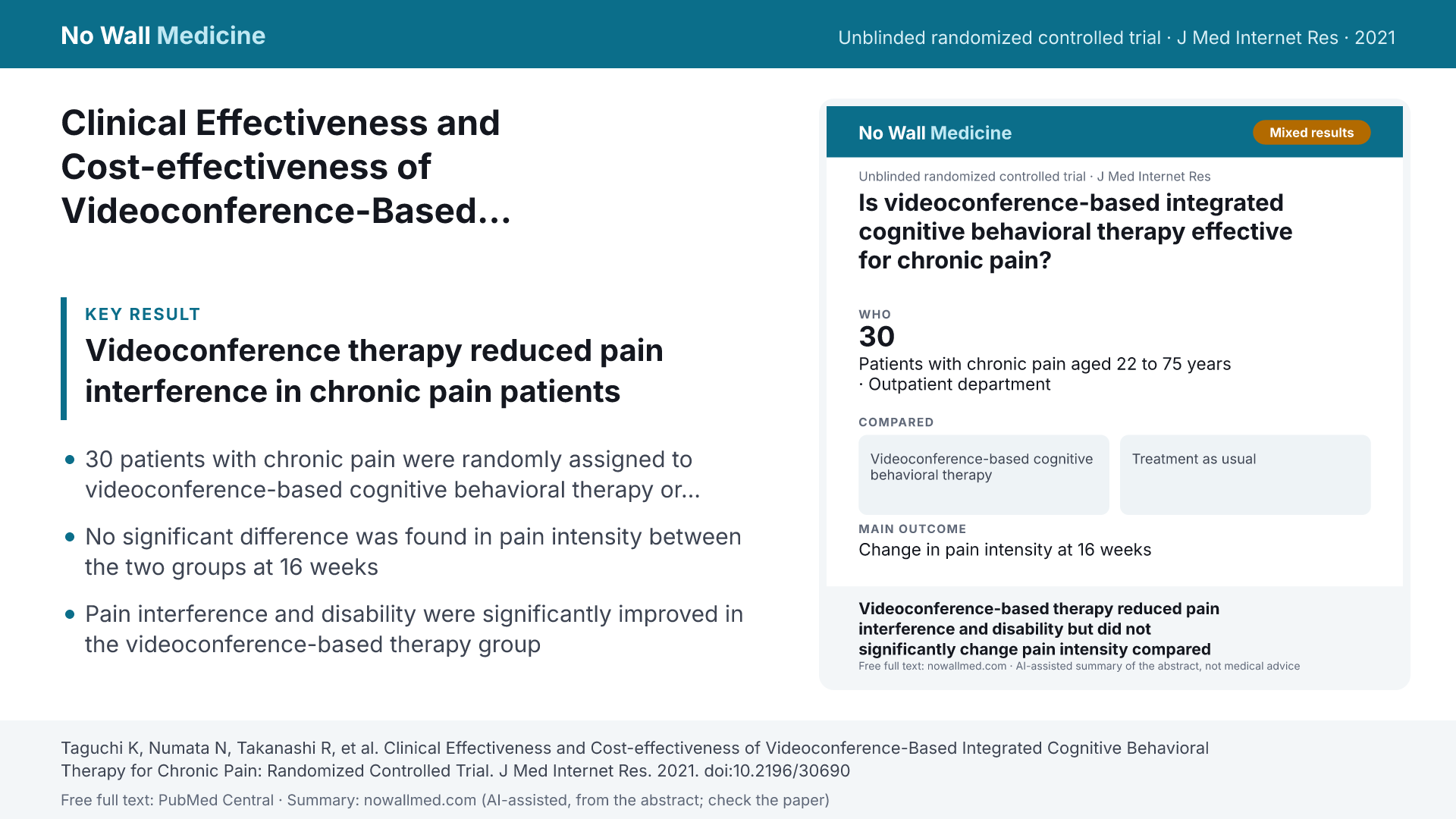
Clinical Effectiveness and Cost-effectiveness of Videoconference-Based Integrated Cognitive Behavioral Therapy for Chronic Pain: Randomized Controlled Trial
Key result: Videoconference therapy reduced pain interference in chronic pain patients
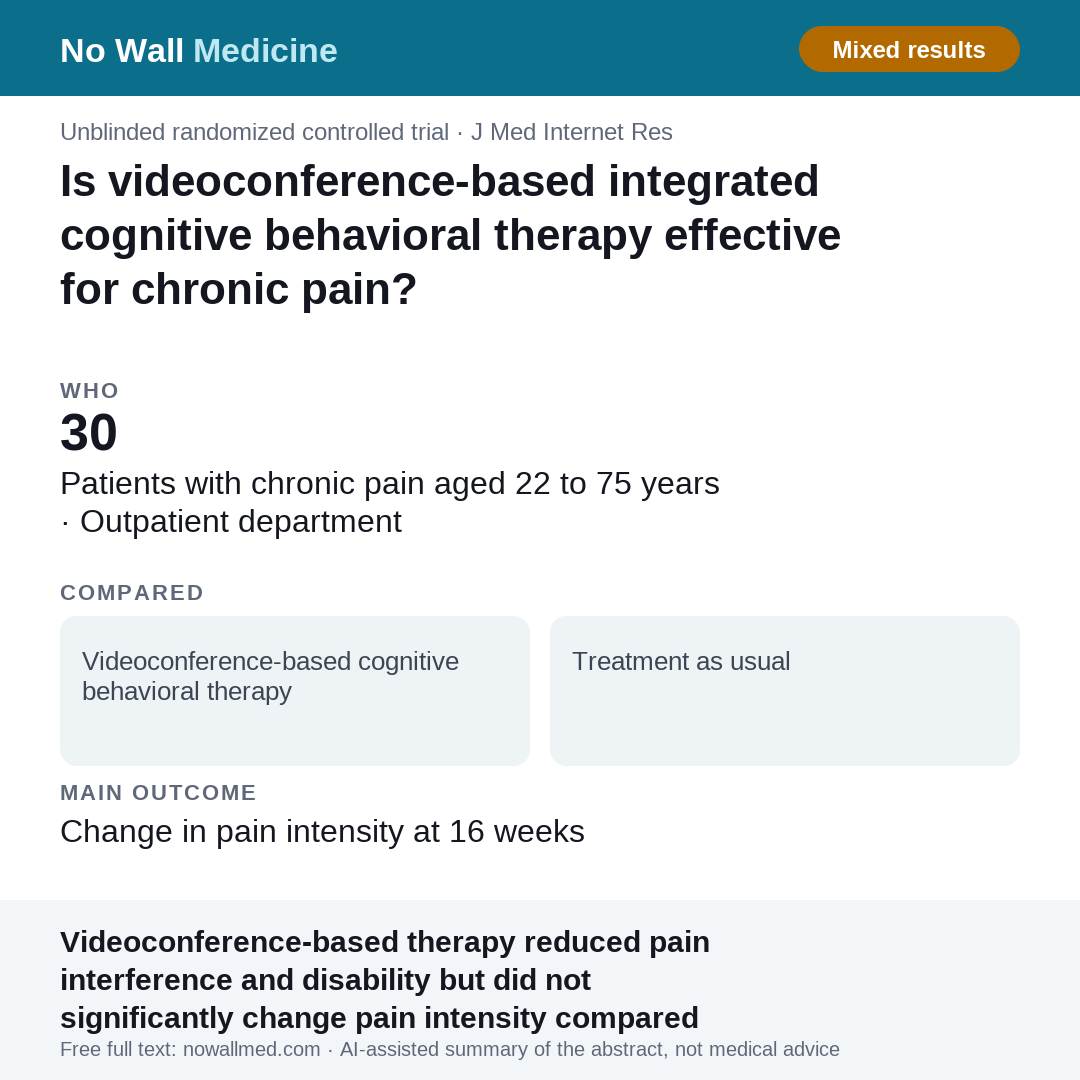
Unblinded randomized controlled trialMixed results
Is videoconference-based integrated cognitive behavioral therapy effective for chronic pain?
Who
30
Patients with chronic pain aged 22 to 75 years · Outpatient department
Compared
Videoconference-based cognitive behavioral therapy
Treatment as usual
Main outcome
Change in pain intensity at 16 weeks
Bottom line: Videoconference-based therapy reduced pain interference and disability but did not significantly change pain intensity compared to usual treatment.
Limitation: Needs to be further verified using a larger sample size.
J Med Internet Res · 2021-11-22Download image
Key points
- 30 patients with chronic pain were randomly assigned to videoconference-based cognitive behavioral therapy or treatment as usual.
- No significant difference was found in pain intensity between the two groups at 16 weeks.
- Pain interference and disability were significantly improved in the videoconference-based therapy group.
Why it matters: The effectiveness of integrated cognitive behavioral therapy for chronic pain management was unknown
Discussion prompts
- Would these patients look like yours? Who was left out?
- Is the main outcome one that matters to patients?
- Is the difference large enough to change what you do?
Cite: Taguchi K, Numata N, Takanashi R, et al. Clinical Effectiveness and Cost-effectiveness of Videoconference-Based Integrated Cognitive Behavioral Therapy for Chronic Pain: Randomized Controlled Trial. J Med Internet Res. 2021. doi:10.2196/30690
Free full text: PubMed Central · Summary and visual abstract: nowallmed.com/a/clinical-effectiveness-and-cost-effectiveness-of-videoconference-1d60kqd/ (AI-assisted from the abstract; check the paper before relying on it).