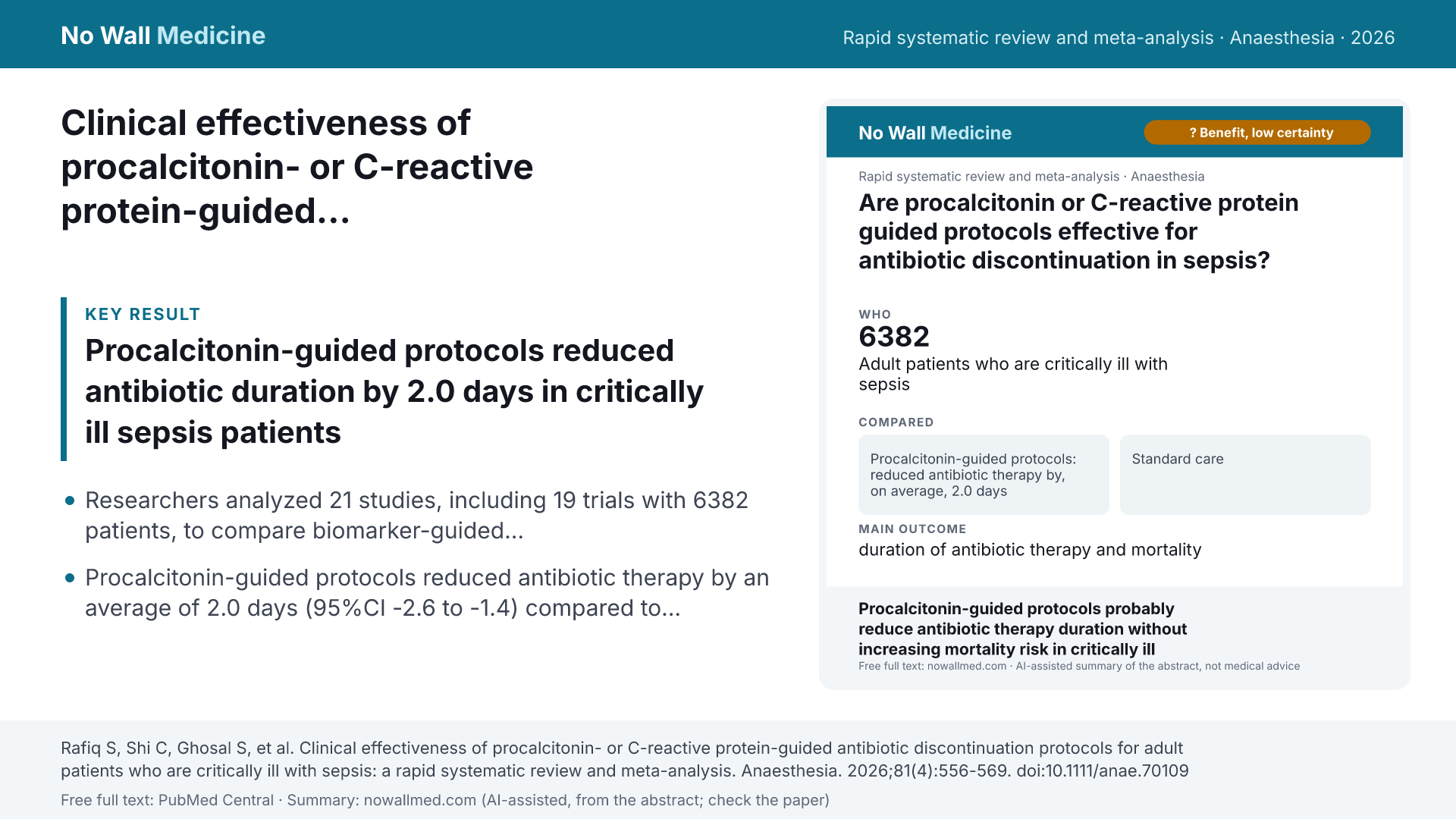
Procalcitonin-guided protocols reduced antibiotic duration by 2.0 days in critically ill sepsis patients
Clinical effectiveness of procalcitonin- or C-reactive protein-guided antibiotic discontinuation protocols for adult patients who are critically ill with sepsis: a rapid systematic review and meta-analysis
Rapid systematic review and meta-analysisBenefit, low certainty
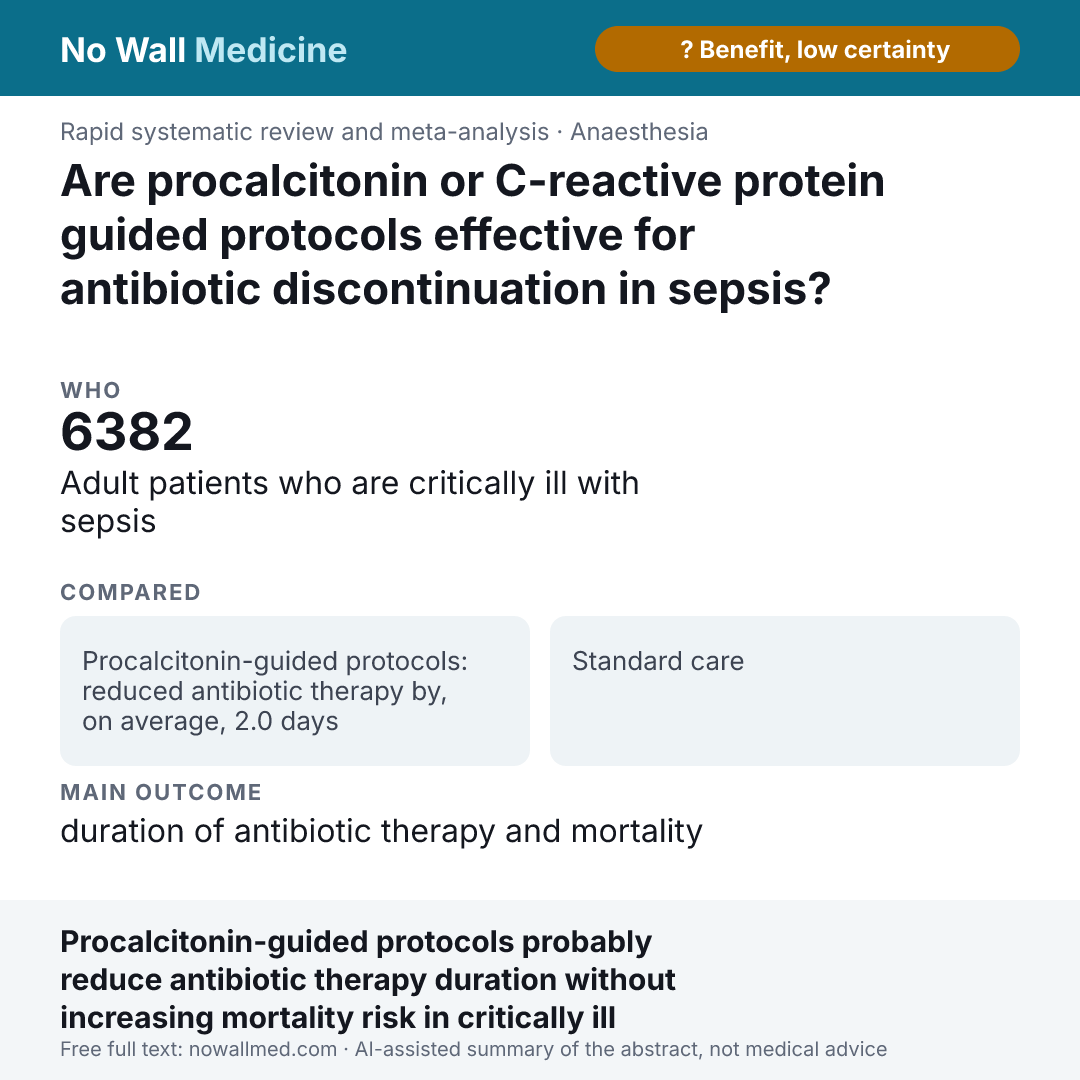
Are procalcitonin or C-reactive protein guided protocols effective for antibiotic discontinuation in sepsis?
Who
6382
Adult patients who are critically ill with sepsis
Compared
Procalcitonin-guided protocols: reduced antibiotic therapy by, on average, 2.0 days
Standard care
Main outcome
duration of antibiotic therapy and mortality
Result: risk ratio 0.95, 95%CI 0.83-1.07
Bottom line: Procalcitonin-guided protocols probably reduce antibiotic therapy duration without increasing mortality risk in critically ill sepsis patients.
Limitation: Evidence regarding C-reactive protein-guided protocols remained unclear with very low to low certainty evidence.
Anaesthesia · 2026-01-08 · Save PNG
Clinical question: Are procalcitonin or C-reactive protein guided protocols effective for antibiotic discontinuation in sepsis?
Why it matters: Prolonged antibiotic use carries significant risks, leading to interest in using inflammatory biomarkers to guide the duration of therapy in sepsis.
Key points
- Researchers analyzed 21 studies, including 19 trials with 6382 patients, to compare biomarker-guided antibiotic discontinuation against standard care.
- Procalcitonin-guided protocols reduced antibiotic therapy by an average of 2.0 days (95%CI -2.6 to -1.4) compared to standard care.
- Using procalcitonin-guided protocols showed an average 5% reduction in mortality risk (risk ratio 0.95, 95%CI 0.83-1.07) compared to standard care.
Limitation the authors note: The evidence regarding C-reactive protein-guided protocols versus standard care approaches remained unclear, with very low to low certainty evidence available.
Headline and key points written with AI from the paper’s abstract, with every number checked against it. Read the paper before relying on them.
Was this summary helpful?
Subject terms
Headline, design, result, key points, caveat and citation as plain text.
Cite this article
Rafiq S, Shi C, Ghosal S, et al. Clinical effectiveness of procalcitonin- or C-reactive protein-guided antibiotic discontinuation protocols for adult patients who are critically ill with sepsis: a rapid systematic review and meta-analysis. Anaesthesia. 2026;81(4):556-569. doi:10.1111/anae.70109
Spotted a mistake? Suggest a correction