Antimicrobial resistance trends and death rates in Germany were analyzed through a systematic review
Clinical epidemiology and case fatality due to antimicrobial resistance in Germany: a systematic review and meta-analysis, 1 January 2010 to 31 December 2021
Systematic review and meta-analysisHarm found
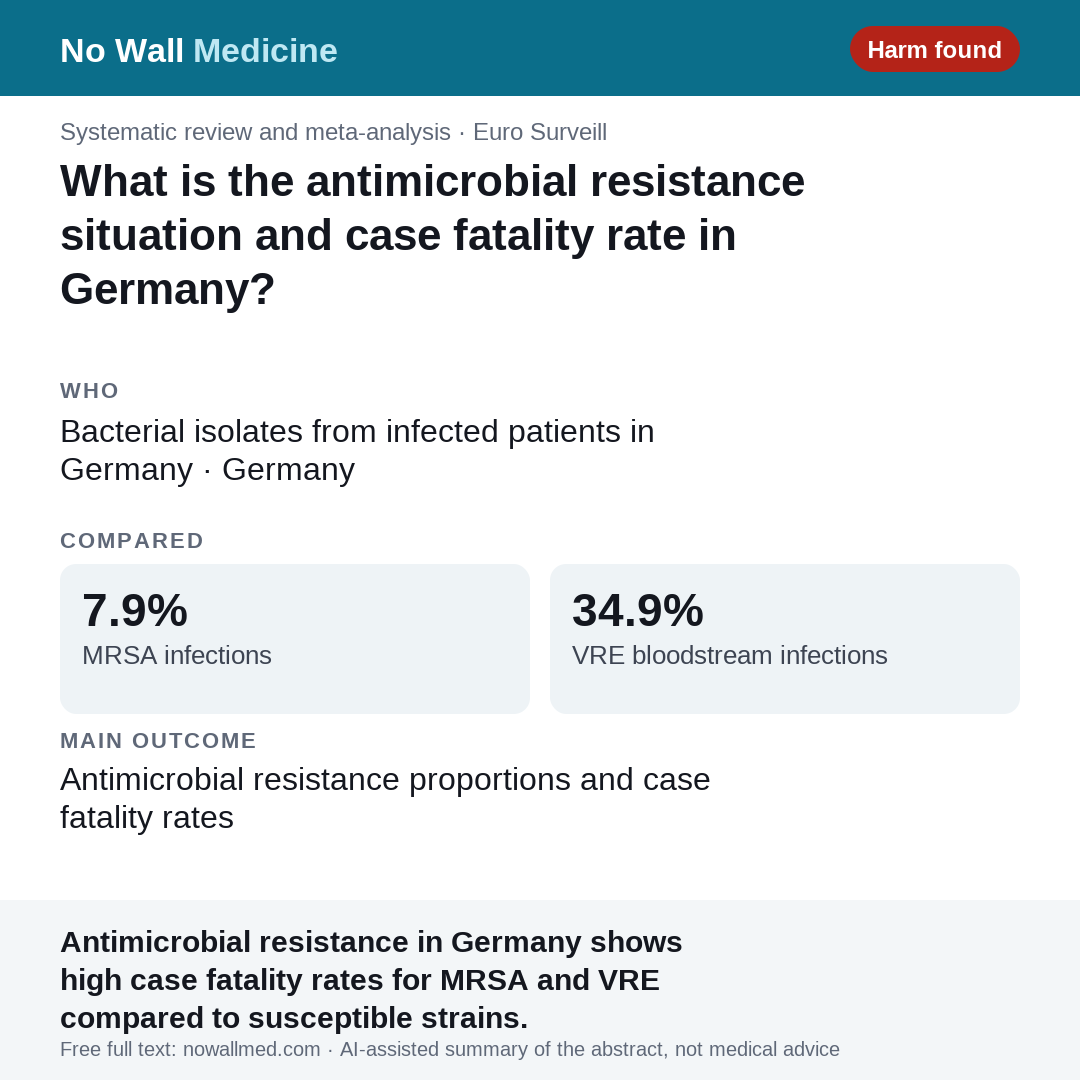
What is the antimicrobial resistance situation and case fatality rate in Germany?
Who
Bacterial isolates from infected patients in Germany · Germany
Compared
7.9%MRSA infections
34.9%VRE bloodstream infections
Main outcome
Antimicrobial resistance proportions and case fatality rates
Result: MRSA case fatality odds ratio 2.29 (95% CI 1.91-2.75)
Bottom line: Antimicrobial resistance in Germany shows high case fatality rates for MRSA and VRE compared to susceptible strains.
Euro Surveill · 2023-05-18Download image
Clinical question: What is the antimicrobial resistance situation and case fatality rate in Germany?
Why it matters: The specific proportions of antibiotic resistance and associated death rates in Germany were not summarized for clinicians and microbiologists.
Key points
- Researchers analyzed 60 studies and surveillance data to measure antibiotic resistance proportions and death rates in Germany from 2010 to 2021.
- The proportion of methicillin-resistant Staphylococcus aureus was 7.9%, while vancomycin-resistant Enterococcus faecium bloodstream infections reached 34.9%.
- Case fatality rates were higher for methicillin-resistant Staphylococcus aureus (OR = 2.29) and vancomycin-resistant Enterococcus faecium (OR = 1.69) compared to susceptible strains.
Headline and key points written with AI from the paper’s abstract, with every number checked against it. Read the paper before relying on them.
Was this summary helpful?
Subject terms
Cite this article
Rödenbeck M, Ayobami O, Eckmanns T, Pletz MW, Bleidorn J, Markwart R. Clinical epidemiology and case fatality due to antimicrobial resistance in Germany: a systematic review and meta-analysis, 1 January 2010 to 31 December 2021. Euro Surveill. 2023. doi:10.2807/1560-7917.ES.2023.28.20.2200672
Spotted a mistake? Suggest a correction
Top studies every Monday
The week’s key trials and guidelines in your specialties, plus any topics you follow. By email, free.
Get the weekly digest