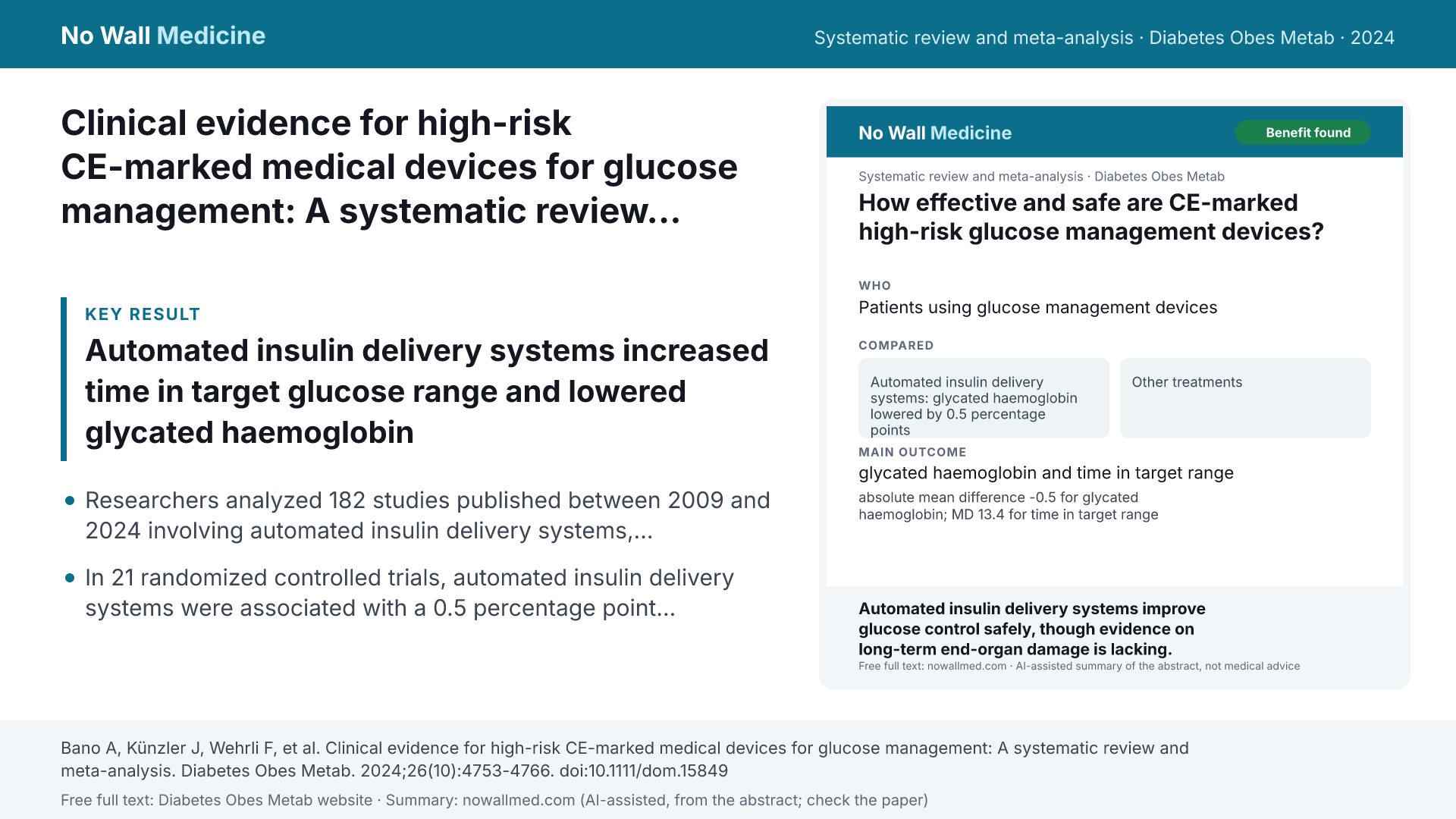
Automated insulin delivery systems increased time in target glucose range and lowered glycated haemoglobin
Clinical evidence for high-risk CE-marked medical devices for glucose management: A systematic review and meta-analysis
Systematic review and meta-analysisBenefit found
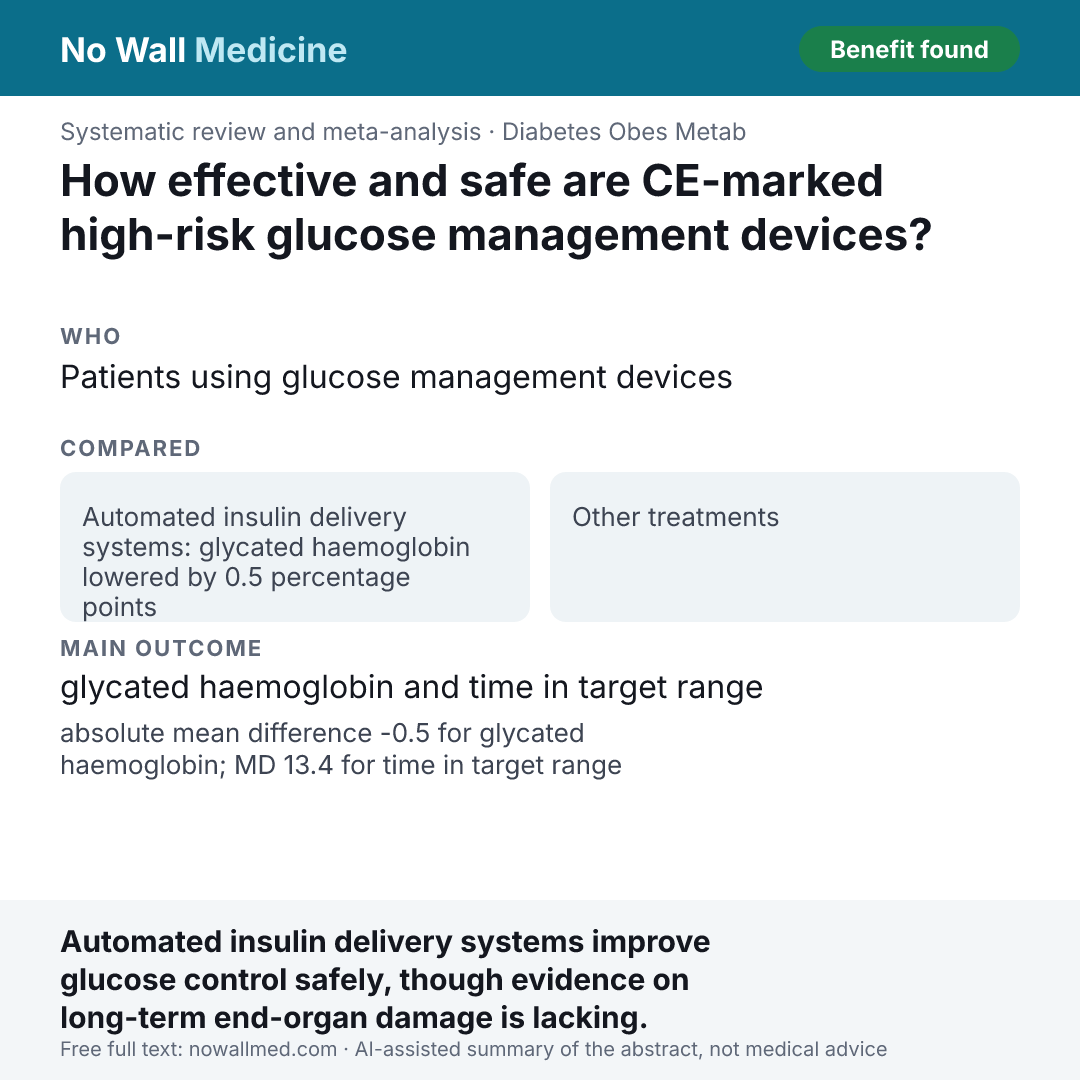
How effective and safe are CE-marked high-risk glucose management devices?
Who
Patients using glucose management devices
Compared
Automated insulin delivery systems: glycated haemoglobin lowered by 0.5 percentage points
Other treatments
Main outcome
glycated haemoglobin and time in target range
Result: absolute mean difference -0.5 for glycated haemoglobin; MD 13.4 for time in target range
Bottom line: Automated insulin delivery systems improve glucose control safely, though evidence on long-term end-organ damage is lacking.
Diabetes Obes Metab · 2024-08-14 · Save PNG
Clinical question: How effective and safe are CE-marked high-risk glucose management devices?
Why it matters: Evidence regarding how these glucose management devices affect diabetes-related damage to organs is lacking due to short study durations.
Key points
- Researchers analyzed 182 studies published between 2009 and 2024 involving automated insulin delivery systems, insulin pumps, and continuous glucose monitoring devices.
- In 21 randomized controlled trials, automated insulin delivery systems were associated with a 0.5 percentage point reduction in glycated haemoglobin.
- In 14 randomized controlled trials, automated insulin delivery systems were associated with a 13.4 percentage point increase in time in target range for sensor glucose levels.
Limitation the authors note: Methodological heterogeneity highlights the need for developing standards for future investigations of diabetes-specific high-risk medical devices.
Headline and key points written with AI from the paper’s abstract, with every number checked against it. Read the paper before relying on them.
Was this summary helpful?
Subject terms
Headline, design, result, key points, caveat and citation as plain text.
Cite this article
Bano A, Künzler J, Wehrli F, et al. Clinical evidence for high-risk CE-marked medical devices for glucose management: A systematic review and meta-analysis. Diabetes Obes Metab. 2024;26(10):4753-4766. doi:10.1111/dom.15849
Spotted a mistake? Suggest a correction