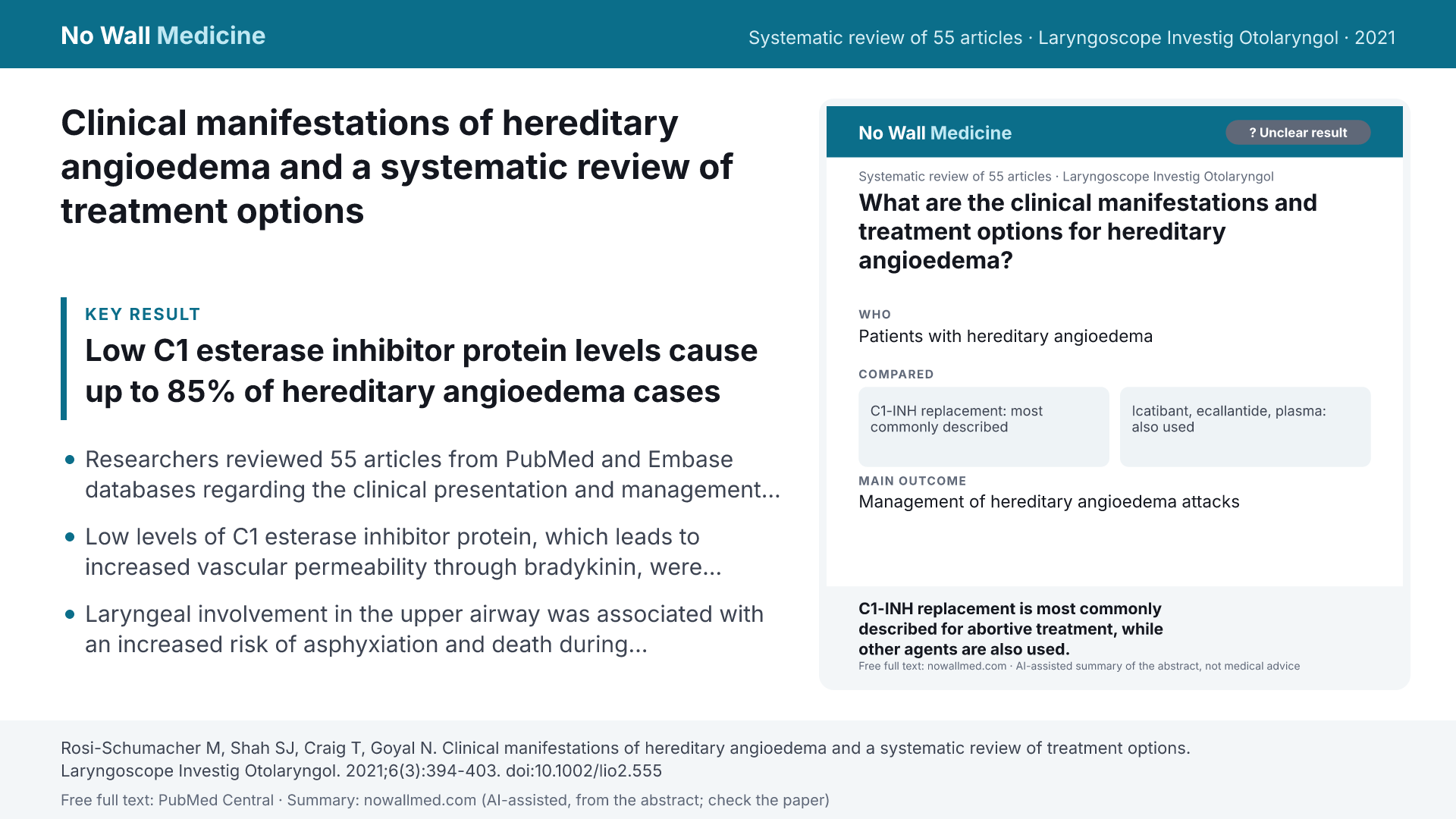
Low C1 esterase inhibitor protein levels cause up to 85% of hereditary angioedema cases
Clinical manifestations of hereditary angioedema and a systematic review of treatment options
Systematic review of 55 articlesUnclear result
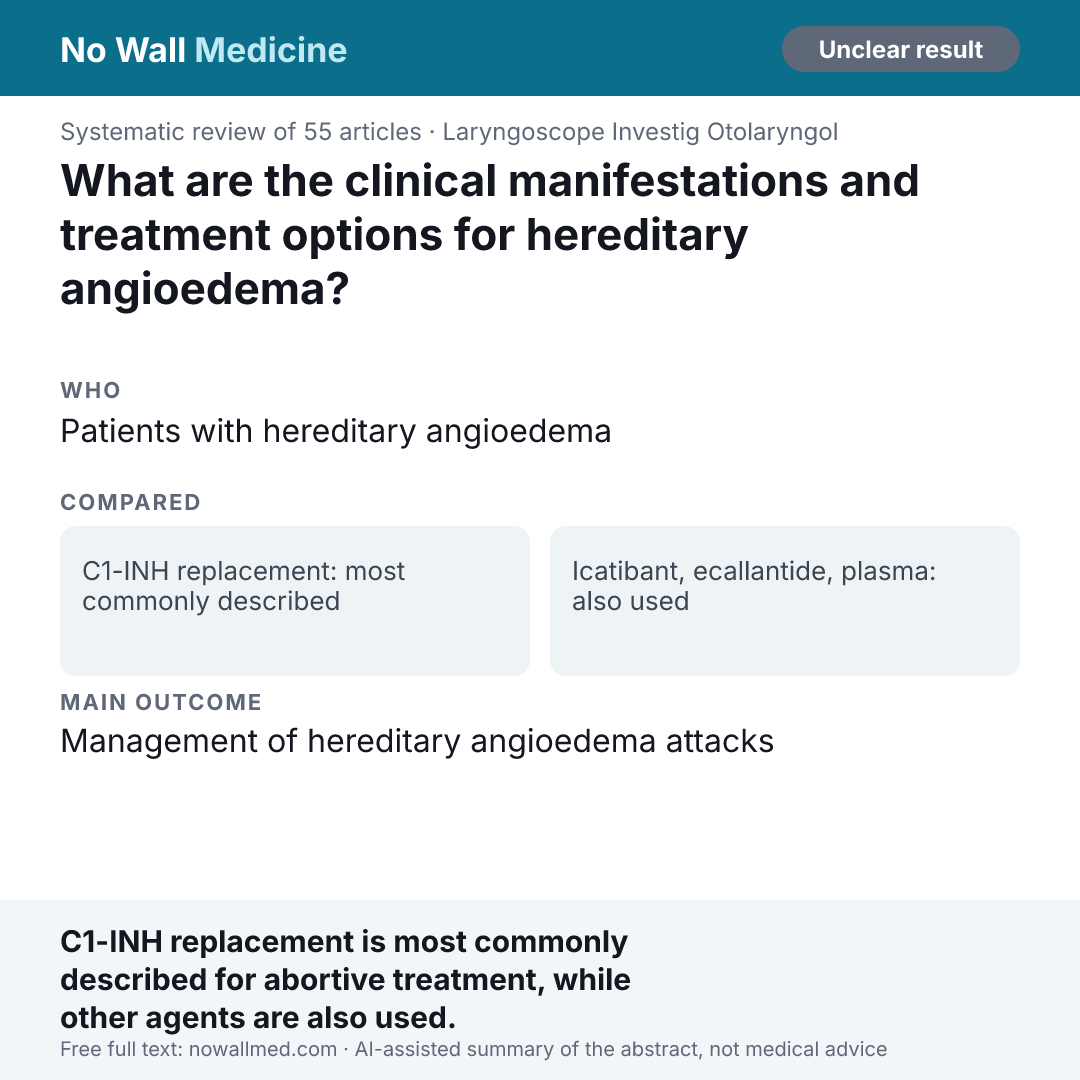
What are the clinical manifestations and treatment options for hereditary angioedema?
Who
Patients with hereditary angioedema
Compared
C1-INH replacement: most commonly described
Icatibant, ecallantide, plasma: also used
Main outcome
Management of hereditary angioedema attacks
Bottom line: C1-INH replacement is most commonly described for abortive treatment, while other agents are also used.
Laryngoscope Investig Otolaryngol · 2021-04-03 · Save PNG
Clinical question: What are the clinical manifestations and treatment options for hereditary angioedema?
Why it matters: The clinical presentation and specific therapies for managing hereditary angioedema required an updated systematic review.
Key points
- Researchers reviewed 55 articles from PubMed and Embase databases regarding the clinical presentation and management of hereditary angioedema.
- Low levels of C1 esterase inhibitor protein, which leads to increased vascular permeability through bradykinin, were found in up to 85% of cases.
- Laryngeal involvement in the upper airway was associated with an increased risk of asphyxiation and death during acute attacks.
Headline and key points written with AI from the paper’s abstract, with every number checked against it. Read the paper before relying on them.
Was this summary helpful?
Headline, design, result, key points, caveat and citation as plain text.
Cite this article
Rosi-Schumacher M, Shah SJ, Craig T, Goyal N. Clinical manifestations of hereditary angioedema and a systematic review of treatment options. Laryngoscope Investig Otolaryngol. 2021;6(3):394-403. doi:10.1002/lio2.555
Spotted a mistake? Suggest a correction