Clinical Outcomes with Transoral and External Surgical Approaches for Resection of Parapharyngeal Space Tumors: Systematic Review and Meta-Analysis
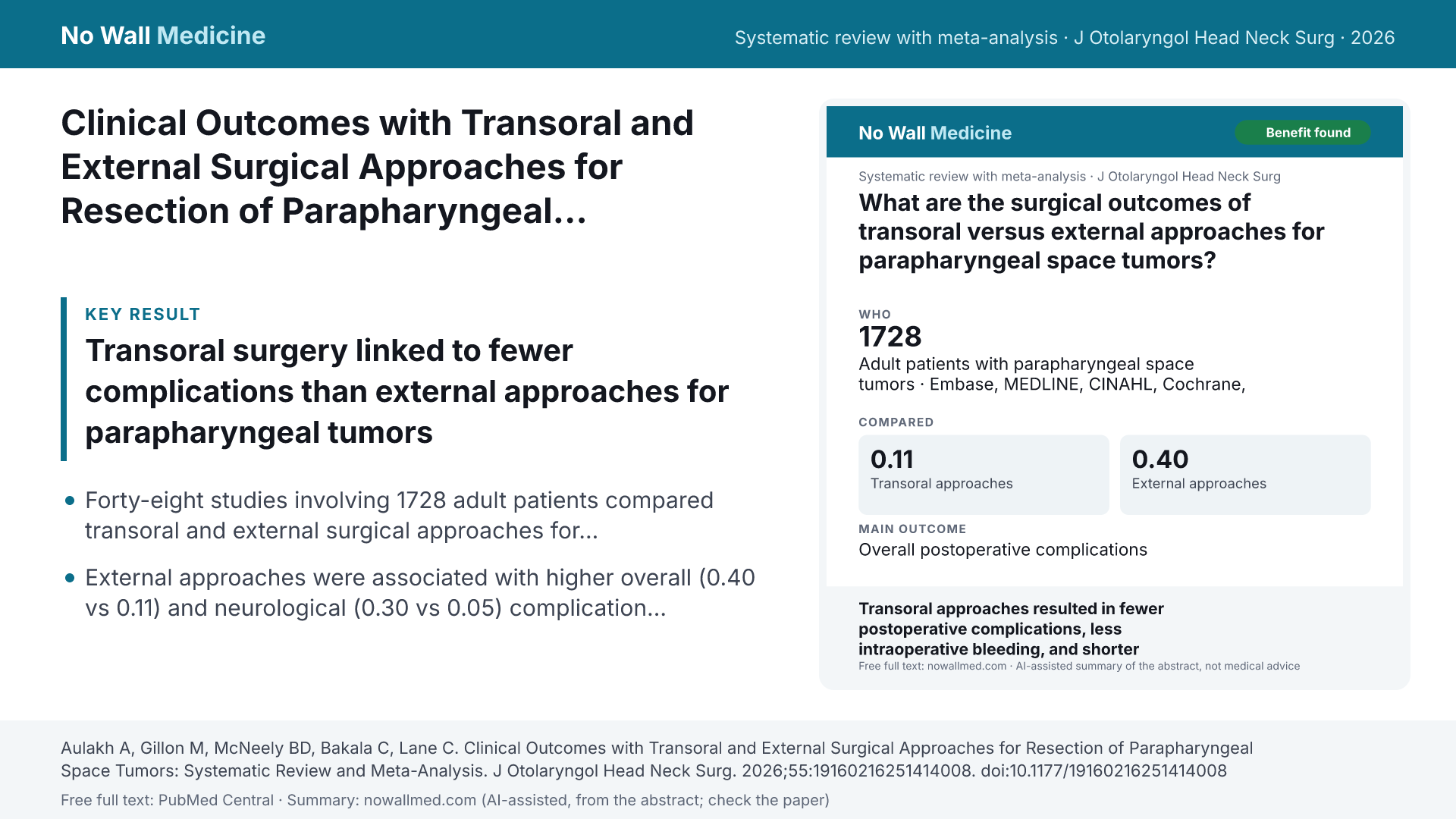
Key result: Transoral surgery linked to fewer complications than external approaches for parapharyngeal tumors
Key points
- Forty-eight studies involving 1728 adult patients compared transoral and external surgical approaches for parapharyngeal space tumors.
- External approaches were associated with higher overall (0.40 vs 0.11) and neurological (0.30 vs 0.05) complication rates than transoral approaches.
- Transoral approaches were associated with lower intraoperative blood loss (MD: -104.30 mL) and shorter hospitalization (MD: -1.70 days).
Why it matters: Few studies compare the various surgical approaches for resecting parapharyngeal space tumors, leaving uncertainty about which method yields better outcomes.
Discussion prompts
- Would these patients look like yours? Who was left out?
- Is the main outcome one that matters to patients?
- Is the difference large enough to change what you do?
Cite: Aulakh A, Gillon M, McNeely BD, Bakala C, Lane C. Clinical Outcomes with Transoral and External Surgical Approaches for Resection of Parapharyngeal Space Tumors: Systematic Review and Meta-Analysis. J Otolaryngol Head Neck Surg. 2026;55:19160216251414008. doi:10.1177/19160216251414008
Free full text: PubMed Central · Summary and visual abstract: nowallmed.com/a/clinical-outcomes-with-transoral-and-external-surgical-approaches-for-ujfysm/ (AI-assisted from the abstract; check the paper before relying on it).