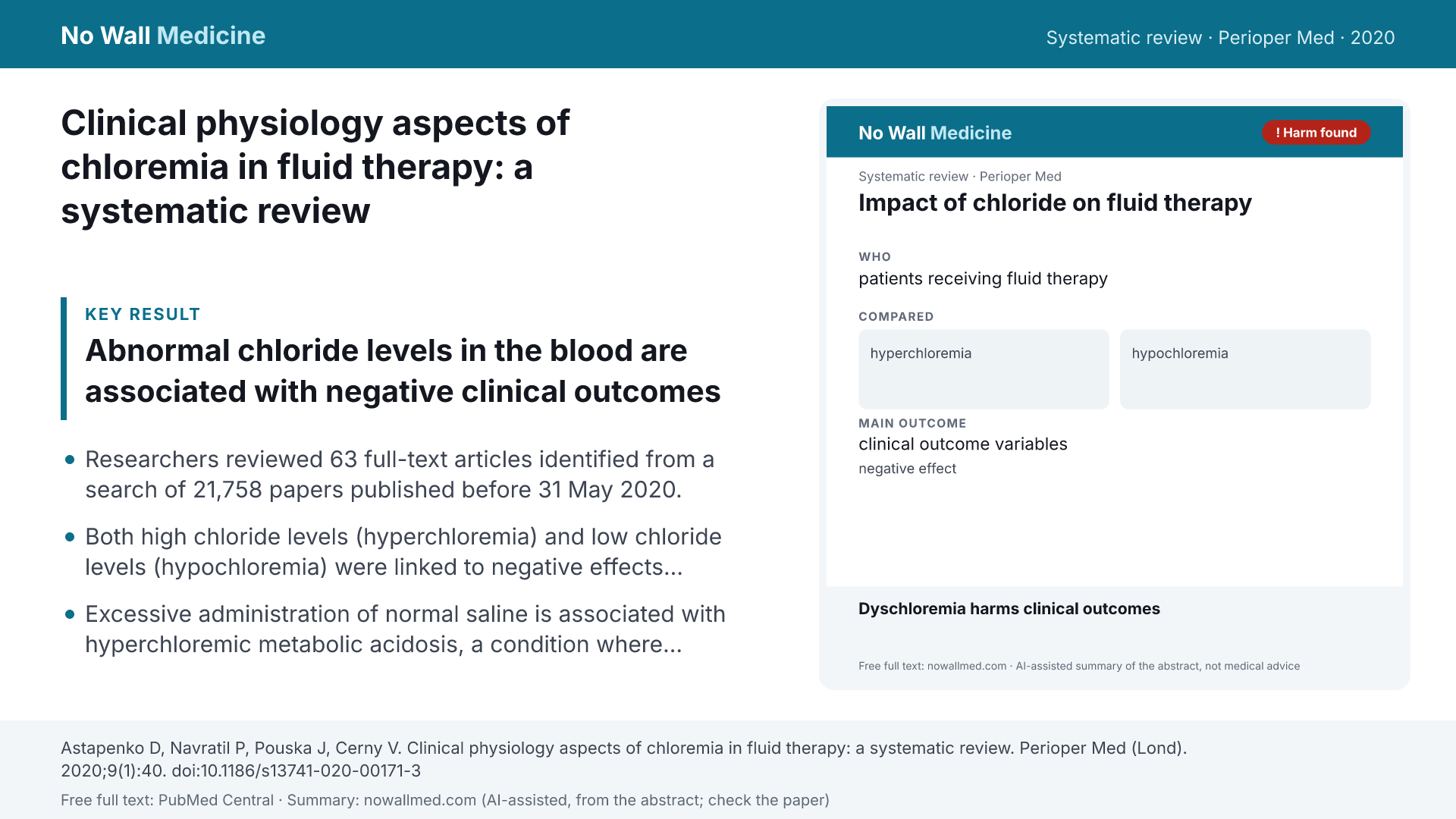
Abnormal chloride levels in the blood are associated with negative clinical outcomes
Clinical physiology aspects of chloremia in fluid therapy: a systematic review
Systematic reviewHarm found
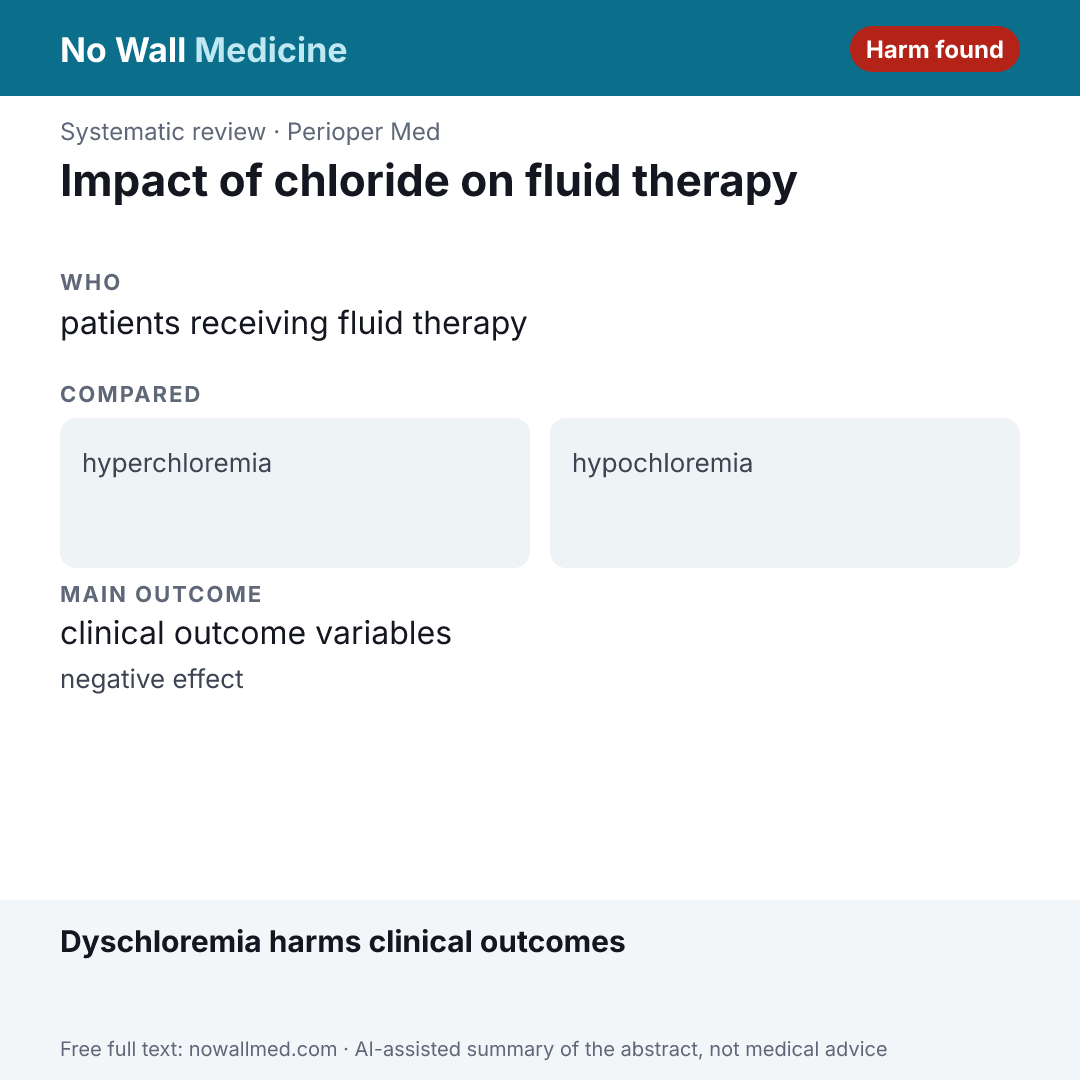
Impact of chloride on fluid therapy
Who
patients receiving fluid therapy
Compared
hyperchloremia
hypochloremia
Main outcome
clinical outcome variables
Result: negative effect
Bottom line: Dyschloremia harms clinical outcomes
Perioper Med · 2020-12-10 · Save PNG
Why it matters: The impact of chloride content in infusion solutions on chloride homeostasis and organ function remains a critical consideration in fluid therapy.
Key points
- Researchers reviewed 63 full-text articles identified from a search of 21,758 papers published before 31 May 2020.
- Both high chloride levels (hyperchloremia) and low chloride levels (hypochloremia) were linked to negative effects on selected clinical outcome variables.
- Excessive administration of normal saline is associated with hyperchloremic metabolic acidosis, a condition where high chloride levels lead to increased acidity in the body.
Headline and key points written with AI from the paper’s abstract, with every number checked against it. Read the paper before relying on them.
Was this summary helpful?
Headline, design, result, key points, caveat and citation as plain text.
Cite this article
Astapenko D, Navratil P, Pouska J, Cerny V. Clinical physiology aspects of chloremia in fluid therapy: a systematic review. Perioper Med (Lond). 2020;9(1):40. doi:10.1186/s13741-020-00171-3
Spotted a mistake? Suggest a correction