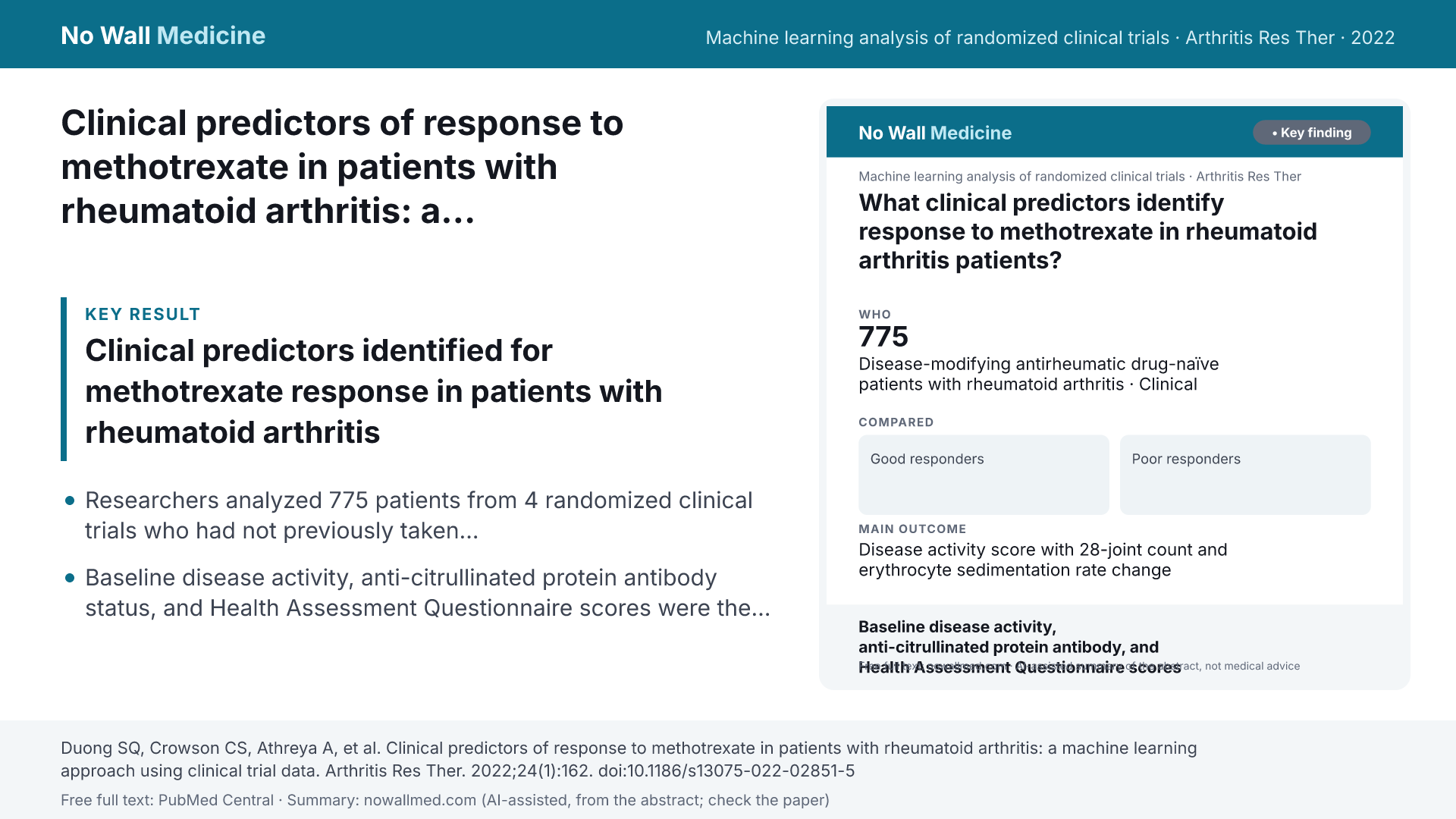
Clinical predictors identified for methotrexate response in patients with rheumatoid arthritis
Clinical predictors of response to methotrexate in patients with rheumatoid arthritis: a machine learning approach using clinical trial data
Machine learning analysis of randomized clinical trialsKey finding
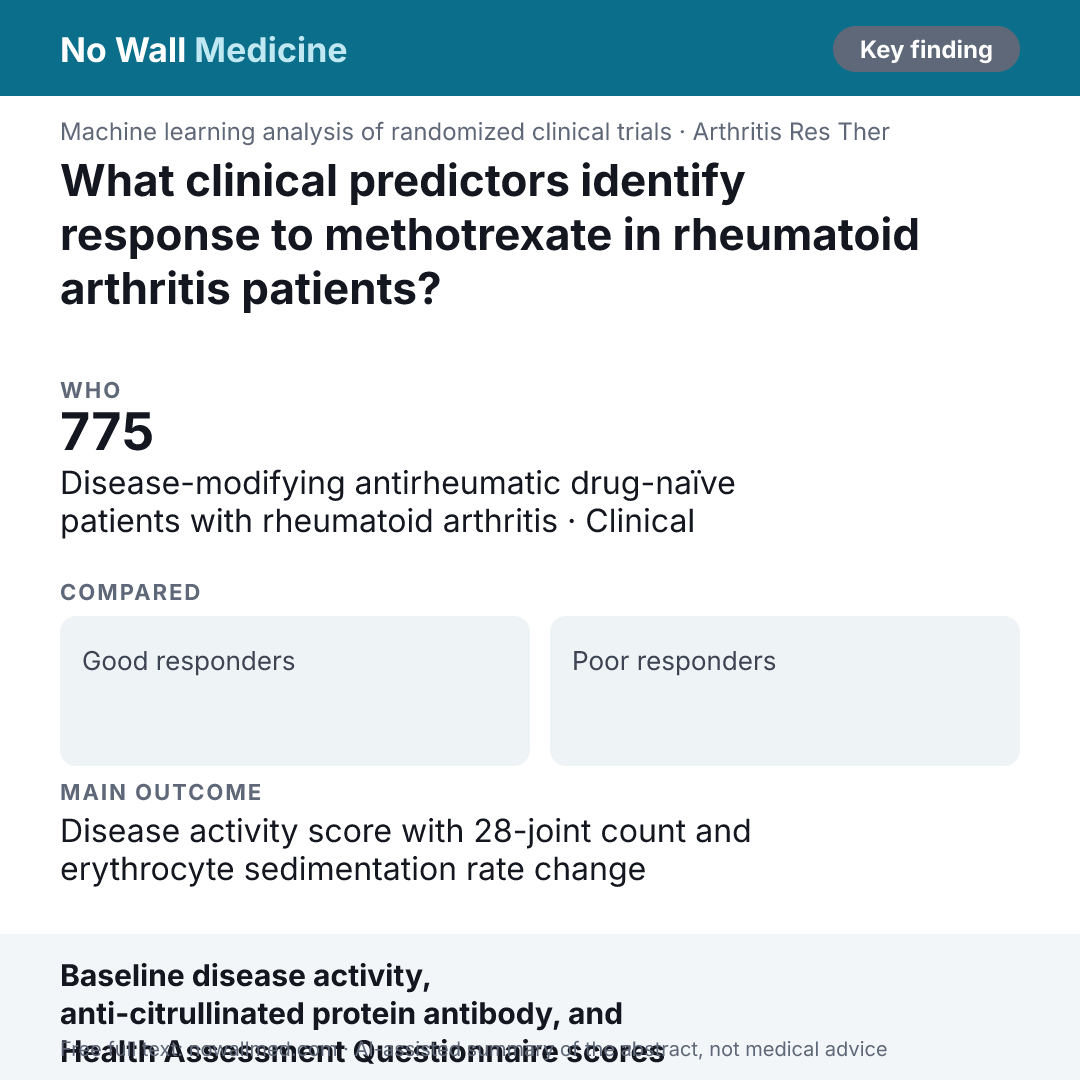
What clinical predictors identify response to methotrexate in rheumatoid arthritis patients?
Who
775
Disease-modifying antirheumatic drug-naïve patients with rheumatoid arthritis · Clinical Study Data Request and Vivli Center
Compared
Good responders
Poor responders
Main outcome
Disease activity score with 28-joint count and erythrocyte sedimentation rate change
Result: LASSO area under the curve 0.79
Bottom line: Baseline disease activity, anti-citrullinated protein antibody, and Health Assessment Questionnaire scores predict methotrexate response.
Arthritis Res Ther · 2022-07-01 · Save PNG
Clinical question: What clinical predictors identify response to methotrexate in rheumatoid arthritis patients?
Why it matters: Clinically useful tools for individualized prediction of how patients with rheumatoid arthritis will respond to methotrexate treatment are lacking.
Key points
- Researchers analyzed 775 patients from 4 randomized clinical trials who had not previously taken disease-modifying antirheumatic drugs.
- Baseline disease activity, anti-citrullinated protein antibody status, and Health Assessment Questionnaire scores were the top predictors of good response.
- A disease activity score of 7.4 or less, being positive for anti-citrullinated protein antibody, and a Health Assessment Questionnaire score of 2 or less provided the highest likelihood of response.
Headline and key points written with AI from the paper’s abstract, with every number checked against it. Read the paper before relying on them.
Was this summary helpful?
Subject terms
Headline, design, result, key points, caveat and citation as plain text.
Cite this article
Duong SQ, Crowson CS, Athreya A, et al. Clinical predictors of response to methotrexate in patients with rheumatoid arthritis: a machine learning approach using clinical trial data. Arthritis Res Ther. 2022;24(1):162. doi:10.1186/s13075-022-02851-5
Spotted a mistake? Suggest a correction