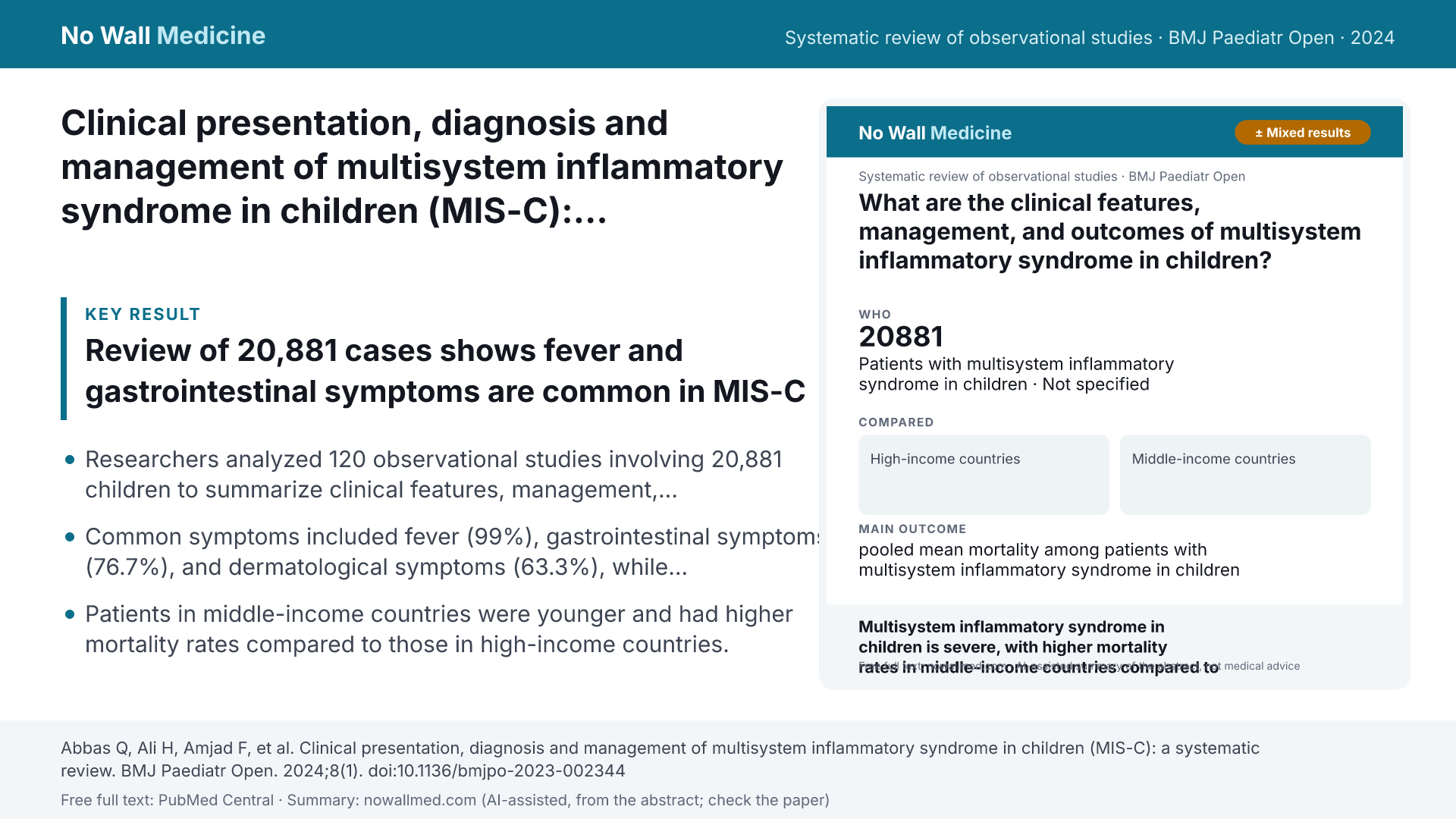
Review of 20,881 cases shows fever and gastrointestinal symptoms are common in MIS-C
Clinical presentation, diagnosis and management of multisystem inflammatory syndrome in children (MIS-C): a systematic review
Systematic review of observational studiesMixed results
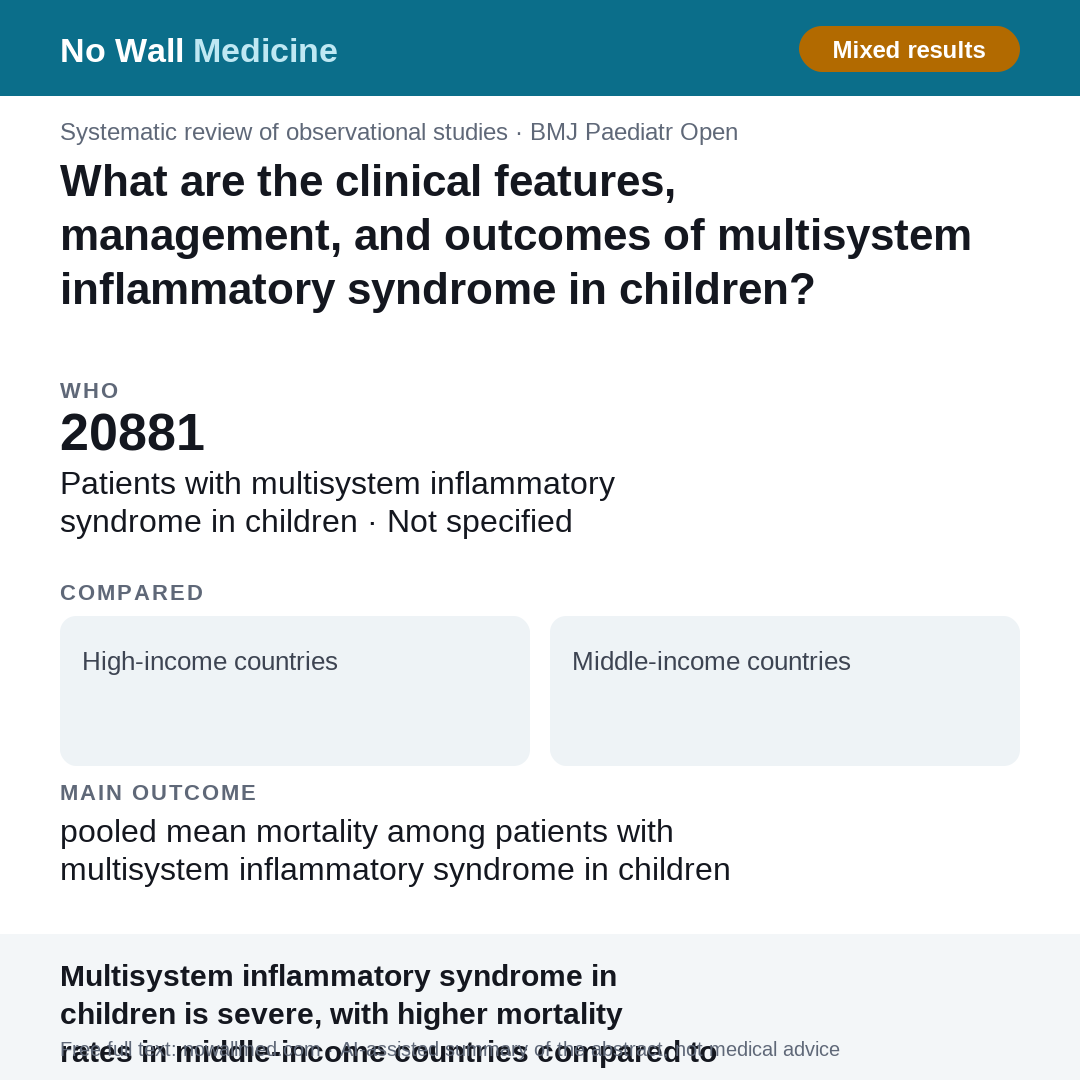
What are the clinical features, management, and outcomes of multisystem inflammatory syndrome in children?
Who
20881
Patients with multisystem inflammatory syndrome in children · Not specified
Compared
High-income countries
Middle-income countries
Main outcome
pooled mean mortality among patients with multisystem inflammatory syndrome in children
Result: 3.9% (95% CI 2.7% to 5.6%)
Bottom line: Multisystem inflammatory syndrome in children is severe, with higher mortality rates in middle-income countries compared to high-income countries.
Limitation: The review includes observational studies which may have inherent biases.
BMJ Paediatr Open · 2024-06-06Download image
Clinical question: What are the clinical features, management, and outcomes of multisystem inflammatory syndrome in children?
Why it matters: Standardized diagnostic and management protocols for multisystem inflammatory syndrome in children are currently lacking.
Key points
- Researchers analyzed 120 observational studies involving 20,881 children to summarize clinical features, management, and outcomes of multisystem inflammatory syndrome in children.
- Common symptoms included fever (99%), gastrointestinal symptoms (76.7%), and dermatological symptoms (63.3%), while overall mortality was 3.9%.
- Patients in middle-income countries were younger and had higher mortality rates compared to those in high-income countries.
Headline and key points written with AI from the paper’s abstract, with every number checked against it. Read the paper before relying on them.
Was this summary helpful?
Abstract
Background
Knowledge about multisystem inflammatory syndrome in children (MIS-C) is evolving, and evidence-based standardised diagnostic and management protocols are lacking. Our review aims to summarise the clinical and diagnostic features, management strategies and outcomes of MIS-C and evaluate the variances in disease parameters and outcomes between high-income countries (HIC) and middle-income countries (MIC). Methods
We searched four databases from December 2019 to March 2023. Observational studies with a sample size of 10 or more patients were included. Mean and prevalence ratios for various variables were pooled by random effects model using R. A mixed generalised linear model was employed to account for the heterogeneity, and publication bias was assessed via funnel and Doi plots. The primary outcome was pooled mean mortality among patients with MIS-C. Subgroup analysis was conducted based on the income status of the country of study. Results
A total of 120 studies (20 881 cases) were included in the review. The most common clinical presentations were fever (99%; 95% CI 99.6% to 100%), gastrointestinal symptoms (76.7%; 95% CI 73.1% to 79.9%) and dermatological symptoms (63.3%; 95% CI 58.7% to 67.7%). Laboratory investigations suggested raised inflammatory, coagulation and cardiac markers. The most common management strategies were intravenous immunoglobulins (87.5%; 95% CI 82.9% to 91%) and steroids (74.7%; 95% CI 68.7% to 79.9%). Around 53.1% (95% CI 47.3% to 58.9%) required paediatric intensive care unit admissions, and overall mortality was 3.9% (95% CI 2.7% to 5.6%). Patients in MIC were younger, had a higher frequency of respiratory distress and evidence of cardiac dysfunction, with a longer hospital and intensive care unit stay and had a higher mortality rate than patients in HIC. Conclusion
MIS-C is a severe multisystem disease with better mortality outcomes in HIC as compared with MIC. The findings emphasise the need for standardised protocols and further research to optimise patient care and address disparities between HIC and MIC. Prospero registration number
CRD42020195823.
Abstract reproduced under the article’s CC BY NC licence.
Subject terms
Cite this article
Abbas Q, Ali H, Amjad F, Hussain MZH, Rahman AR, Khan MH. Clinical presentation, diagnosis and management of multisystem inflammatory syndrome in children (MIS-C): a systematic review. BMJ Paediatr Open. 2024. doi:10.1136/bmjpo-2023-002344
Spotted a mistake? Suggest a correction
Top studies every Monday
The week’s key trials and guidelines in your specialties, plus any topics you follow. By email, free.
Get the weekly digest