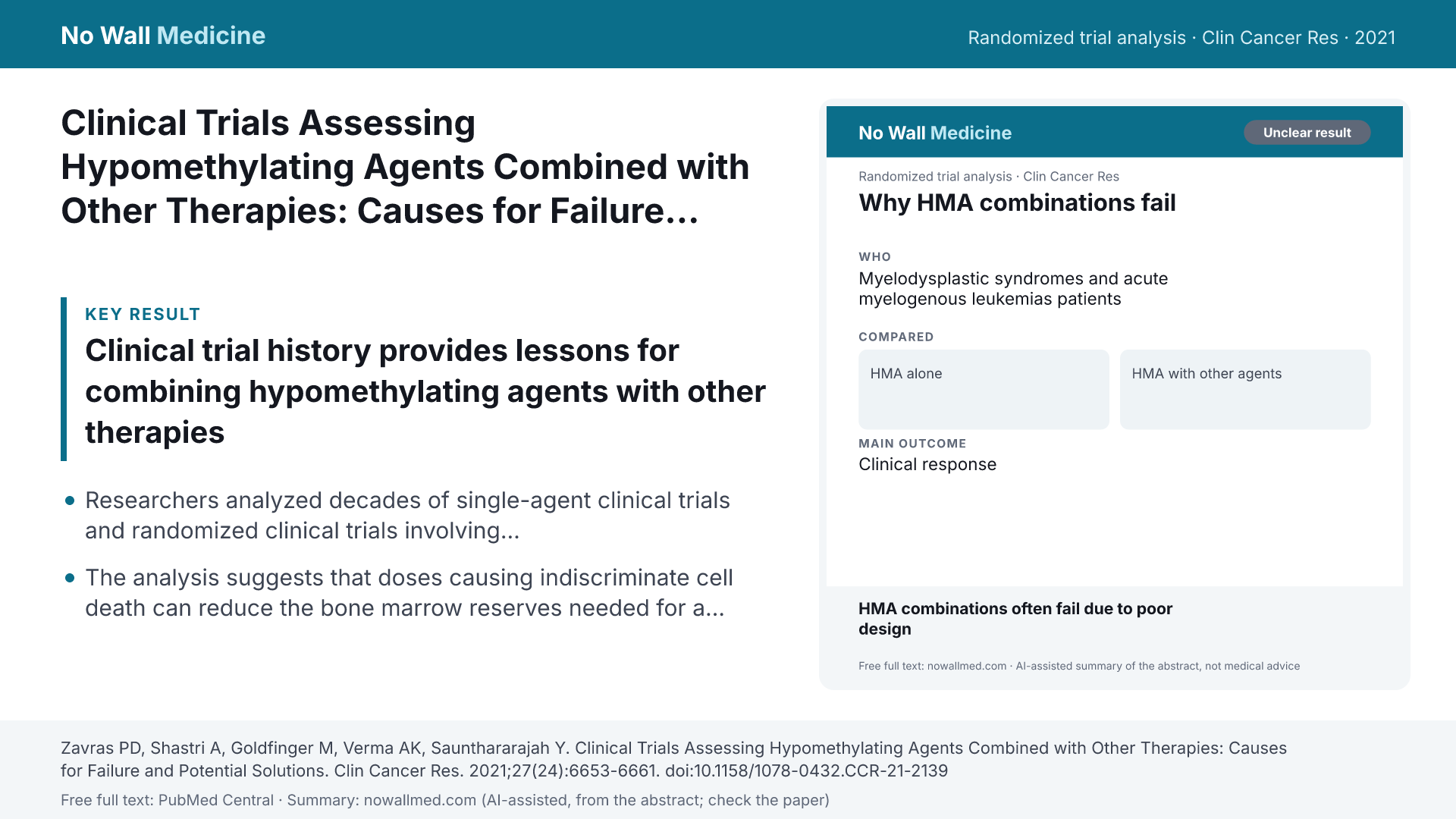
Clinical Trials Assessing Hypomethylating Agents Combined with Other Therapies: Causes for Failure and Potential Solutions
Key result: Clinical trial history provides lessons for combining hypomethylating agents with other therapies
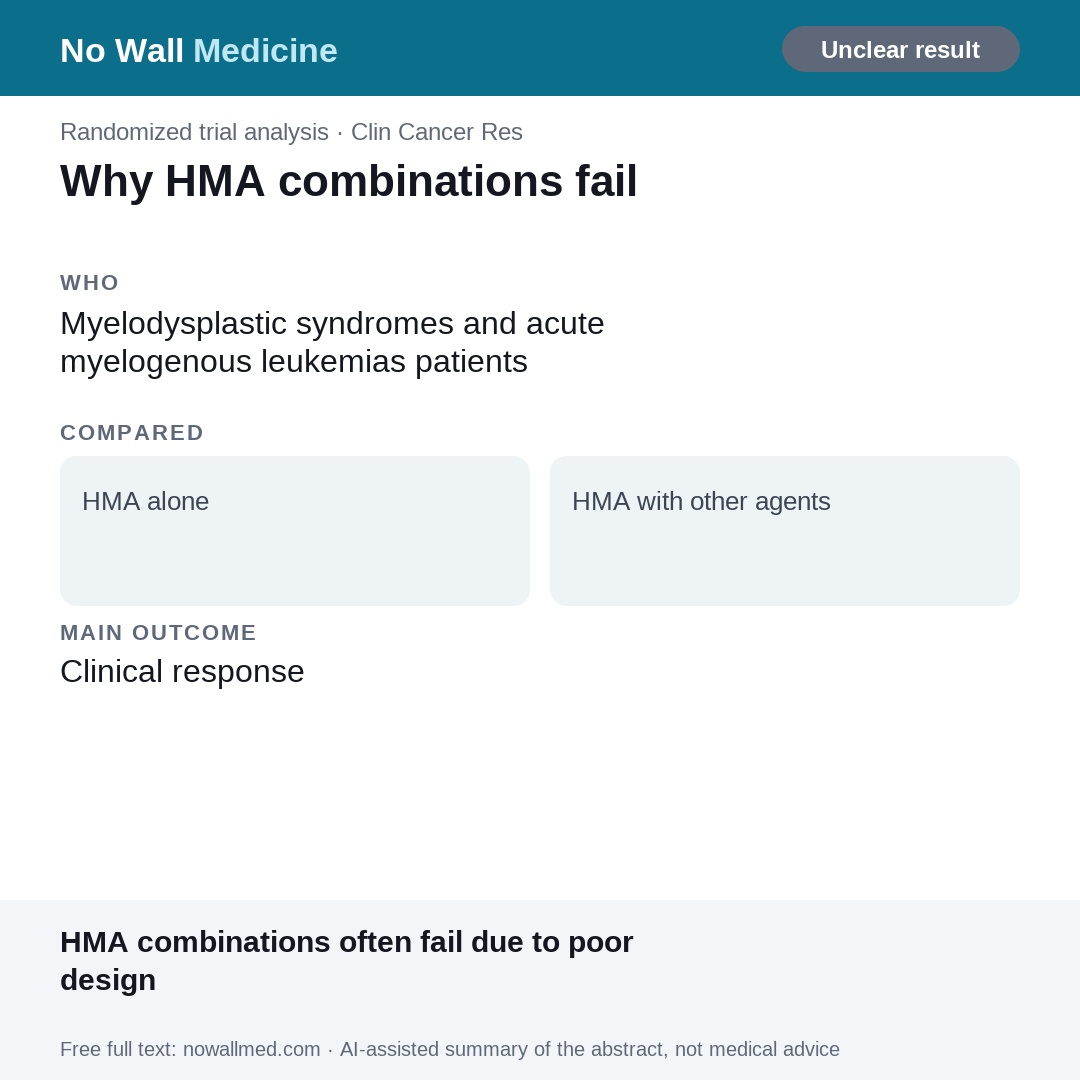
Randomized trial analysisUnclear result
Why HMA combinations fail
Who
Myelodysplastic syndromes and acute myelogenous leukemias patients
Compared
HMA alone
HMA with other agents
Main outcome
Clinical response
Bottom line: HMA combinations often fail due to poor design
Clin Cancer Res · 2021-09-22Download image
Key points
- Researchers analyzed decades of single-agent clinical trials and randomized clinical trials involving hypomethylating agents, which are drugs that inhibit DNA methyltransferase 1.
- The analysis suggests that doses causing indiscriminate cell death can reduce the bone marrow reserves needed for a clinical response.
- Concurrent use of drugs that stop cell growth can interfere with the way these agents target specific enzymes during the S-phase of the cell cycle.
Why it matters: Many attempts to combine hypomethylating agents with other investigational drugs have failed in randomized clinical trials.
Discussion prompts
- Would these patients look like yours? Who was left out?
- Is the main outcome one that matters to patients?
- Is the difference large enough to change what you do?
Cite: Zavras PD, Shastri A, Goldfinger M, Verma AK, Saunthararajah Y. Clinical Trials Assessing Hypomethylating Agents Combined with Other Therapies: Causes for Failure and Potential Solutions. Clin Cancer Res. 2021. doi:10.1158/1078-0432.CCR-21-2139
Free full text: PubMed Central · Summary and visual abstract: nowallmed.com/a/clinical-trials-assessing-hypomethylating-agents-combined-with-other-ed3578/ (AI-assisted from the abstract; check the paper before relying on it).