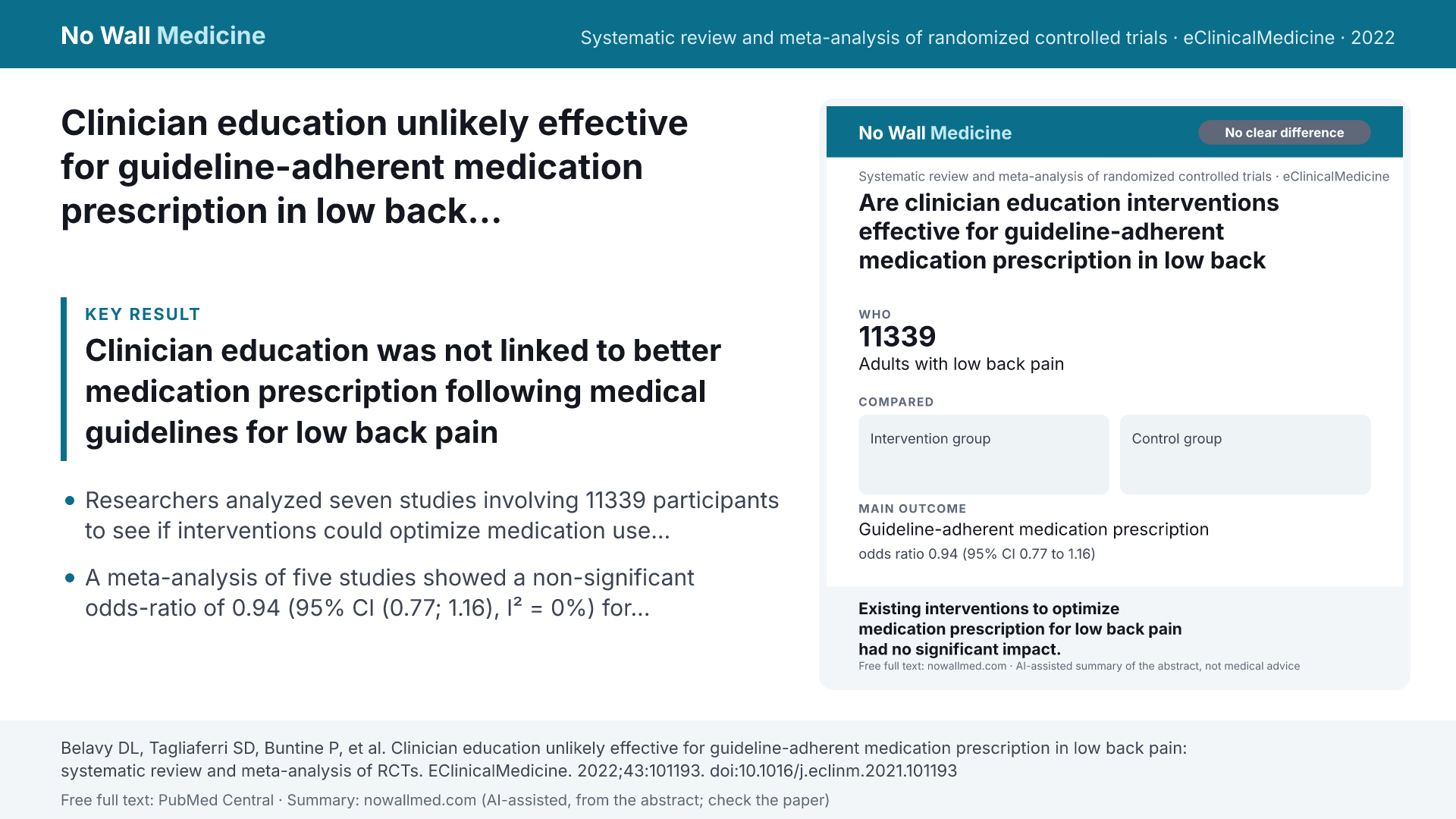
Clinician education unlikely effective for guideline-adherent medication prescription in low back pain: systematic review and meta-analysis of RCTs
Key result: Clinician education was not linked to better medication prescription following medical guidelines for low back pain
Key points
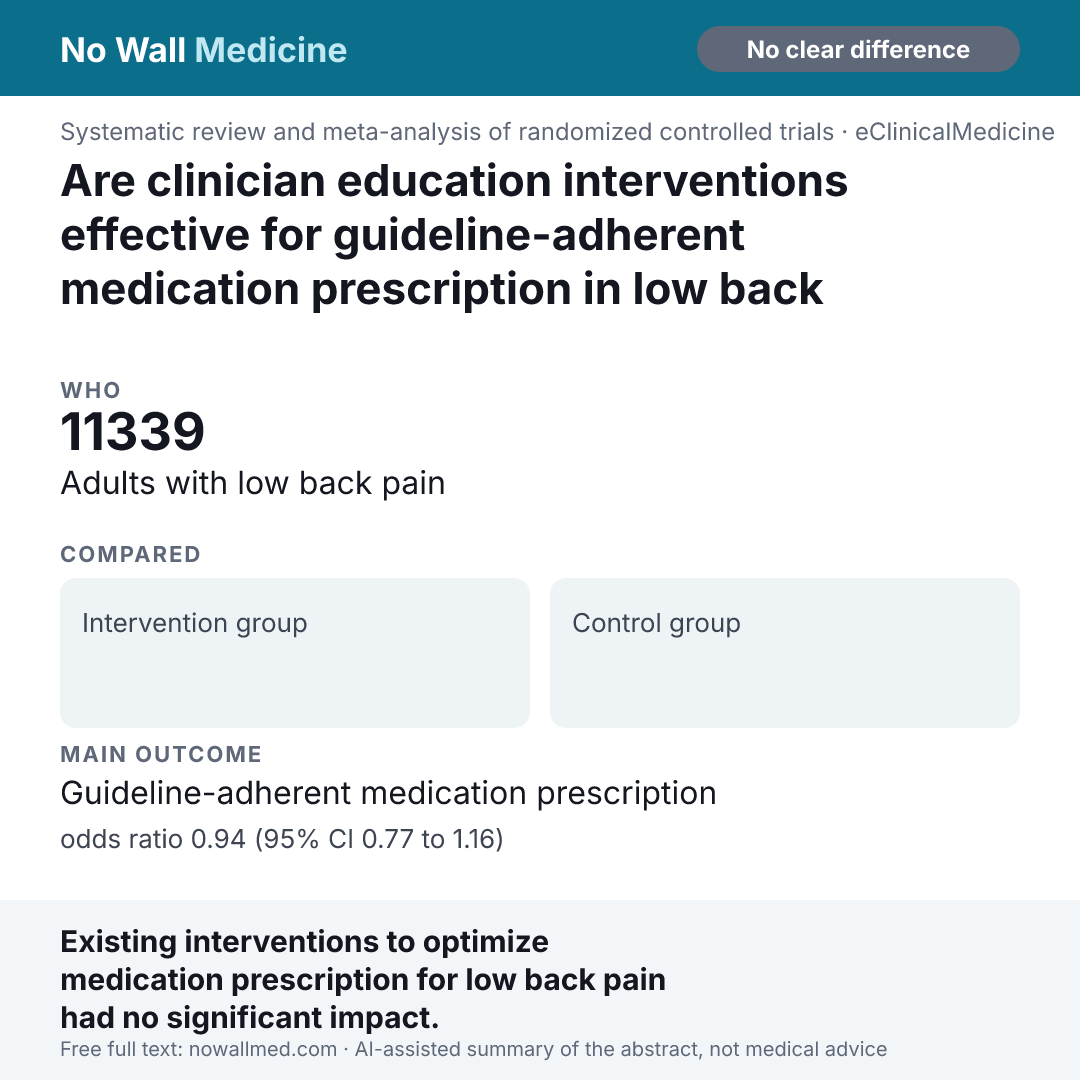
- Researchers analyzed seven studies involving 11339 participants to see if interventions could optimize medication use for adults with low back pain.
- A meta-analysis of five studies showed a non-significant odds-ratio of 0.94 (95% CI (0.77; 1.16), I² = 0%) for the intervention group.
- The included interventions consisted of clinician education, audit and feedback, or changes to medical record systems.
Why it matters: It is not well established how effective interventions are at optimizing medical prescriptions that follow recommended guidelines for low back pain.
Limitation the authors note: The authors stated there is low quality evidence based on the included studies.
Discussion prompts
- Would these patients look like yours? Who was left out?
- Is the main outcome one that matters to patients?
- Is the difference large enough to change what you do?
Cite: Belavy DL, Tagliaferri SD, Buntine P, et al. Clinician education unlikely effective for guideline-adherent medication prescription in low back pain: systematic review and meta-analysis of RCTs. eClinicalMedicine. 2022. doi:10.1016/j.eclinm.2021.101193
Free full text: PubMed Central · Summary and visual abstract: nowallmed.com/a/clinician-education-unlikely-effective-for-guideline-adherent-xtp0a9/ (AI-assisted from the abstract; check the paper before relying on it).