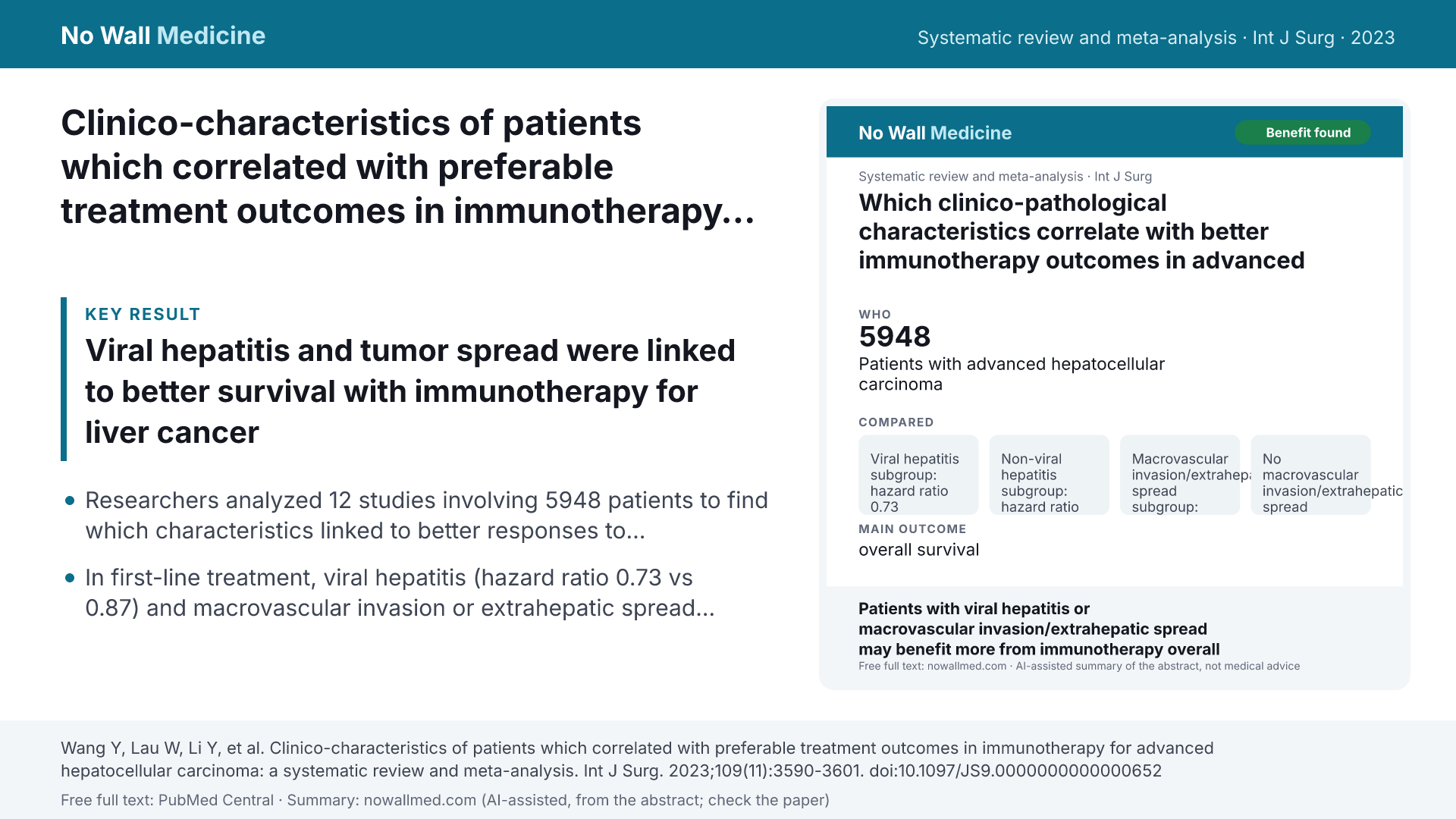
Viral hepatitis and tumor spread were linked to better survival with immunotherapy for liver cancer
Clinico-characteristics of patients which correlated with preferable treatment outcomes in immunotherapy for advanced hepatocellular carcinoma: a systematic review and meta-analysis
Systematic review and meta-analysisBenefit found
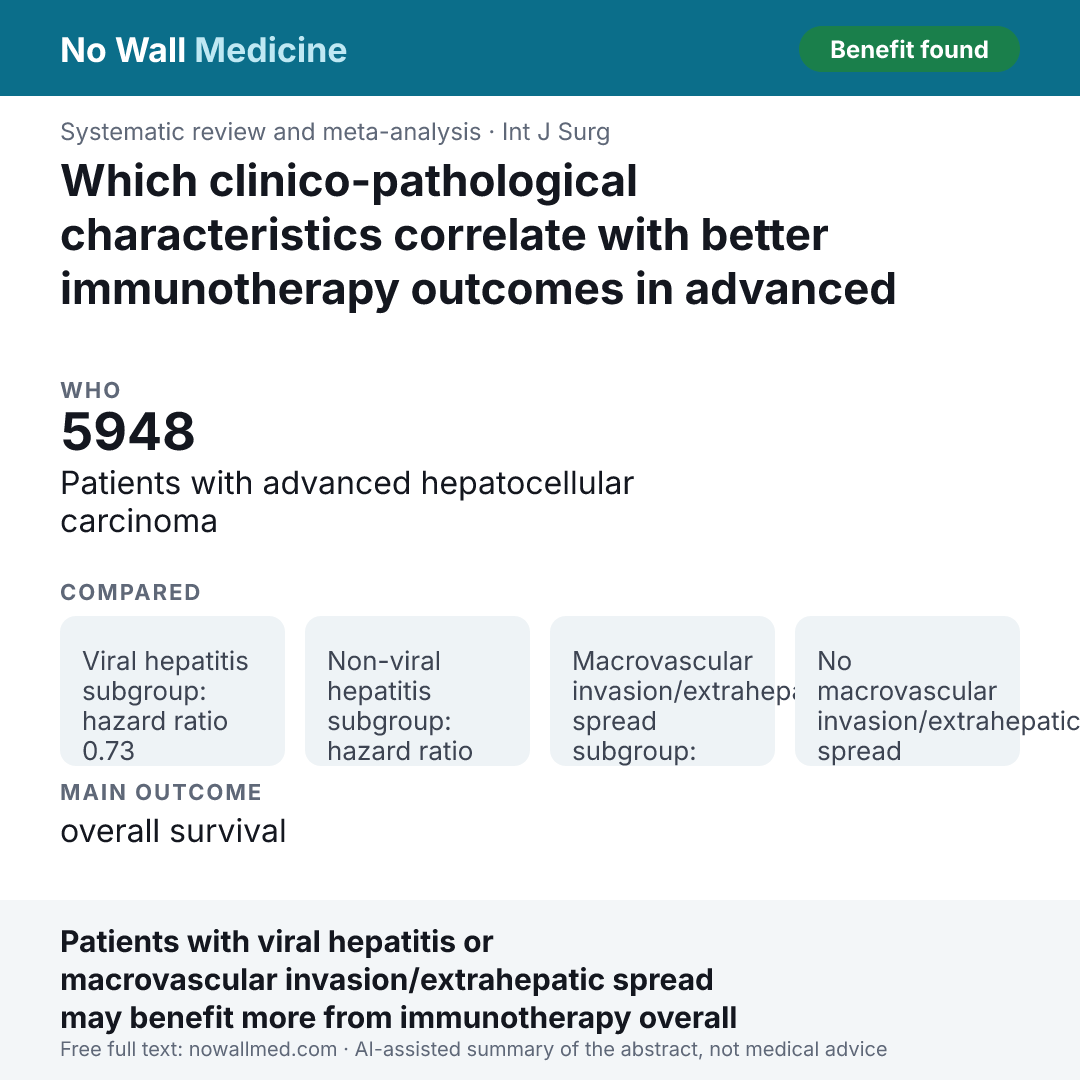
Which clinico-pathological characteristics correlate with better immunotherapy outcomes in advanced hepatocellular carcinoma?
Who
5948
Patients with advanced hepatocellular carcinoma
Compared
Viral hepatitis subgroup: hazard ratio 0.73
Non-viral hepatitis subgroup: hazard ratio 0.87
Macrovascular invasion/extrahepatic spread subgroup: hazard ratio 0.73
No macrovascular invasion/extrahepatic spread subgroup: hazard ratio 0.89
Main outcome
overall survival
Result: hazard ratio 0.73 (P for interaction=0.02)
Bottom line: Patients with viral hepatitis or macrovascular invasion/extrahepatic spread may benefit more from immunotherapy overall survival.
Int J Surg · 2023-11-01 · Save PNG
Clinical question: Which clinico-pathological characteristics correlate with better immunotherapy outcomes in advanced hepatocellular carcinoma?
Key points
- Researchers analyzed 12 studies involving 5948 patients to find which characteristics linked to better responses to immune checkpoint inhibitors for advanced liver cancer.
- In first-line treatment, viral hepatitis (hazard ratio 0.73 vs 0.87) and macrovascular invasion or extrahepatic spread (hazard ratio 0.73 vs 0.89) were linked to better overall survival.
- Programmed death-1 inhibitors may have a higher probability of causing treatment-related adverse events, such as diarrhea, hypertension, and increased aspartate aminotransferase, compared to programmed cell death-ligand 1 inhibitors.
Headline and key points written with AI from the paper’s abstract, with every number checked against it. Read the paper before relying on them.
Was this summary helpful?
Subject terms
Headline, design, result, key points, caveat and citation as plain text.
Cite this article
Wang Y, Lau W, Li Y, et al. Clinico-characteristics of patients which correlated with preferable treatment outcomes in immunotherapy for advanced hepatocellular carcinoma: a systematic review and meta-analysis. Int J Surg. 2023;109(11):3590-3601. doi:10.1097/JS9.0000000000000652
Spotted a mistake? Suggest a correction