Clinicopathological and prognostic value of calcification morphology descriptors in ductal carcinoma in situ of the breast: a systematic review and meta-analysis
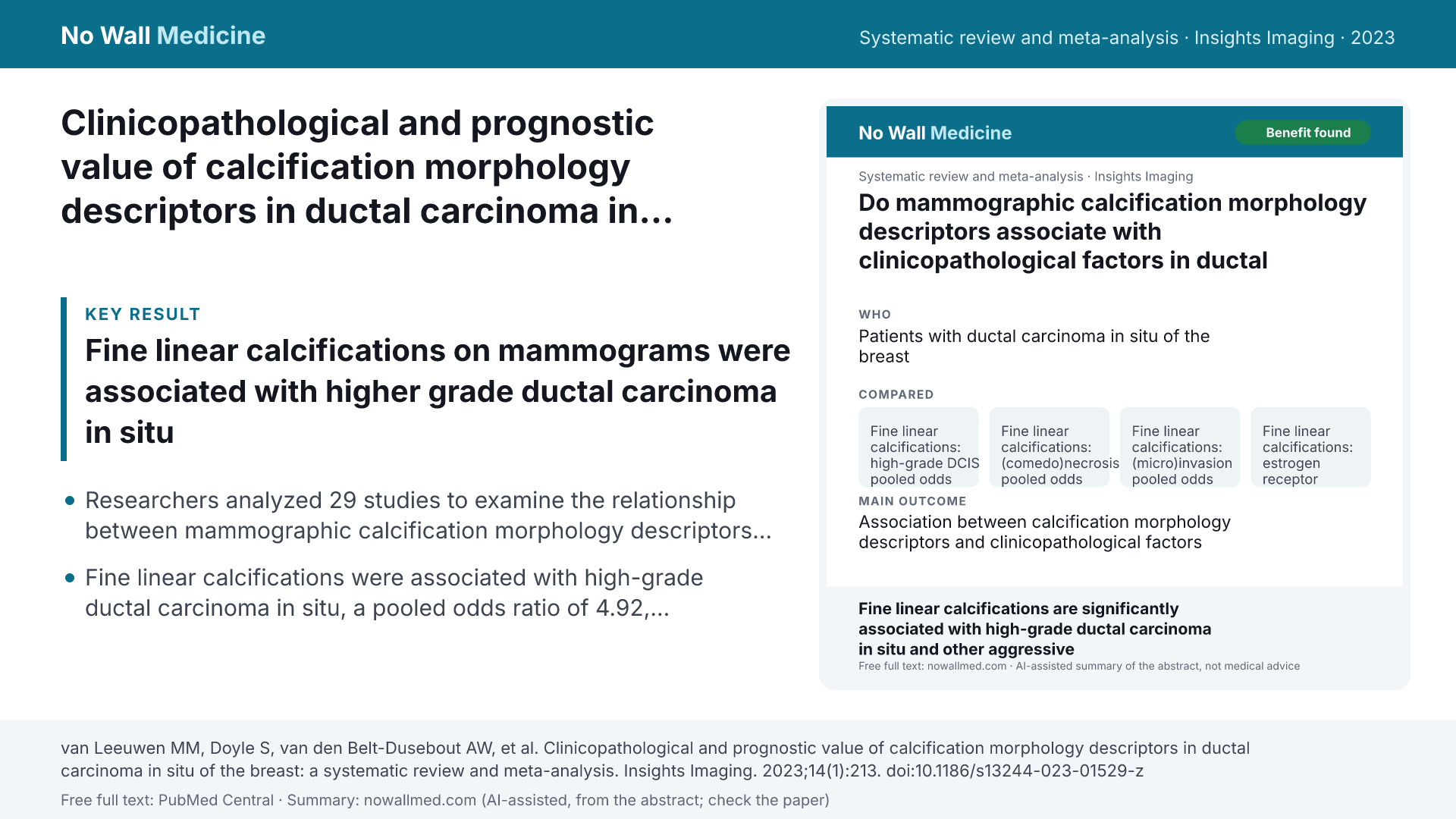
Key result: Fine linear calcifications on mammograms were associated with higher grade ductal carcinoma in situ
Key points
- Researchers analyzed 29 studies to examine the relationship between mammographic calcification morphology descriptors and 17 clinicopathological factors in breast cancer.
- Fine linear calcifications were associated with high-grade ductal carcinoma in situ, a pooled odds ratio of 4.92, comedo necrosis, and microinvasion.
- Fine linear calcifications were also associated with a negative relationship to estrogen receptor positivity, with a pooled odds ratio of 0.33.
Limitation the authors note: The overall risk of bias was high, primarily due to small and inadequately described study populations.
Discussion prompts
- Would these patients look like yours? Who was left out?
- Is the main outcome one that matters to patients?
- Is the difference large enough to change what you do?
Cite: van Leeuwen MM, Doyle S, van den Belt-Dusebout AW, et al. Clinicopathological and prognostic value of calcification morphology descriptors in ductal carcinoma in situ of the breast: a systematic review and meta-analysis. Insights Imaging. 2023;14(1):213. doi:10.1186/s13244-023-01529-z
Free full text: PubMed Central · Summary and visual abstract: nowallmed.com/a/clinicopathological-and-prognostic-value-of-calcification-morphology-1n6pb95/ (AI-assisted from the abstract; check the paper before relying on it).