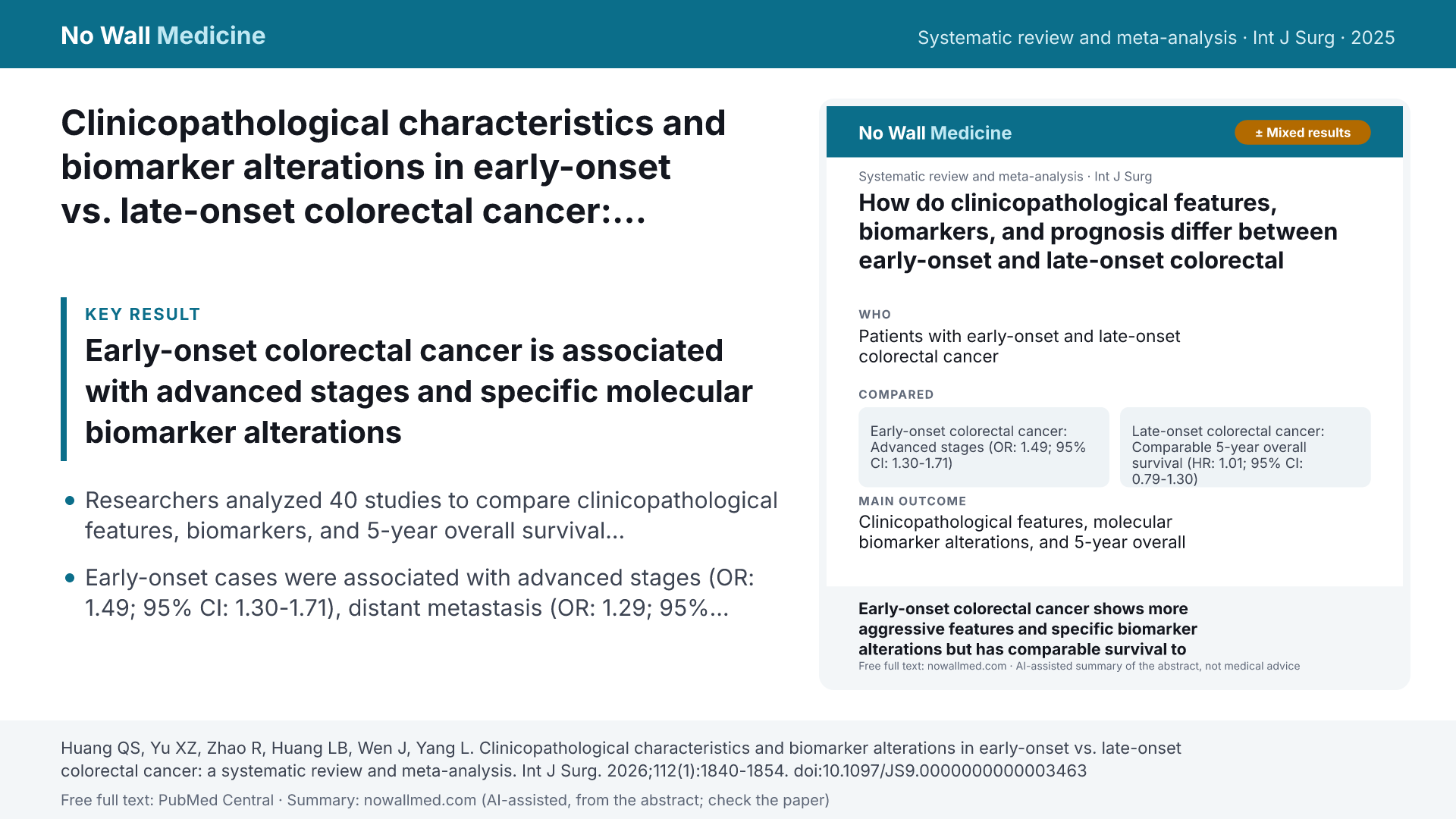
Early-onset colorectal cancer is associated with advanced stages and specific molecular biomarker alterations
Clinicopathological characteristics and biomarker alterations in early-onset vs. late-onset colorectal cancer: a systematic review and meta-analysis
Systematic review and meta-analysisMixed results
How do clinicopathological features, biomarkers, and prognosis differ between early-onset and late-onset colorectal cancer?
Who
Patients with early-onset and late-onset colorectal cancer
Compared
Early-onset colorectal cancer: Advanced stages (OR: 1.49; 95% CI: 1.30-1.71)
Late-onset colorectal cancer: Comparable 5-year overall survival (HR: 1.01; 95% CI: 0.79-1.30)
Main outcome
Clinicopathological features, molecular biomarker alterations, and 5-year overall survival
Result: hazard ratio 1.01 (95% CI 0.79-1.30) for 5-year overall survival
Bottom line: Early-onset colorectal cancer shows more aggressive features and specific biomarker alterations but has comparable survival to late-onset cancer.
Int J Surg · 2025-09-15Download image
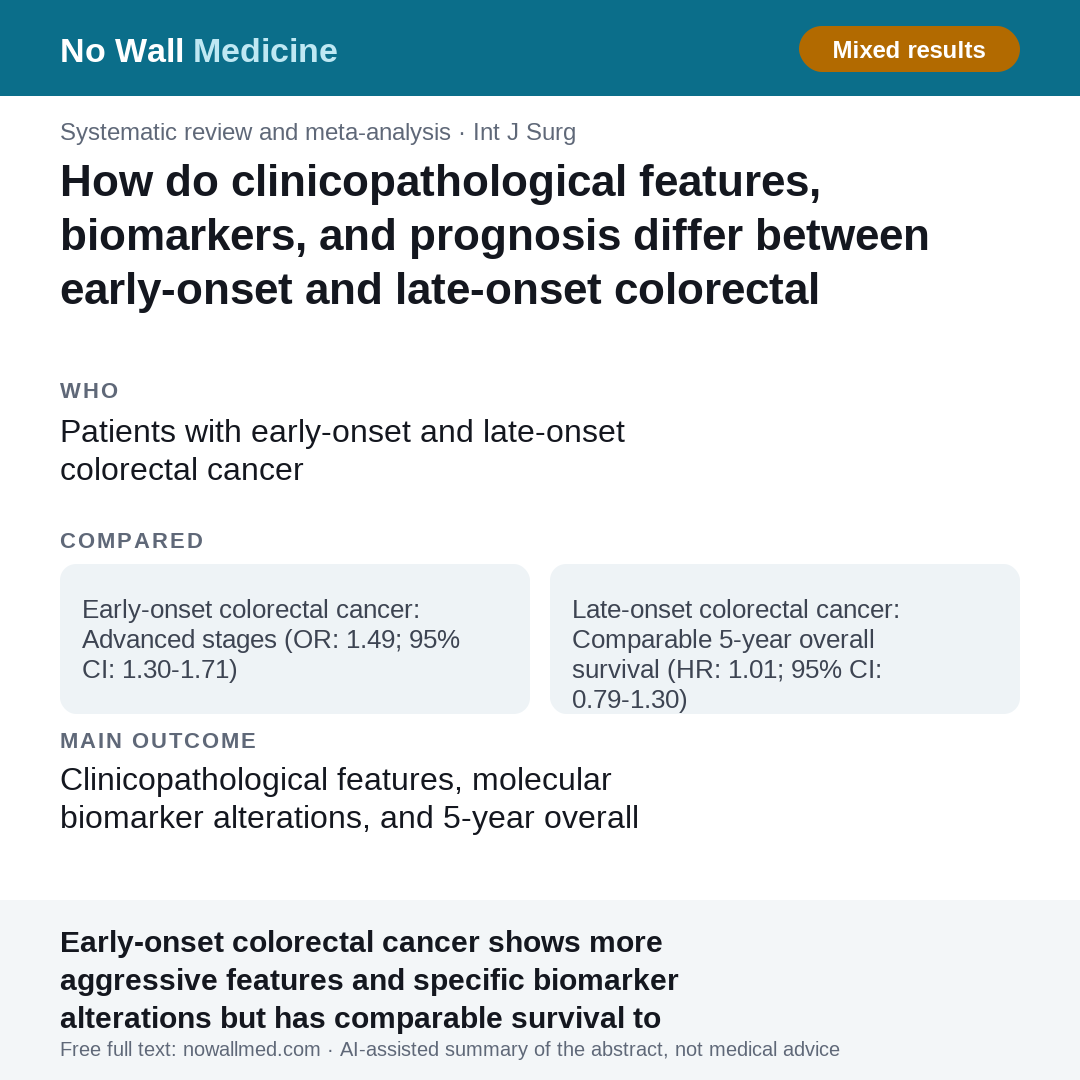
Clinical question: How do clinicopathological features, biomarkers, and prognosis differ between early-onset and late-onset colorectal cancer?
Why it matters: The clinicopathological and molecular characteristics of early-onset colorectal cancer are unclear.
Key points
- Researchers analyzed 40 studies to compare clinicopathological features, biomarkers, and 5-year overall survival between early-onset and late-onset colorectal cancer.
- Early-onset cases were associated with advanced stages (OR: 1.49; 95% CI: 1.30-1.71), distant metastasis (OR: 1.29; 95% CI: 1.04-1.60), and higher TP53 mutation rates (OR: 1.33; 95% CI: 1.13-1.58).
- The 5-year overall survival rates were similar between early-onset and late-onset colorectal cancer (HR: 1.01; 95% CI: 0.79-1.30; P = 0.92).
Headline and key points written with AI from the paper’s abstract, with every number checked against it. Read the paper before relying on them.
Was this summary helpful?
Subject terms
Cite this article
Huang QS, Yu XZ, Zhao R, Huang LB, Wen J, Yang L. Clinicopathological characteristics and biomarker alterations in early-onset vs. late-onset colorectal cancer: a systematic review and meta-analysis. Int J Surg. 2025. doi:10.1097/JS9.0000000000003463
Spotted a mistake? Suggest a correction