Cognitive behavior therapy shows moderate to large effects compared to control conditions for depression
Cognitive behavior therapy vs. control conditions, other psychotherapies, pharmacotherapies and combined treatment for depression: a comprehensive meta-analysis including 409 trials with 52,702 patients
Meta-analysis of 409 trialsBenefit found
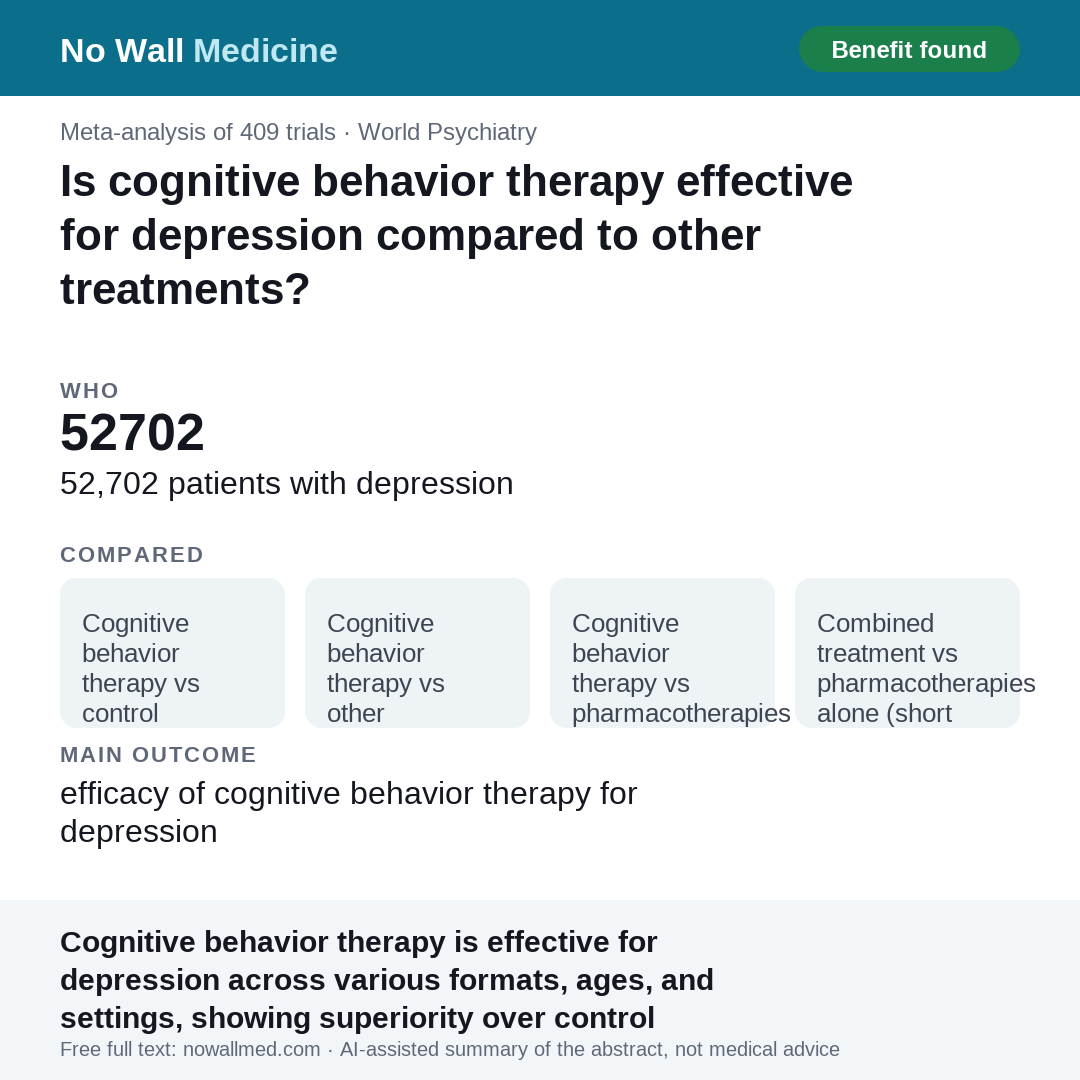
Is cognitive behavior therapy effective for depression compared to other treatments?
Who
52702
52,702 patients with depression
Compared
Cognitive behavior therapy vs control conditions: g=0.79
Cognitive behavior therapy vs other psychotherapies: g=0.06
Cognitive behavior therapy vs pharmacotherapies (6-12 month): g=0.34
Combined treatment vs pharmacotherapies alone (short term): g=0.51
Main outcome
efficacy of cognitive behavior therapy for depression
Result: g=0.79 (95% CI: 0.70-0.89) vs control
Bottom line: Cognitive behavior therapy is effective for depression across various formats, ages, and settings, showing superiority over control conditions.
Limitation: The difference between cognitive behavior therapy and other psychotherapies did not emerge clearly.
World Psychiatry · 2023-01-14Download image
Clinical question: Is cognitive behavior therapy effective for depression compared to other treatments?
Why it matters: The efficacy of cognitive behavior therapy compared to other psychotherapies, medications, and combined treatments for depression remains uncertain.
Key points
- Researchers analyzed 409 trials involving 52,702 patients to compare cognitive behavior therapy against various treatments for depression.
- Cognitive behavior therapy had moderate to large effects compared to control conditions like waitlists (g=0.79; 95% CI: 0.70-0.89).
- Combined treatment was more effective than medication alone at the short term (g=0.51; 95% CI: 0.19-0.84) and long term (g=0.32; 95% CI: 0.09-0.55).
Limitation the authors note: The number of trials comparing cognitive behavior therapy to medications at follow-up was small.
Headline and key points written with AI from the paper’s abstract, with every number checked against it. Read the paper before relying on them.
Was this summary helpful?
Cite this article
Cuijpers P, Miguel C, Harrer M, Plessen CY, Ciharova M, Ebert D. Cognitive behavior therapy vs. control conditions, other psychotherapies, pharmacotherapies and combined treatment for depression: a comprehensive meta-analysis including 409 trials with 52,702 patients. World Psychiatry. 2023. doi:10.1002/wps.21069
Spotted a mistake? Suggest a correction
Top studies every Monday
The week’s key trials and guidelines in your specialties, plus any topics you follow. By email, free.
Get the weekly digest