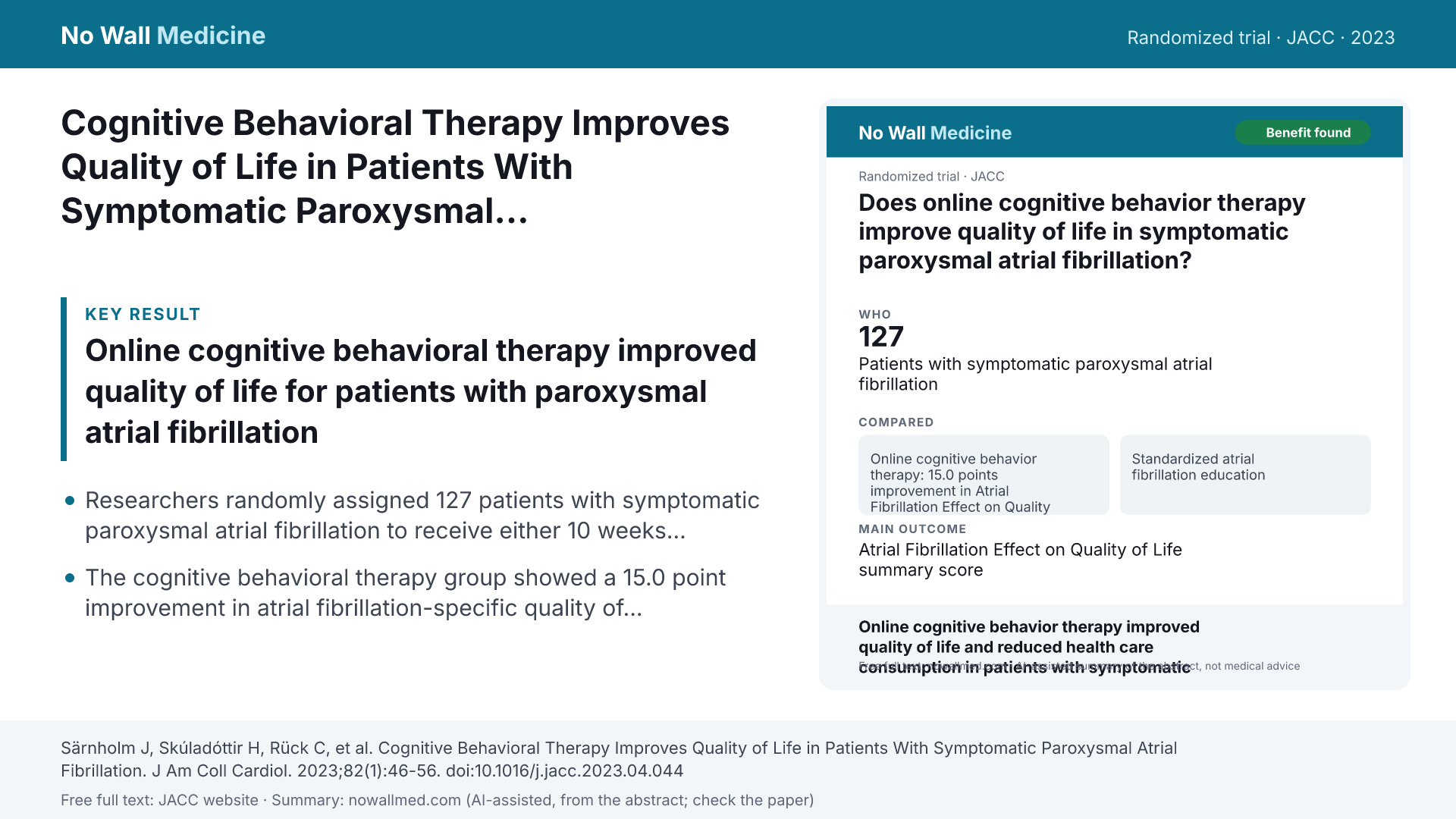
Online cognitive behavioral therapy improved quality of life for patients with paroxysmal atrial fibrillation
Cognitive Behavioral Therapy Improves Quality of Life in Patients With Symptomatic Paroxysmal Atrial Fibrillation
Randomized trialBenefit found
Does online cognitive behavior therapy improve quality of life in symptomatic paroxysmal atrial fibrillation?
Who
127
Patients with symptomatic paroxysmal atrial fibrillation
Compared
Online cognitive behavior therapy: 15.0 points improvement in Atrial Fibrillation Effect on Quality of Life
Standardized atrial fibrillation education
Main outcome
Atrial Fibrillation Effect on Quality of Life summary score
Result: 15.0 points (95% CI: 10.1-19.8)
Bottom line: Online cognitive behavior therapy improved quality of life and reduced health care consumption in patients with symptomatic paroxysmal atrial fibrillation.
JACC · 2023-06-29 · Save PNG
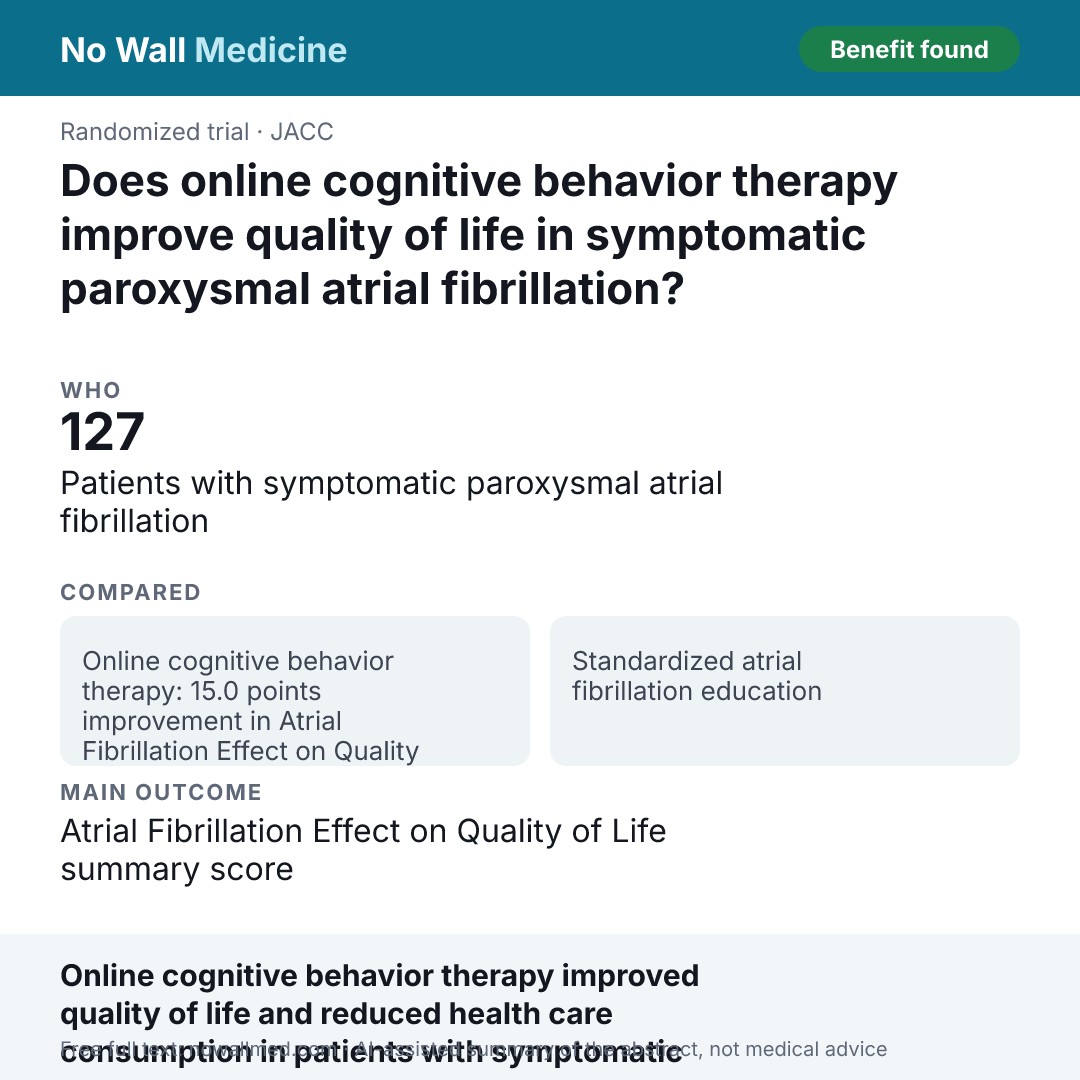
Clinical question: Does online cognitive behavior therapy improve quality of life in symptomatic paroxysmal atrial fibrillation?
Why it matters: Current interventions for atrial fibrillation do not target symptom preoccupation, which is the fear of cardiac symptoms and avoidance behavior that may contribute to disability.
Key points
- Researchers randomly assigned 127 patients with symptomatic paroxysmal atrial fibrillation to receive either 10 weeks of online cognitive behavioral therapy or standardized education.
- The cognitive behavioral therapy group showed a 15.0 point improvement in atrial fibrillation-specific quality of life scores at the 3-month follow-up.
- Online cognitive behavioral therapy was associated with a 56% reduction in health care consumption, though the atrial fibrillation burden remained unchanged.
Headline and key points written with AI from the paper’s abstract, with every number checked against it. Read the paper before relying on them.
Was this summary helpful?
Subject terms
Headline, design, result, key points, caveat and citation as plain text.
Cite this article
Särnholm J, Skúladóttir H, Rück C, et al. Cognitive Behavioral Therapy Improves Quality of Life in Patients With Symptomatic Paroxysmal Atrial Fibrillation. J Am Coll Cardiol. 2023;82(1):46-56. doi:10.1016/j.jacc.2023.04.044
Spotted a mistake? Suggest a correction