Cognitive dysfunction and associated neuroimaging biomarkers in antiphospholipid syndrome: a systematic review
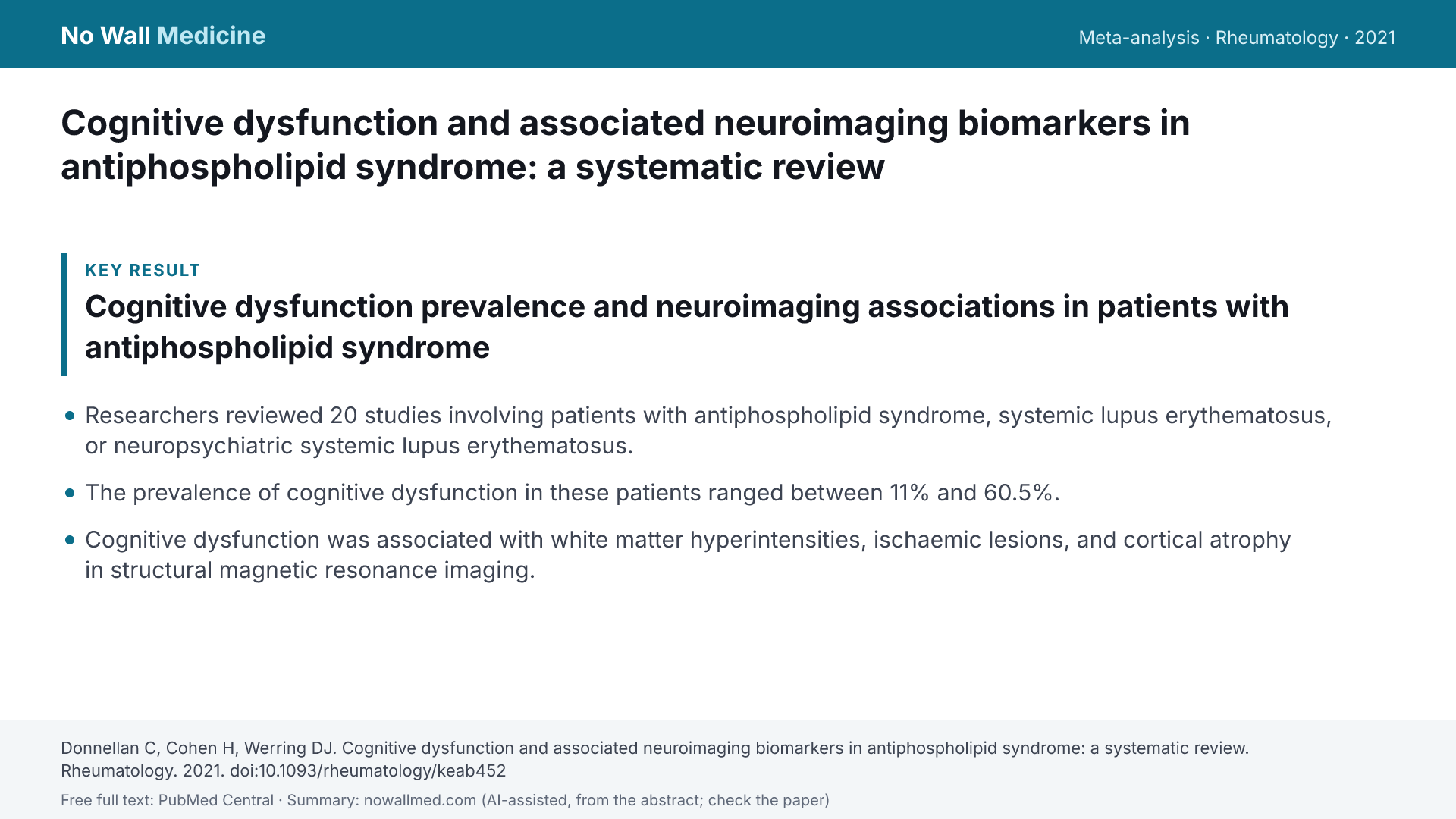
Key result: Cognitive dysfunction prevalence and neuroimaging associations in patients with antiphospholipid syndrome
Key points
- Researchers reviewed 20 studies involving patients with antiphospholipid syndrome, systemic lupus erythematosus, or neuropsychiatric systemic lupus erythematosus.
- The prevalence of cognitive dysfunction in these patients ranged between 11% and 60.5%.
- Cognitive dysfunction was associated with white matter hyperintensities, ischaemic lesions, and cortical atrophy in structural magnetic resonance imaging.
Why it matters: The specific prevalence of cognitive dysfunction and its relationship with brain imaging biomarkers in patients with antiphospholipid syndrome was not clearly established.
Limitation the authors note: The authors noted a medium risk of bias in many studies and marked heterogeneity in cognitive assessments, disease definitions, and neuroimaging protocols.
Discussion prompts
- Would these patients look like yours? Who was left out?
- Is the main outcome one that matters to patients?
- Is the difference large enough to change what you do?
Cite: Donnellan C, Cohen H, Werring DJ. Cognitive dysfunction and associated neuroimaging biomarkers in antiphospholipid syndrome: a systematic review. Rheumatology. 2021. doi:10.1093/rheumatology/keab452
Free full text: PubMed Central · Summary and visual abstract: nowallmed.com/a/cognitive-dysfunction-and-associated-neuroimaging-biomarkers-in-1c5a6e3/ (AI-assisted from the abstract; check the paper before relying on it).