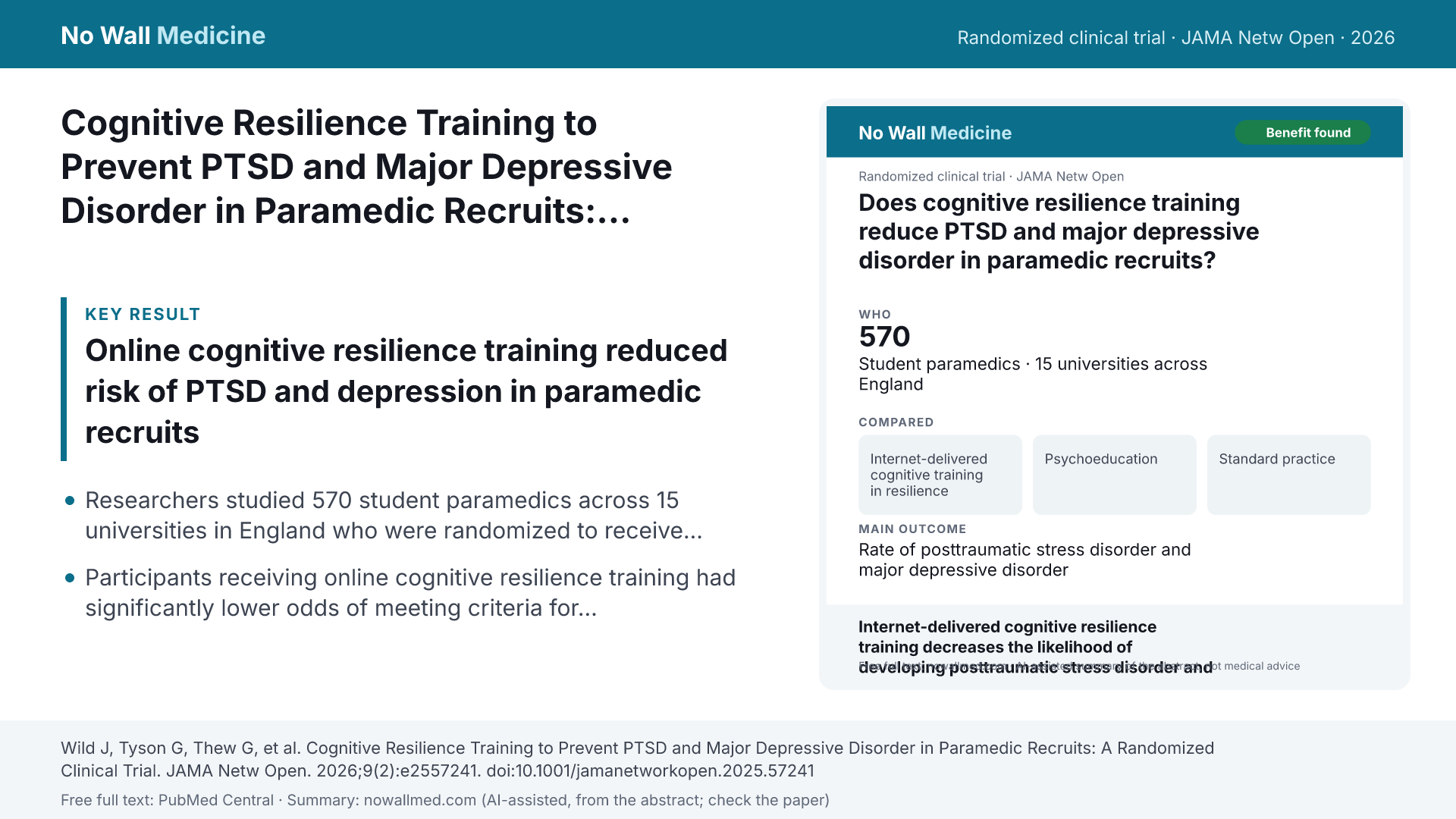
Online cognitive resilience training reduced risk of PTSD and depression in paramedic recruits
Cognitive Resilience Training to Prevent PTSD and Major Depressive Disorder in Paramedic Recruits: A Randomized Clinical Trial
Randomized clinical trialBenefit found
Does cognitive resilience training reduce PTSD and major depressive disorder in paramedic recruits?
Who
570
Student paramedics · 15 universities across England
Compared
Internet-delivered cognitive training in resilience
Psychoeducation
Standard practice
Main outcome
Rate of posttraumatic stress disorder and major depressive disorder
Result: odds ratio 0.20 (95% CI, 0.05-0.73) vs psychoeducation; odds ratio 0.25 (95% CI, 0.07-0.97) vs standard practice
Bottom line: Internet-delivered cognitive resilience training decreases the likelihood of developing posttraumatic stress disorder and major depressive disorder in paramedic trainees.
JAMA Netw Open · 2026-02-02Download image
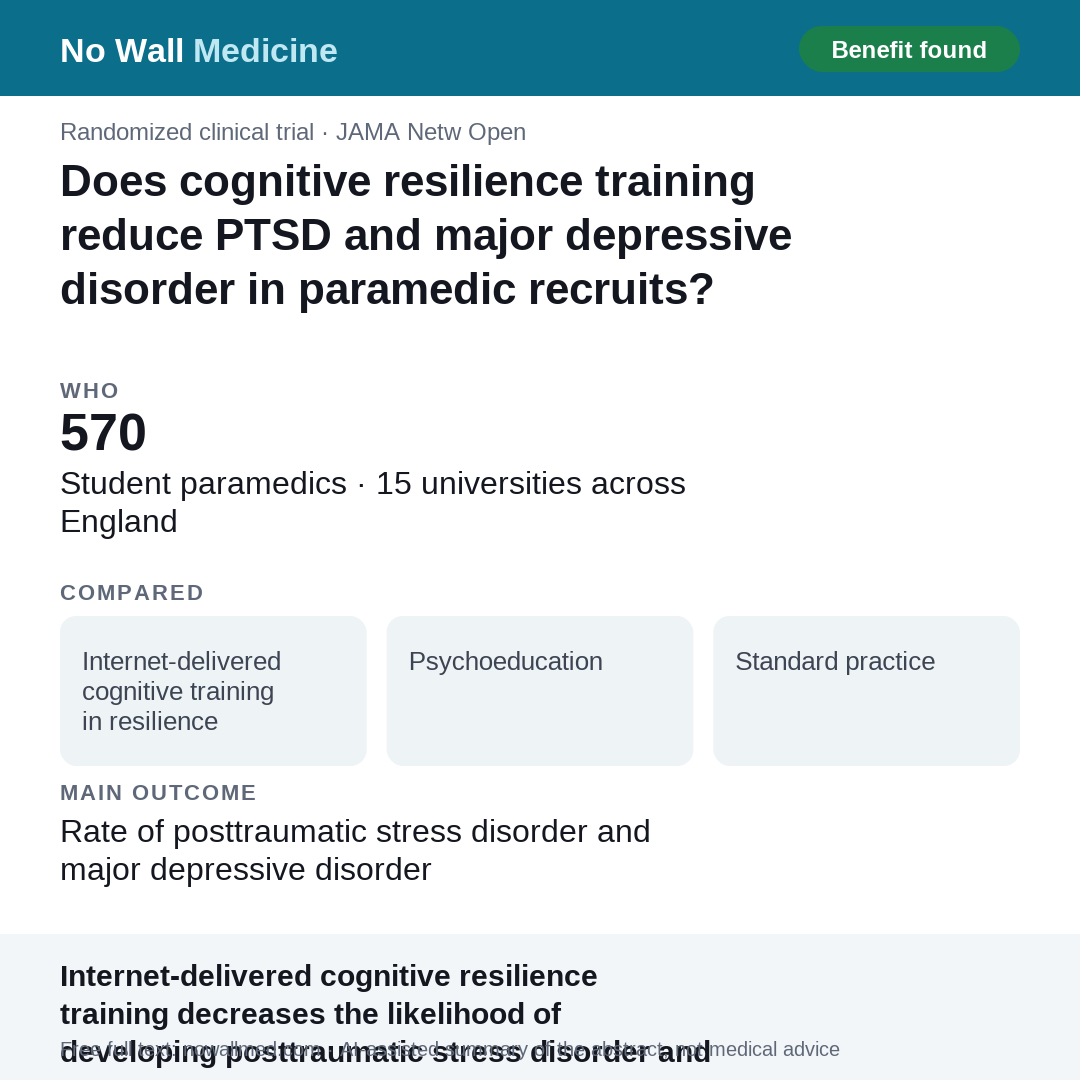
Clinical question: Does cognitive resilience training reduce PTSD and major depressive disorder in paramedic recruits?
Why it matters: Paramedics experience high rates of posttraumatic stress disorder and major depressive disorder during their careers.
Key points
- Researchers studied 570 student paramedics across 15 universities in England who were randomized to receive online cognitive resilience training, psychoeducation, or standard practice.
- Participants receiving online cognitive resilience training had significantly lower odds of meeting criteria for posttraumatic stress disorder or major depressive disorder at 12 months.
- Providing online cognitive resilience training to 18 to 24 paramedic trainees would prevent 1 case of posttraumatic stress disorder or major depressive disorder.
Headline and key points written with AI from the paper’s abstract, with every number checked against it. Read the paper before relying on them.
Was this summary helpful?
Subject terms
Cite this article
Wild J, Tyson G, Thew G, et al. Cognitive Resilience Training to Prevent PTSD and Major Depressive Disorder in Paramedic Recruits: A Randomized Clinical Trial. JAMA Netw Open. 2026. doi:10.1001/jamanetworkopen.2025.57241
Spotted a mistake? Suggest a correction