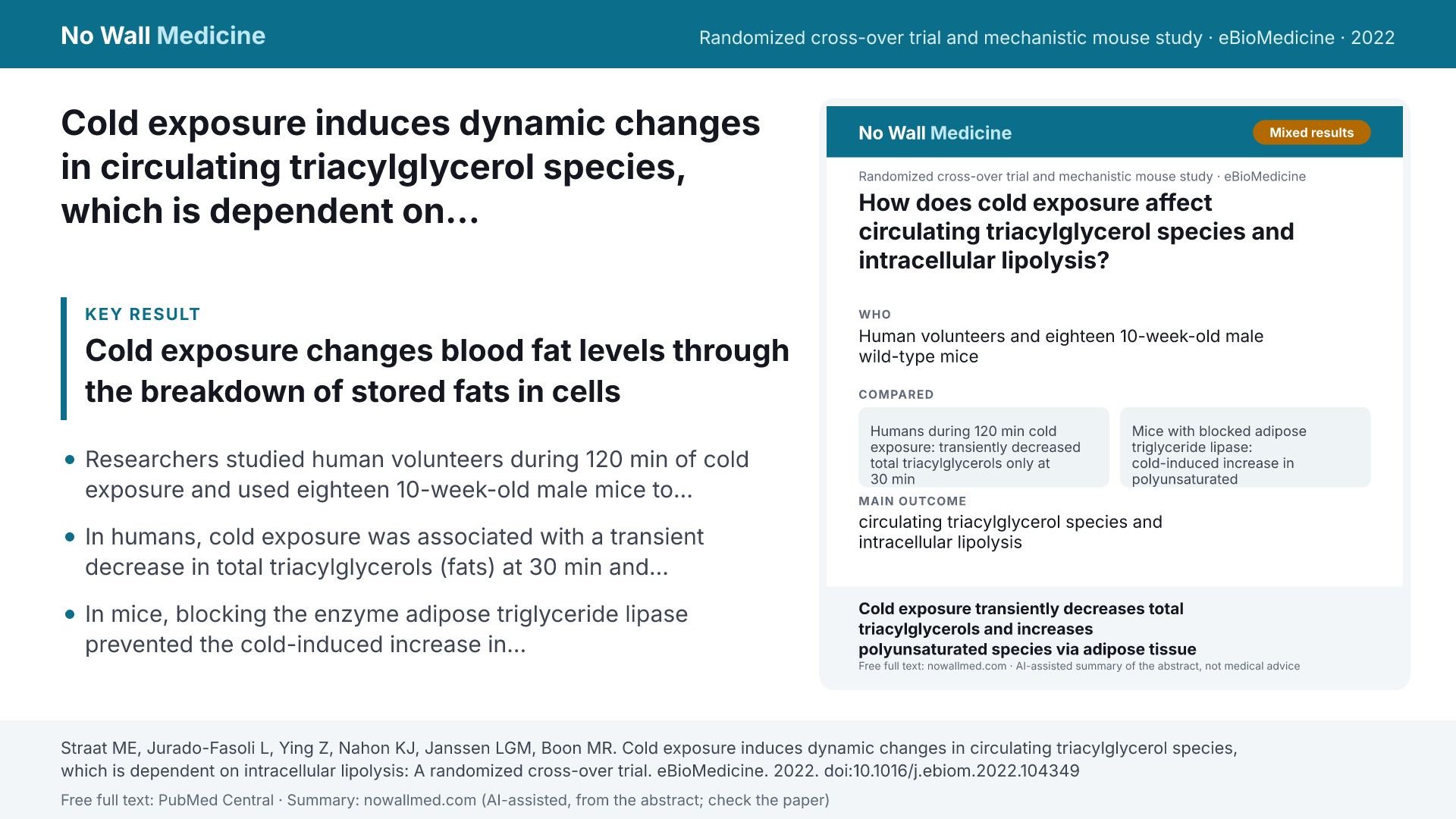
Cold exposure induces dynamic changes in circulating triacylglycerol species, which is dependent on intracellular lipolysis: A randomized cross-over trial
Key result: Cold exposure changes blood fat levels through the breakdown of stored fats in cells
Key points
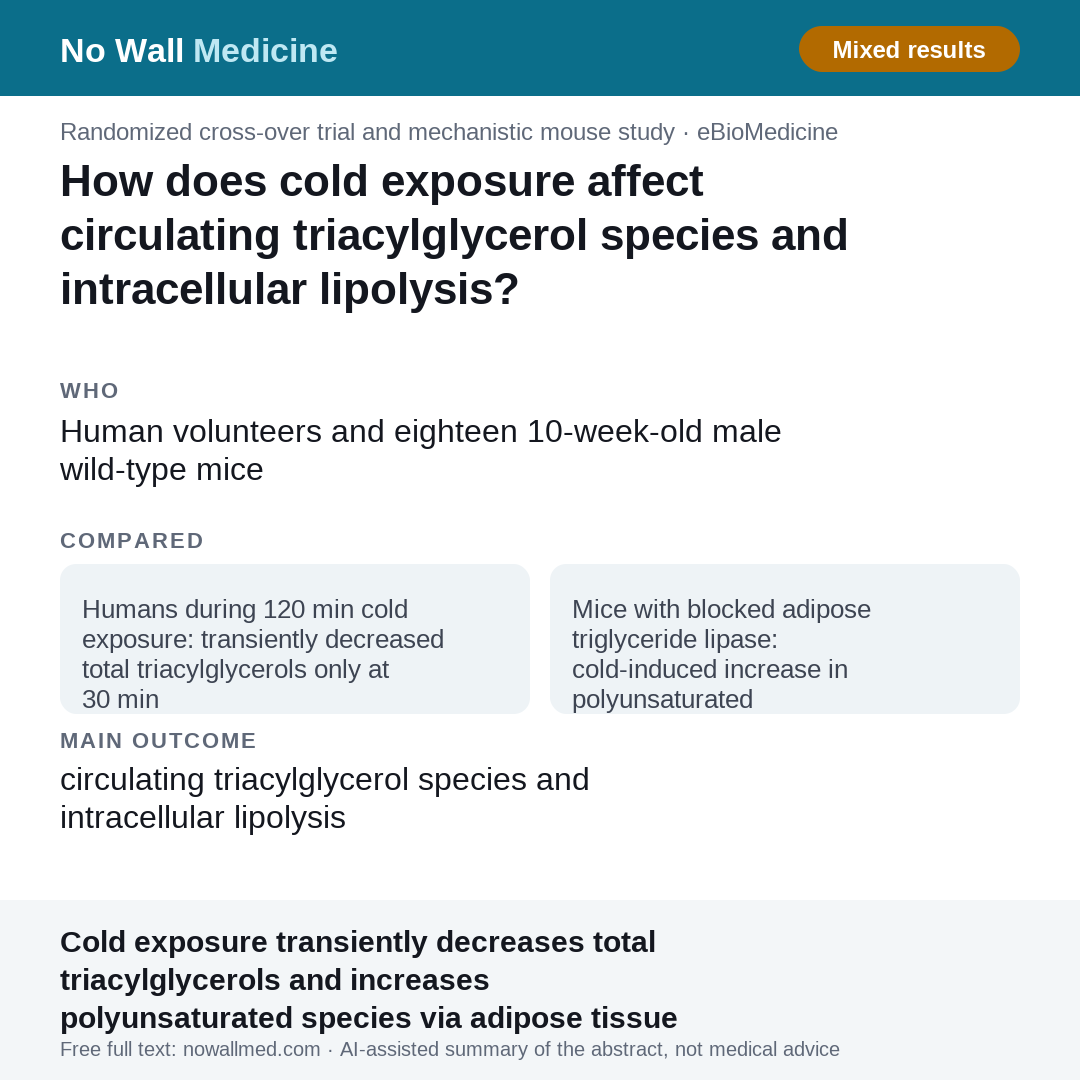
- Researchers studied human volunteers during 120 min of cold exposure and used eighteen 10-week-old male mice to investigate the biological mechanisms.
- In humans, cold exposure was associated with a transient decrease in total triacylglycerols (fats) at 30 min and an increase in polyunsaturated triacylglycerols with ≥6 double bonds after 120 min.
- In mice, blocking the enzyme adipose triglyceride lipase prevented the cold-induced increase in polyunsaturated triacylglycerols.
Why it matters: The global effect of cold exposure on the lipidome in humans has been reported with mixed results depending on the intensity and duration of the cold.
Discussion prompts
- Would these patients look like yours? Who was left out?
- Is the main outcome one that matters to patients?
- Is the difference large enough to change what you do?
Cite: Straat ME, Jurado-Fasoli L, Ying Z, Nahon KJ, Janssen LGM, Boon MR. Cold exposure induces dynamic changes in circulating triacylglycerol species, which is dependent on intracellular lipolysis: A randomized cross-over trial. eBioMedicine. 2022. doi:10.1016/j.ebiom.2022.104349
Free full text: PubMed Central · Summary and visual abstract: nowallmed.com/a/cold-exposure-induces-dynamic-changes-in-circulating-triacylglycerol-1hblgcc/ (AI-assisted from the abstract; check the paper before relying on it).