Collaborative care reduced pain interference for adults with chronic pain after traumatic brain injury
Collaborative Care for Chronic Pain After Traumatic Brain Injury: A Randomized Clinical Trial
Randomized clinical trialBenefit found
Does collaborative care decrease pain interference in adults with traumatic brain injury and chronic pain?
Who
158
Adults with mild-to-severe traumatic brain injury and chronic pain · 2 hospital-based academic rehabilitation medicine clinics in Seattle, Washington
Compared
Collaborative care: mean (SD), 3.46 (2.17)
Usual care: mean (SD), 5.03 (2.28)
Main outcome
Pain interference on the Brief Pain Inventory at 4 months
Bottom line: Collaborative care effectively reduced pain interference in adults with traumatic brain injury, with benefits sustained at 8 months.
JAMA Netw Open · 2024-06-03Download image
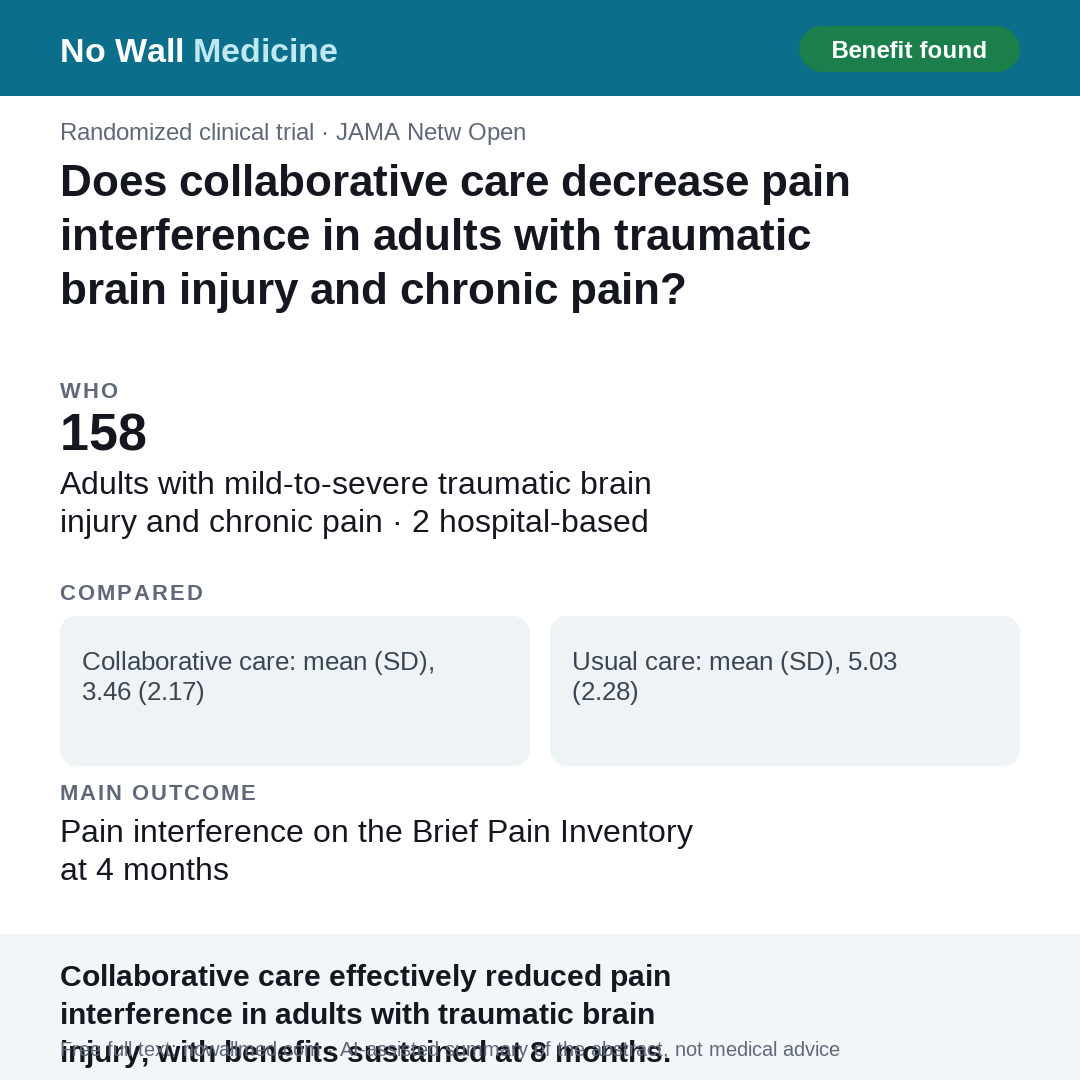
Clinical question: Does collaborative care decrease pain interference in adults with traumatic brain injury and chronic pain?
Why it matters: It is unknown if a multidisciplinary collaborative care approach can reduce how much pain interferes with daily life for people living with chronic pain after a traumatic brain injury.
Key points
- The randomized clinical trial studied 158 adults with mild-to-severe traumatic brain injury and chronic pain, comparing collaborative care to usual care.
- At 4 months, the collaborative care group had lower pain interference scores (mean 3.46) compared to the usual care group (mean 5.03).
- The collaborative care group also showed lower pain severity, depression, and anxiety symptoms at 4 months compared to the usual care group.
Headline and key points written with AI from the paper’s abstract, with every number checked against it. Read the paper before relying on them.
Was this summary helpful?
Subject terms
Cite this article
Hoffman JM, Curran M, Barber J, Lucas S, Fann JR, Zumsteg JM. Collaborative Care for Chronic Pain After Traumatic Brain Injury: A Randomized Clinical Trial. JAMA Netw Open. 2024. doi:10.1001/jamanetworkopen.2024.13459
Spotted a mistake? Suggest a correction
Top studies every Monday
The week’s key trials and guidelines in your specialties, plus any topics you follow. By email, free.
Get the weekly digest