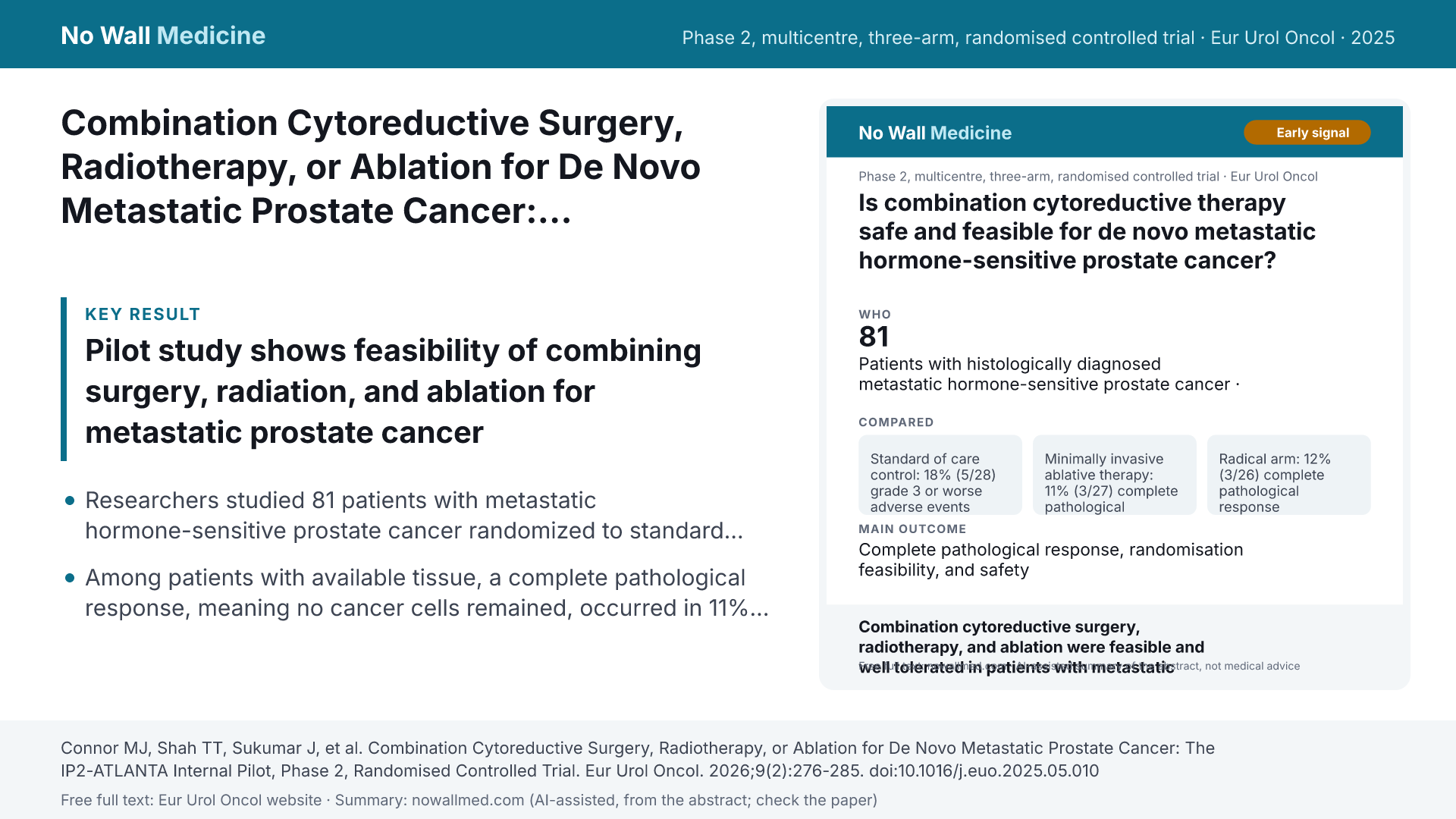
Pilot study shows feasibility of combining surgery, radiation, and ablation for metastatic prostate cancer
Combination Cytoreductive Surgery, Radiotherapy, or Ablation for De Novo Metastatic Prostate Cancer: The IP2-ATLANTA Internal Pilot, Phase 2, Randomised Controlled Trial
Phase 2, multicentre, three-arm, randomised controlled trialBenefit found
Is combination cytoreductive therapy safe and feasible for de novo metastatic hormone-sensitive prostate cancer?
Who
81
Patients with histologically diagnosed metastatic hormone-sensitive prostate cancer · multicentre
Compared
Standard of care control: 18% (5/28) grade 3 or worse adverse events
Minimally invasive ablative therapy: 11% (3/27) complete pathological response
Radical arm: 12% (3/26) complete pathological response
Main outcome
Complete pathological response, randomisation feasibility, and safety
Bottom line: Combination cytoreductive surgery, radiotherapy, and ablation were feasible and well tolerated in patients with metastatic prostate cancer.
Limitation: The majority of patients still have viable residual prostate cancer after systemic therapy.
Eur Urol Oncol · 2025-06-13Download image
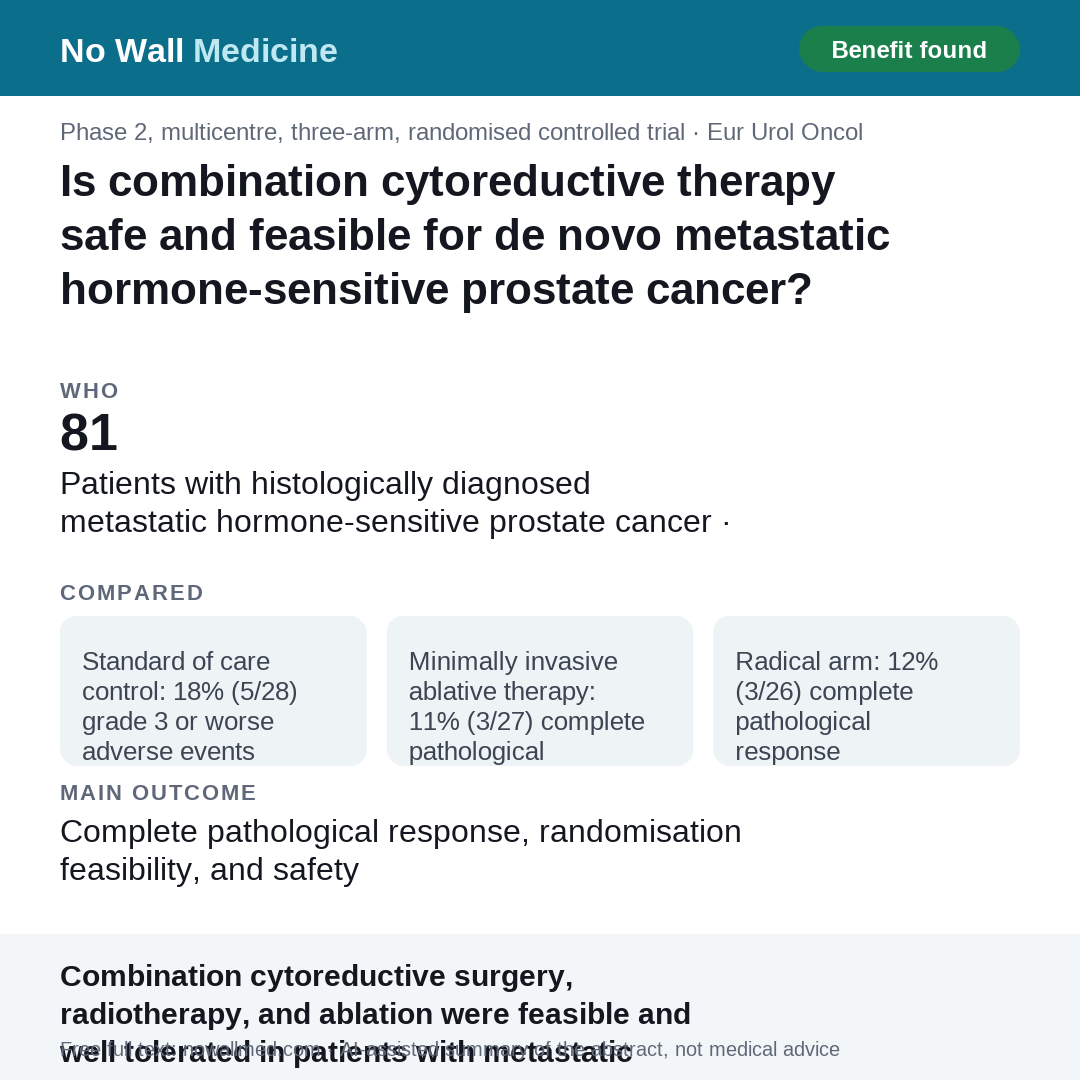
Clinical question: Is combination cytoreductive therapy safe and feasible for de novo metastatic hormone-sensitive prostate cancer?
Why it matters: It is unclear if combining surgery, radiation, or ablation of the primary tumor and metastases improves outcomes for patients with newly diagnosed metastatic prostate cancer.
Key points
- Researchers studied 81 patients with metastatic hormone-sensitive prostate cancer randomized to standard care, minimally invasive ablative therapy, or radical cytoreductive therapy.
- Among patients with available tissue, a complete pathological response, meaning no cancer cells remained, occurred in 11% of participants.
- Grade 3 or worse adverse events occurred in 18% of the control group, 7% of the minimally invasive group, and 15% of the radical group.
Headline and key points written with AI from the paper’s abstract, with every number checked against it. Read the paper before relying on them.
Was this summary helpful?
Subject terms
Cite this article
Connor MJ, Shah TT, Sukumar J, Basak D, Fiorentino F, Heath C. Combination Cytoreductive Surgery, Radiotherapy, or Ablation for De Novo Metastatic Prostate Cancer: The IP2-ATLANTA Internal Pilot, Phase 2, Randomised Controlled Trial. Eur Urol Oncol. 2025. doi:10.1016/j.euo.2025.05.010
Spotted a mistake? Suggest a correction
Top studies every Monday
The week’s key trials and guidelines in your specialties, plus any topics you follow. By email, free.
Get the weekly digest