Combining urinary biomarkers improves prediction of acute kidney injury after cardiac surgery
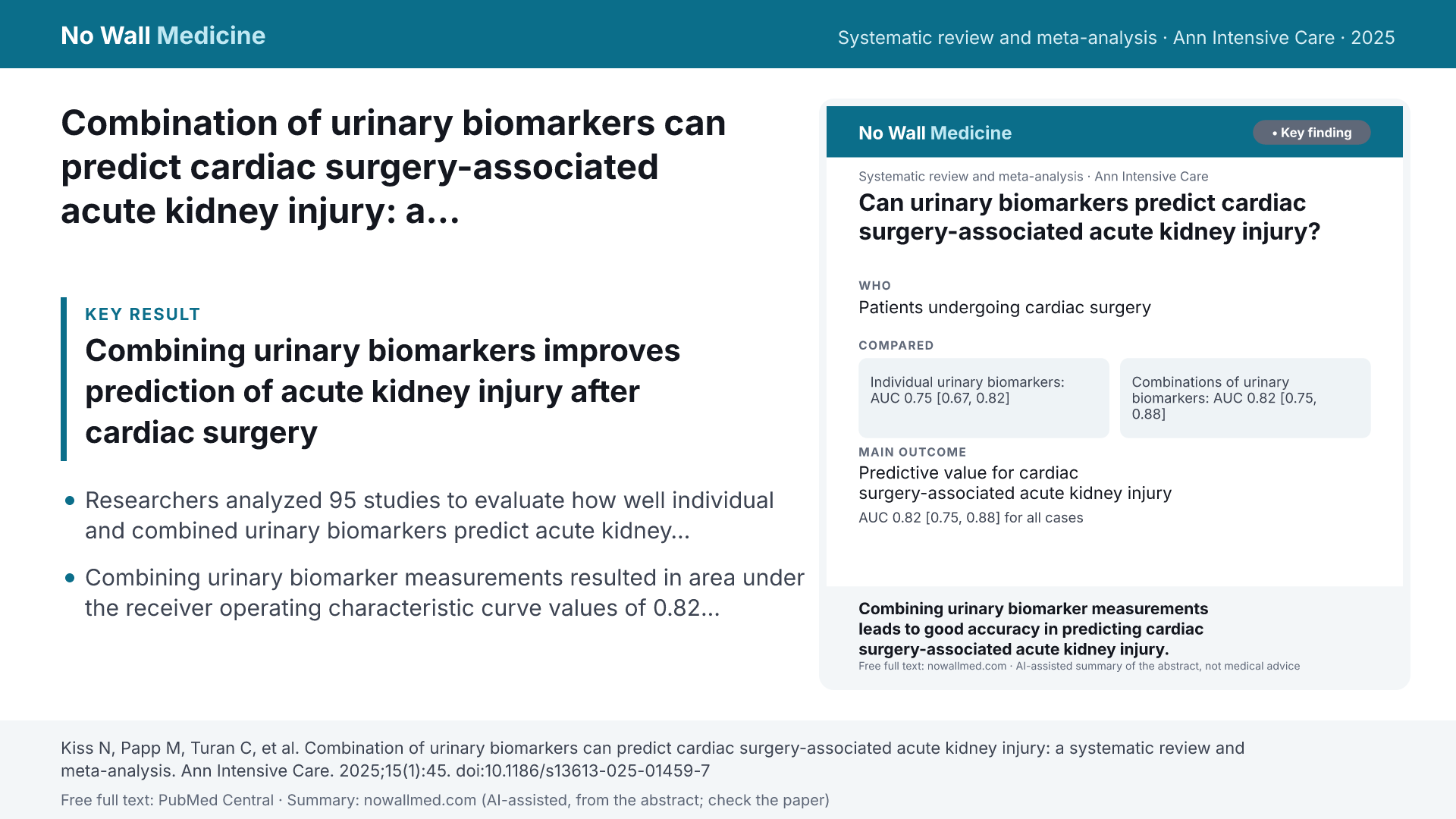
Combination of urinary biomarkers can predict cardiac surgery-associated acute kidney injury: a systematic review and meta-analysis
Systematic review and meta-analysisBenefit found
Can urinary biomarkers predict cardiac surgery-associated acute kidney injury?
Who
Patients undergoing cardiac surgery
Compared
Individual urinary biomarkers: AUC 0.75 [0.67, 0.82]
Combinations of urinary biomarkers: AUC 0.82 [0.75, 0.88]
Main outcome
Predictive value for cardiac surgery-associated acute kidney injury
Result: AUC 0.82 [0.75, 0.88] for all cases
Bottom line: Combining urinary biomarker measurements leads to good accuracy in predicting cardiac surgery-associated acute kidney injury.
Ann Intensive Care · 2025-03-29Download image
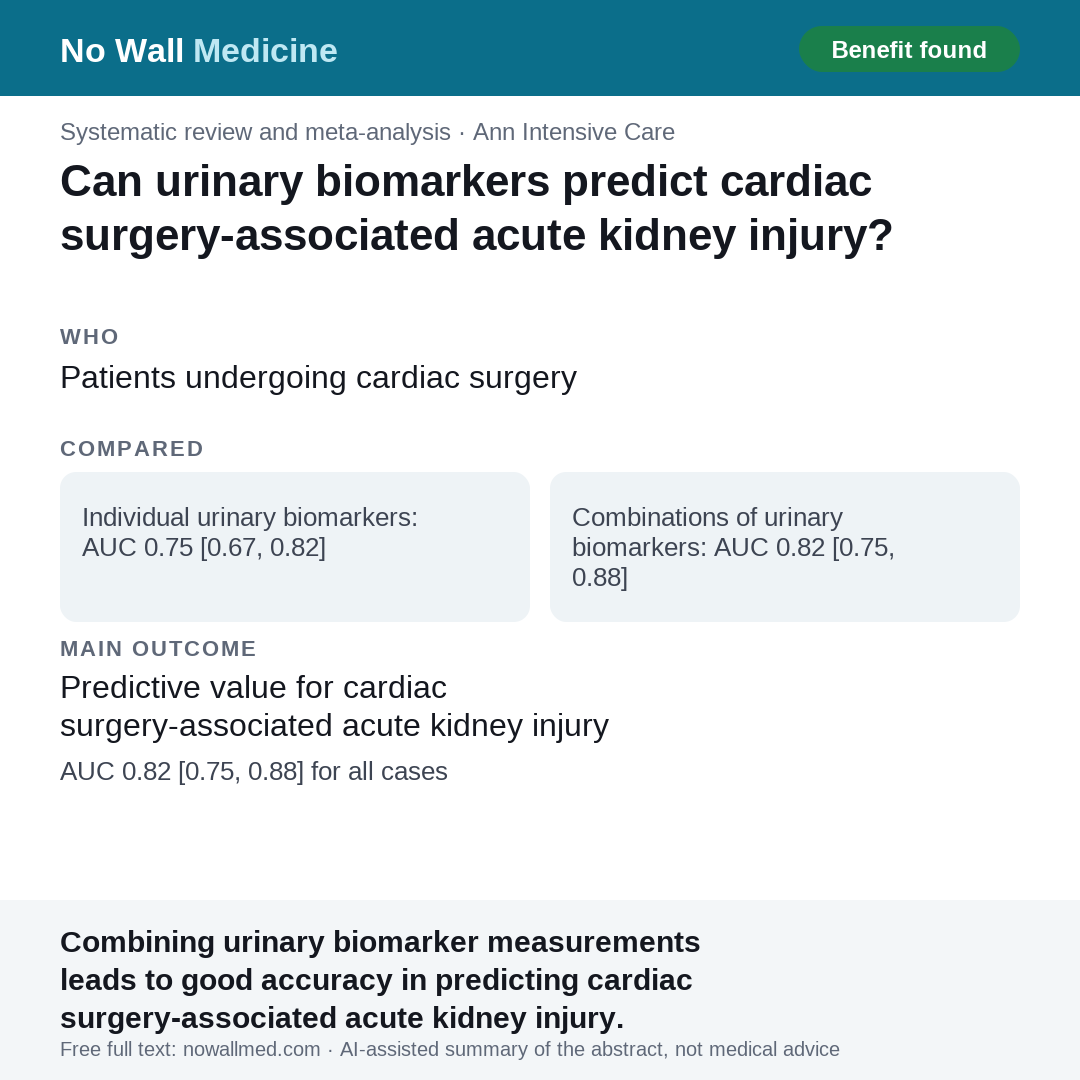
Clinical question: Can urinary biomarkers predict cardiac surgery-associated acute kidney injury?
Why it matters: It is unknown if using multiple urinary biomarkers together or adding them to clinical models provides better accuracy for identifying patients at risk of kidney injury after cardiac surgery.
Key points
- Researchers analyzed 95 studies to evaluate how well individual and combined urinary biomarkers predict acute kidney injury after heart surgery.
- Combining urinary biomarker measurements resulted in area under the receiver operating characteristic curve values of 0.82 for all kidney injury stages and 0.85 for severe cases.
- Individual biomarkers measured during or shortly after surgery showed maximum acceptable accuracy, with the highest area under the receiver operating characteristic curve values of 0.74, 0.73, and 0.74.
Headline and key points written with AI from the paper’s abstract, with every number checked against it. Read the paper before relying on them.
Was this summary helpful?
Cite this article
Kiss N, Papp M, Turan C, Kói T, Madách K, Hegyi P. Combination of urinary biomarkers can predict cardiac surgery-associated acute kidney injury: a systematic review and meta-analysis. Ann Intensive Care. 2025. doi:10.1186/s13613-025-01459-7
Spotted a mistake? Suggest a correction