Common Pathways of Epileptogenesis in Patients With Epilepsy Post-Brain Injury: Findings From a Systematic Review and Meta-analysis
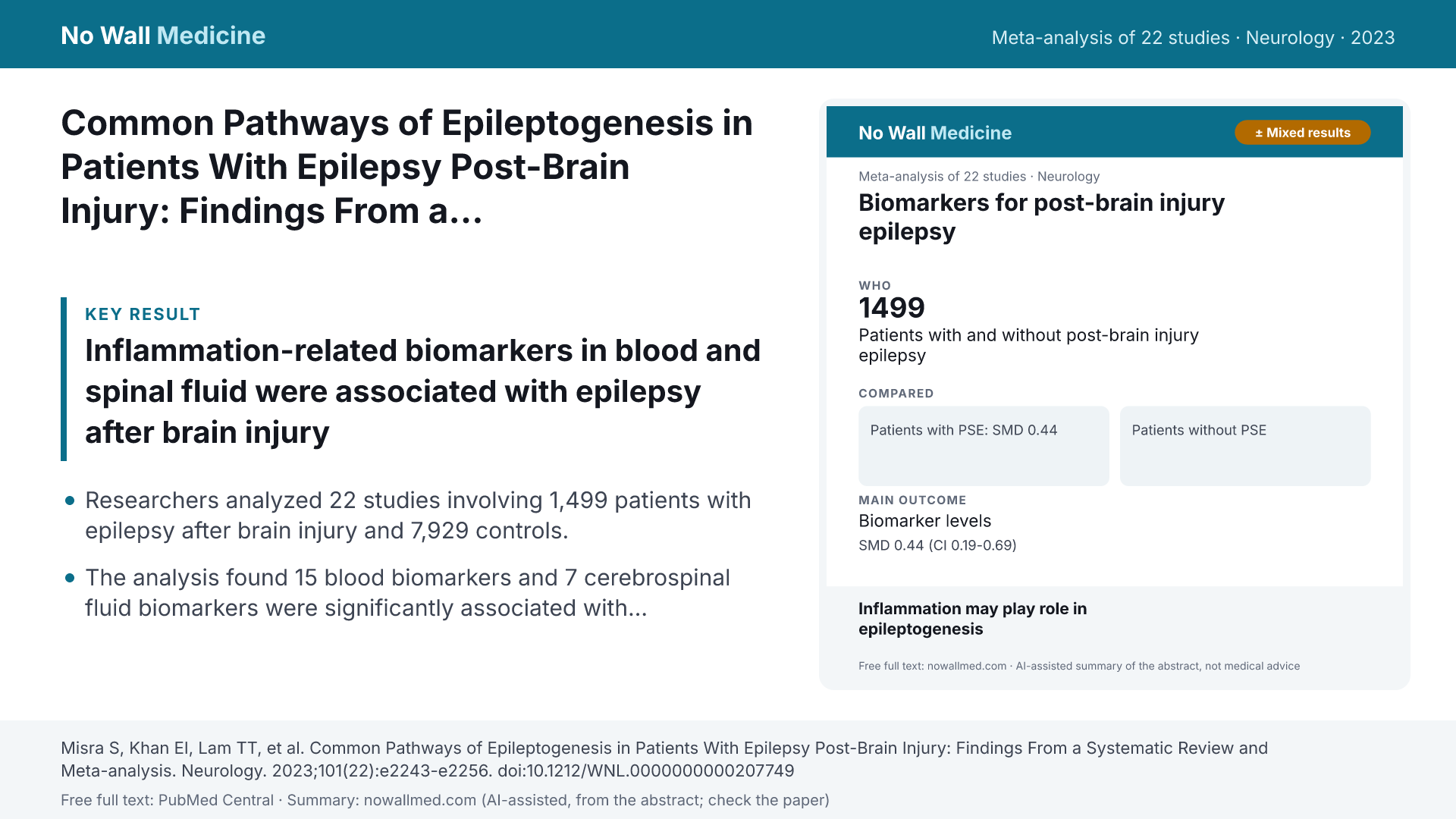
Key result: Inflammation-related biomarkers in blood and spinal fluid were associated with epilepsy after brain injury
Meta-analysis of 22 studiesMixed results
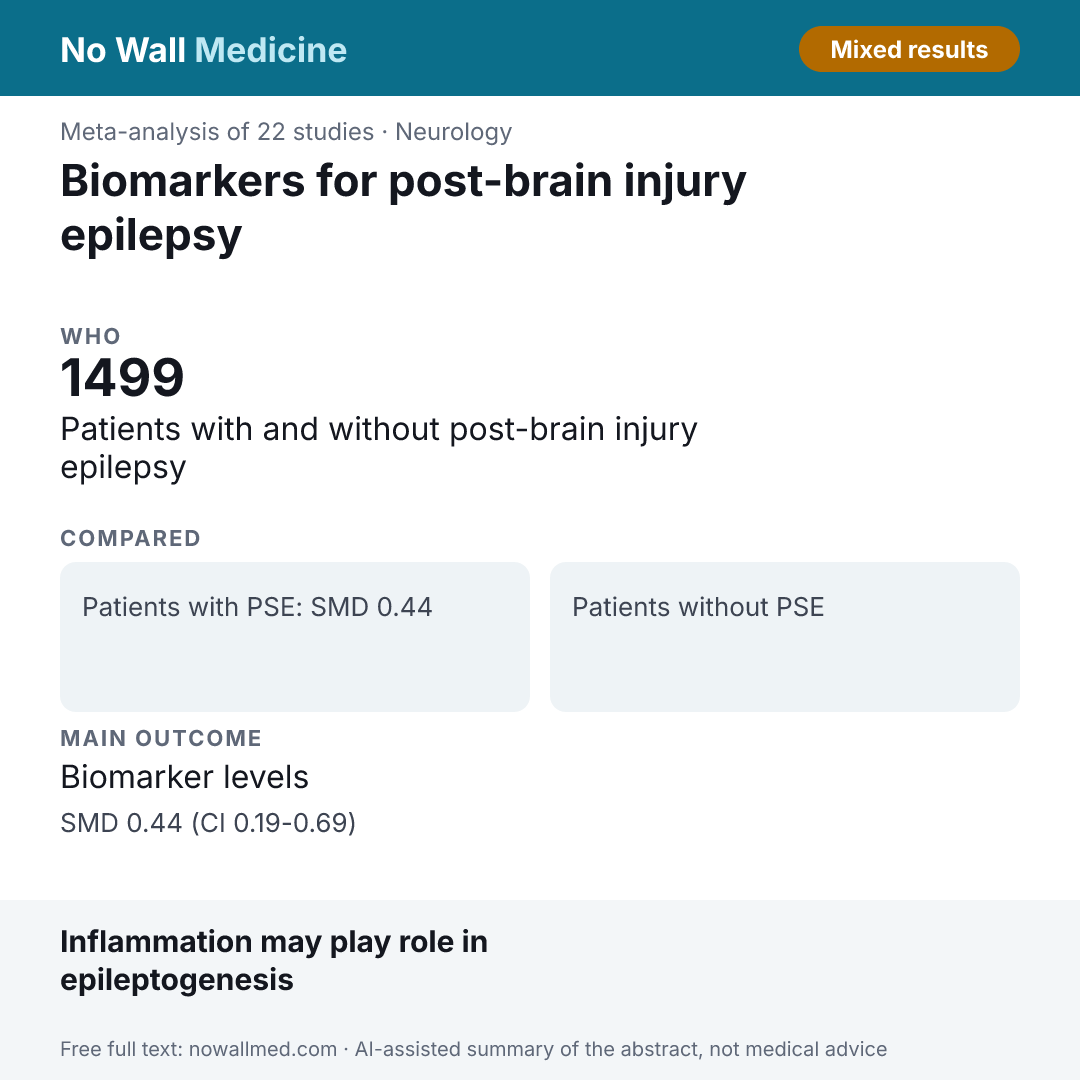
Biomarkers for post-brain injury epilepsy
Who
1499
Patients with and without post-brain injury epilepsy
Compared
Patients with PSE: SMD 0.44
Patients without PSE
Main outcome
Biomarker levels
Result: SMD 0.44 (CI 0.19-0.69)
Bottom line: Inflammation may play role in epileptogenesis
Limitation: Methodological heterogeneity and bias
Neurology · 2023-11-27 · Save PNG
Key points
- Researchers analyzed 22 studies involving 1,499 patients with epilepsy after brain injury and 7,929 controls.
- The analysis found 15 blood biomarkers and 7 cerebrospinal fluid biomarkers were significantly associated with post-brain injury epilepsy.
- Blood glucose levels were significantly higher in patients with poststroke epilepsy than those without, with a standardized mean difference of 0.44 (95% CI 0.19-0.69).
Limitation the authors note: The included studies had a moderate-to-high risk of bias, methodological heterogeneity, and insufficient validation data.
Discussion prompts
- Would these patients look like yours? Who was left out?
- Is the main outcome one that matters to patients?
- Is the difference large enough to change what you do?
Cite: Misra S, Khan EI, Lam TT, et al. Common Pathways of Epileptogenesis in Patients With Epilepsy Post-Brain Injury: Findings From a Systematic Review and Meta-analysis. Neurology. 2023;101(22):e2243-e2256. doi:10.1212/WNL.0000000000207749
Free full text: PubMed Central · Summary and visual abstract: nowallmed.com/a/common-pathways-of-epileptogenesis-in-patients-with-epilepsy-post-14nin0z/ (AI-assisted from the abstract; check the paper before relying on it).