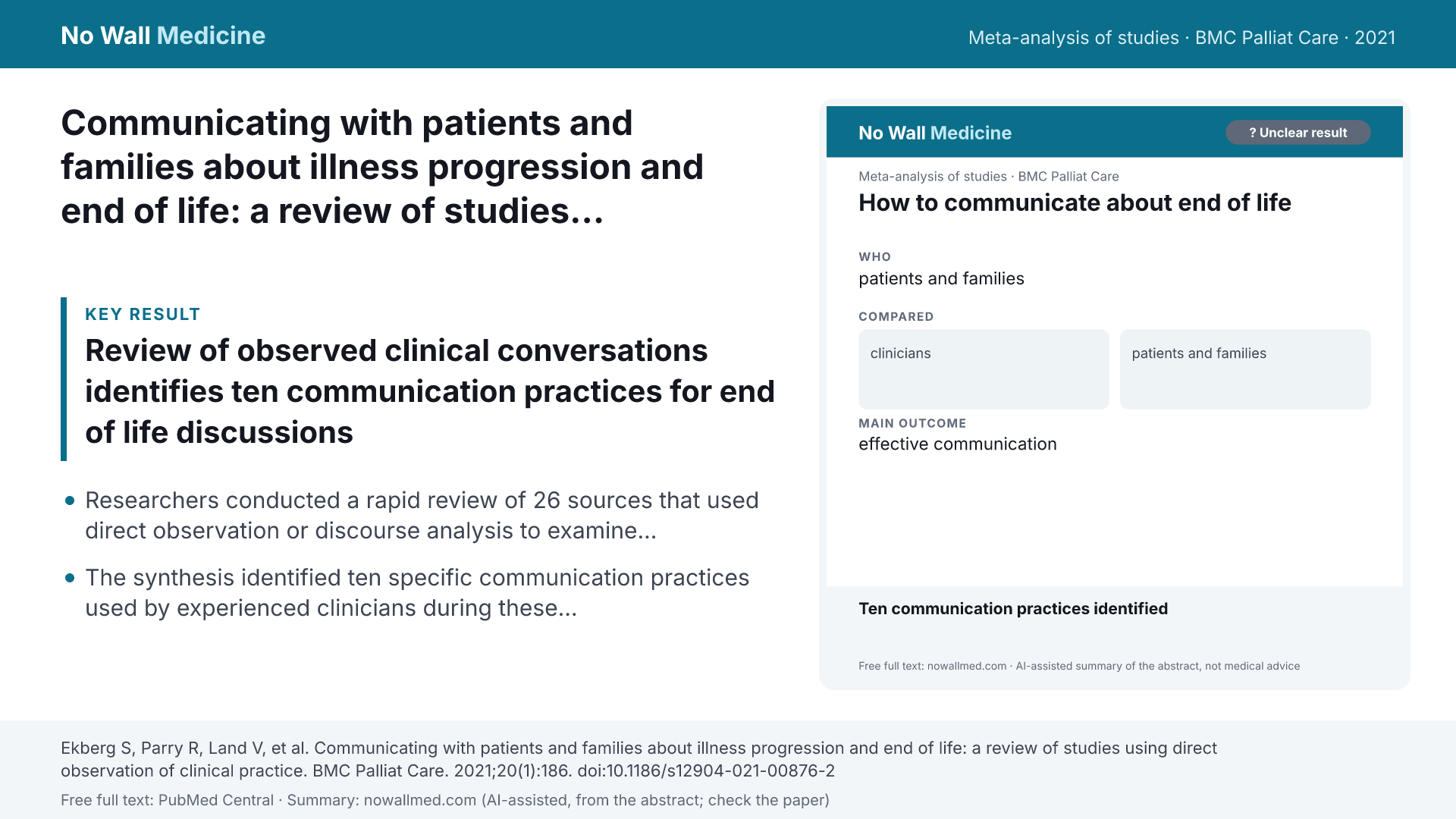
Communicating with patients and families about illness progression and end of life: a review of studies using direct observation of clinical practice
Key result: Review of observed clinical conversations identifies ten communication practices for end of life discussions
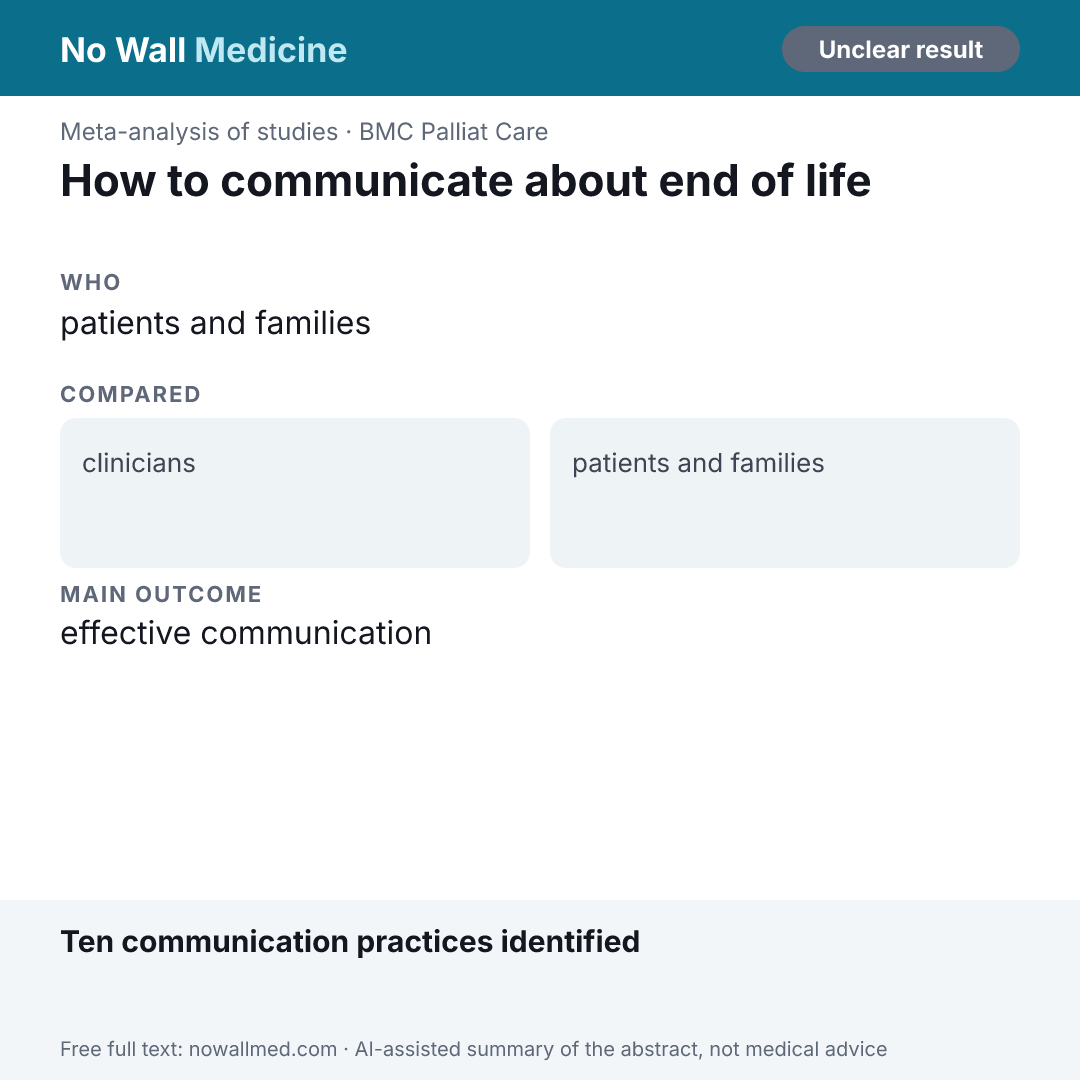
Meta-analysis of studiesUnclear result
How to communicate about end of life
Who
patients and families
Compared
clinicians
patients and families
Main outcome
effective communication
Bottom line: Ten communication practices identified
BMC Palliat Care · 2021-12-08 · Save PNG
Key points
- Researchers conducted a rapid review of 26 sources that used direct observation or discourse analysis to examine actual conversations about illness progression and end of life.
- The synthesis identified ten specific communication practices used by experienced clinicians during these sensitive discussions.
- These ten identified practices form the basis for five evidence-based recommendations for communicating with patients and families.
Discussion prompts
- Would these patients look like yours? Who was left out?
- Is the main outcome one that matters to patients?
- Is the difference large enough to change what you do?
Cite: Ekberg S, Parry R, Land V, et al. Communicating with patients and families about illness progression and end of life: a review of studies using direct observation of clinical practice. BMC Palliat Care. 2021;20(1):186. doi:10.1186/s12904-021-00876-2
Free full text: PubMed Central · Summary and visual abstract: nowallmed.com/a/communicating-with-patients-and-families-about-illness-progression-62vtx1/ (AI-assisted from the abstract; check the paper before relying on it).