Comparative Effectiveness of Botulinum Toxin Injections and Extracorporeal Shockwave Therapy for Post-Stroke Spasticity: A Systematic Review and Network Meta-Analysis
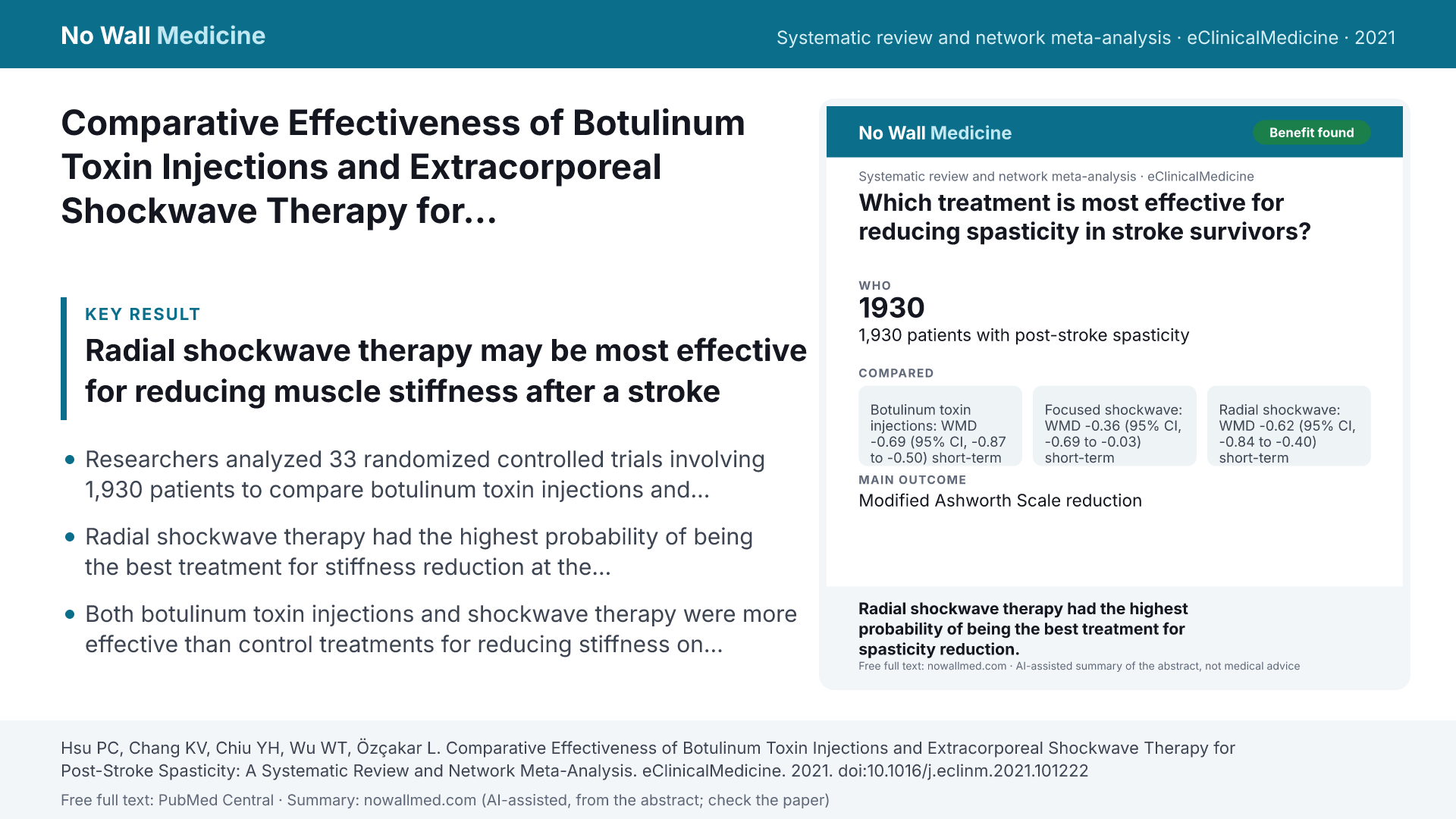
Key result: Radial shockwave therapy may be most effective for reducing muscle stiffness after a stroke
Key points
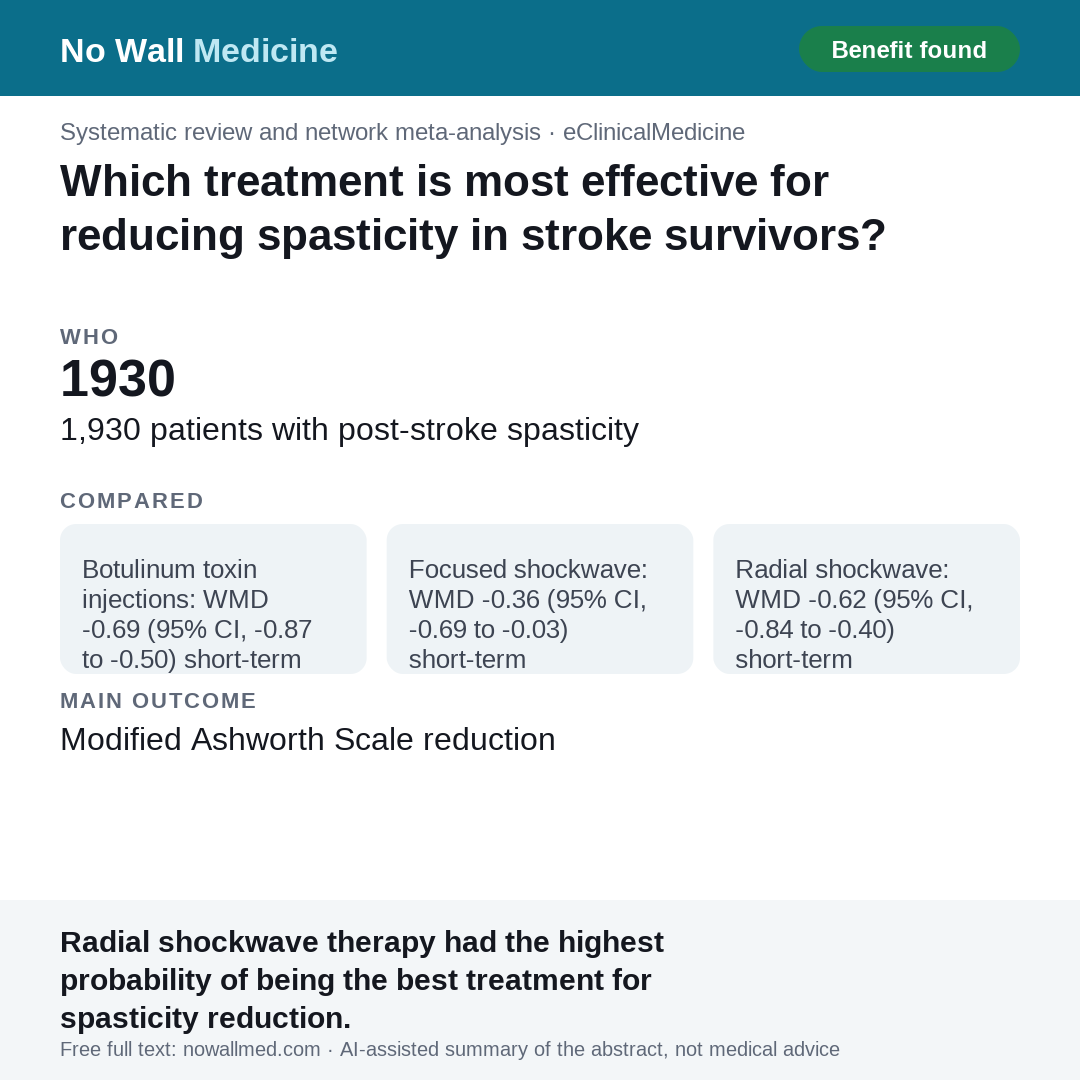
- Researchers analyzed 33 randomized controlled trials involving 1,930 patients to compare botulinum toxin injections and two types of shockwave therapy for muscle stiffness.
- Radial shockwave therapy had the highest probability of being the best treatment for stiffness reduction at the short-term (62.2%) and mid-term (72.3%) periods.
- Both botulinum toxin injections and shockwave therapy were more effective than control treatments for reducing stiffness on the Modified Ashworth Scale.
Limitation the authors note: More prospective trials incorporating head-to-head comparisons of botulinum toxin injections versus shockwave therapy are needed to validate these findings.
Discussion prompts
- Would these patients look like yours? Who was left out?
- Is the main outcome one that matters to patients?
- Is the difference large enough to change what you do?
Cite: Hsu PC, Chang KV, Chiu YH, Wu WT, Özçakar L. Comparative Effectiveness of Botulinum Toxin Injections and Extracorporeal Shockwave Therapy for Post-Stroke Spasticity: A Systematic Review and Network Meta-Analysis. eClinicalMedicine. 2021. doi:10.1016/j.eclinm.2021.101222
Free full text: PubMed Central · Summary and visual abstract: nowallmed.com/a/comparative-effectiveness-of-botulinum-toxin-injections-and-1fnfmsk/ (AI-assisted from the abstract; check the paper before relying on it).