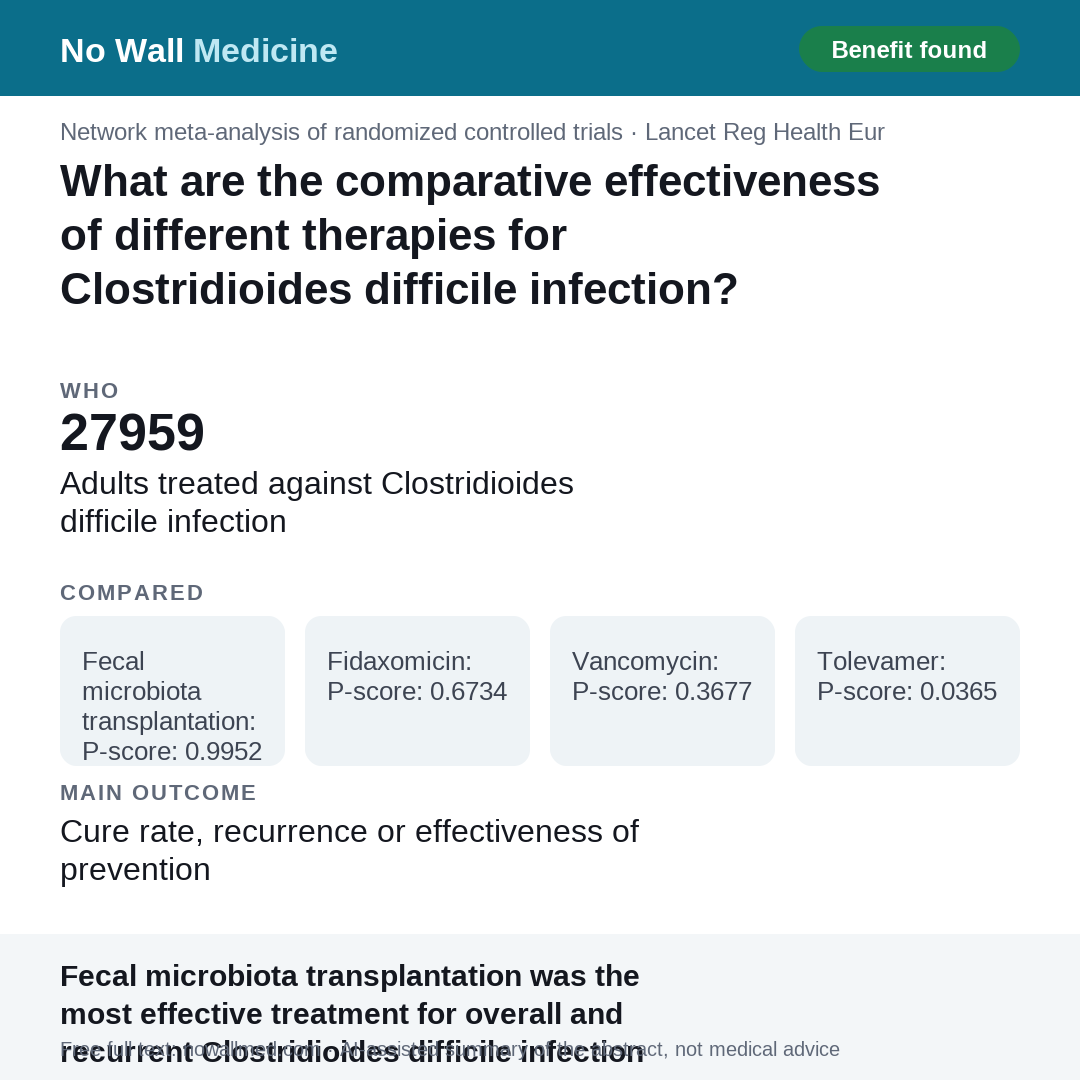
Fecal microbiota transplantation was the most effective treatment for Clostridioides difficile infection
Comparative effectiveness of different therapies for Clostridioides difficile infection in adults: a systematic review and network meta-analysis of randomized controlled trials
Network meta-analysis of randomized controlled trialsBenefit found
What are the comparative effectiveness of different therapies for Clostridioides difficile infection?
Who
27959
Adults treated against Clostridioides difficile infection
Compared
Fecal microbiota transplantation: P-score: 0.9952
Fidaxomicin: P-score: 0.6734
Vancomycin: P-score: 0.3677
Tolevamer: P-score: 0.0365
Main outcome
Cure rate, recurrence or effectiveness of prevention
Bottom line: Fecal microbiota transplantation was the most effective treatment for overall and recurrent Clostridioides difficile infection cure rates.
Limitation: Relevant heterogeneity among studies in therapeutic doses, treatment durations, and follow-up times.
Lancet Reg Health Eur · 2025-01-05Download image
Clinical question: What are the comparative effectiveness of different therapies for Clostridioides difficile infection?
Why it matters: There are numerous treatment options for Clostridioides difficile infection, but their comparative effectiveness for both recurrent and non-recurrent cases is not fully established.
Key points
- Researchers analyzed 73 randomized controlled trials involving 27,959 adult patients to compare various treatments for Clostridioides difficile infection.
- Fecal microbiota transplantation, which involves transferring stool from a healthy donor to a patient, had the highest cure rate overall (P-score: 0.9952) and in recurrent cases (P-score: 0.9836).
- In recurrent cases, fidaxomicin was more effective than vancomycin and tolevamer, while probiotics showed no significant difference from placebo in preventing infection.
Limitation the authors note: The study observed relevant heterogeneity among studies regarding therapeutic doses, treatment durations, and follow-up times.
Headline and key points written with AI from the paper’s abstract, with every number checked against it. Read the paper before relying on them.
Was this summary helpful?
Cite this article
Bednárik DS, Földvári-Nagy KC, Simon V, Rancz A, Gede N, Veres DS. Comparative effectiveness of different therapies for Clostridioides difficile infection in adults: a systematic review and network meta-analysis of randomized controlled trials. Lancet Reg Health Eur. 2025. doi:10.1016/j.lanepe.2024.101151
Spotted a mistake? Suggest a correction
Top studies every Monday
The week’s key trials and guidelines in your specialties, plus any topics you follow. By email, free.
Get the weekly digest