Neuromuscular electrical stimulation combined with different therapies improves lower limb function after stroke
Comparative effectiveness of neuromuscular electrical stimulation-based combination interventions for post-stroke lower limb rehabilitation: a systematic review and network meta-analysis
Meta-analysis of 37 trialsBenefit found
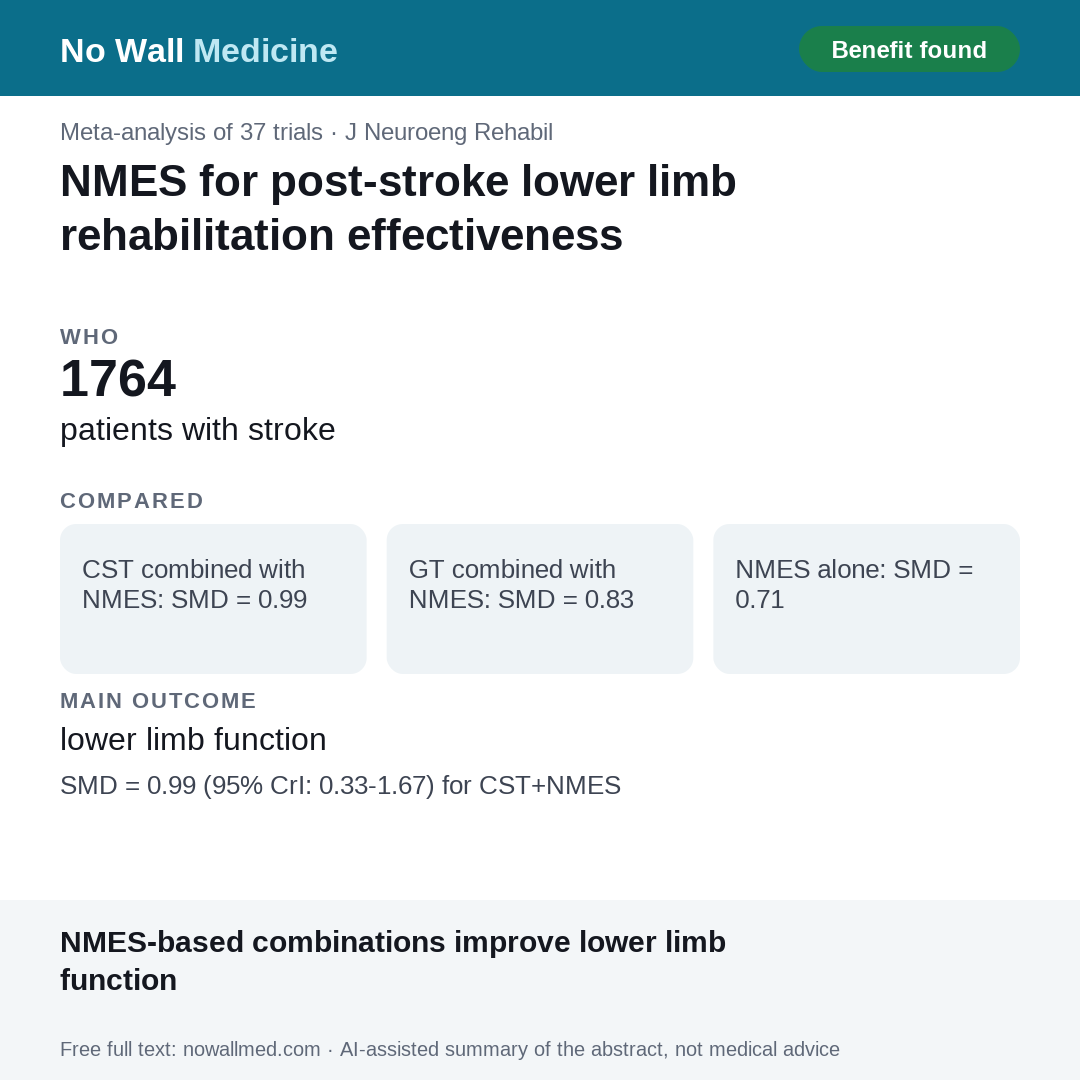
NMES for post-stroke lower limb rehabilitation effectiveness
Who
1764
patients with stroke
Compared
CST combined with NMES: SMD = 0.99
GT combined with NMES: SMD = 0.83
NMES alone: SMD = 0.71
Main outcome
lower limb function
Result: SMD = 0.99 (95% CrI: 0.33-1.67) for CST+NMES
Bottom line: NMES-based combinations improve lower limb function
Limitation: limited evidence for subgroup findings
J Neuroeng Rehabil · 2026-05-16Download image
Why it matters: Clinicians need evidence-based support to choose the most effective neuromuscular electrical stimulation-based combination protocols for stroke rehabilitation.
Key points
- Researchers analyzed 37 randomized controlled trials involving 1,764 stroke patients to compare nine different neuromuscular electrical stimulation-based combination protocols.
- Core stability training combined with neuromuscular electrical stimulation ranked highest for balance, while augmented reality, gait training, and neuromuscular electrical stimulation alone improved functional mobility.
- No statistically significant differences were found among the various interventions regarding walking ability.
Limitation the authors note: The authors noted that subgroup-level rankings were based on limited evidence and that findings regarding walking ability lacked closed loops in the network.
Headline and key points written with AI from the paper’s abstract, with every number checked against it. Read the paper before relying on them.
Topics
Spotted a mistake? Suggest a correction