Physical activity, multicomponent, and nutrition interventions were associated with reduced frailty in older adults
Comparative effectiveness of non-pharmacological interventions for frailty: a systematic review and network meta-analysis
Network meta-analysis of randomized controlled trialsBenefit found
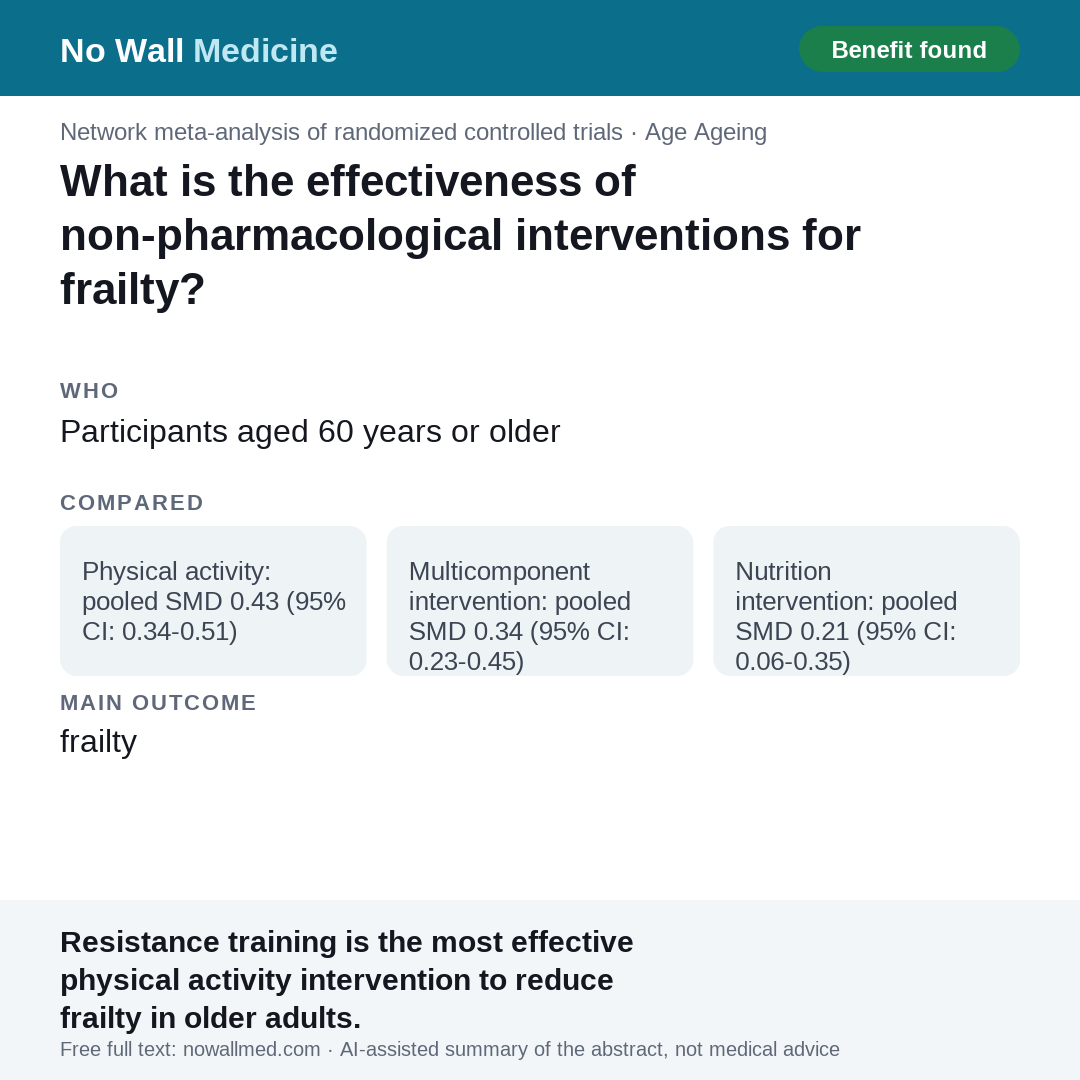
What is the effectiveness of non-pharmacological interventions for frailty?
Who
Participants aged 60 years or older
Compared
Physical activity: pooled SMD 0.43 (95% CI: 0.34-0.51)
Multicomponent intervention: pooled SMD 0.34 (95% CI: 0.23-0.45)
Nutrition intervention: pooled SMD 0.21 (95% CI: 0.06-0.35)
Main outcome
frailty
Bottom line: Resistance training is the most effective physical activity intervention to reduce frailty in older adults.
Age Ageing · 2023-02-06Download image
Clinical question: What is the effectiveness of non-pharmacological interventions for frailty?
Why it matters: The effectiveness of different non-drug interventions for managing frailty in the aging population needed to be updated.
Key points
- Researchers analyzed 69 randomized controlled trials involving participants aged 60 years or older to compare different non-drug treatments for frailty.
- Physical activity (SMD = 0.43, 95% CI: 0.34-0.51), multicomponent interventions (SMD = 0.34, 95% CI: 0.23-0.45), and nutrition interventions (SMD = 0.21, 95% CI: 0.06-0.35) were associated with reduced frailty.
- Among physical activity types, resistance training (SMD = 0.58, 95% CI: 0.33-0.83) was associated with the greatest reduction in frailty compared to usual care.
Headline and key points written with AI from the paper’s abstract, with every number checked against it. Read the paper before relying on them.
Was this summary helpful?
Subject terms
Cite this article
Sun X, Liu W, Gao Y, Qin L, Feng H, Tan H. Comparative effectiveness of non-pharmacological interventions for frailty: a systematic review and network meta-analysis. Age Ageing. 2023. doi:10.1093/ageing/afad004
Spotted a mistake? Suggest a correction
Top studies every Monday
The week’s key trials and guidelines in your specialties, plus any topics you follow. By email, free.
Get the weekly digest