Patient self-management of warfarin was associated with lower risk of major thromboembolic events
Comparative effectiveness of warfarin management strategies: a systematic review and network meta-analysis
Systematic review and network meta-analysisBenefit, low certainty
Which warfarin management strategies are most effective for patients?
Who
8100
Patients prescribed warfarin for any indication
Compared
Patient self-management: RR = 0.41 (95% CI: 0.24, 0.71)
Usual care
Main outcome
Major thromboembolic risk and time in therapeutic range
Result: RR = 0.41 (95% CI: 0.24, 0.71)
Bottom line: Patient self-management reduces major thromboembolic risk and improves anticoagulation control compared to usual care.
Limitation: Very low certainty of evidence for time in therapeutic range improvement.
Funded by: Agency for Healthcare Research and Quality
eClinicalMedicine · 2024-07-02Download image
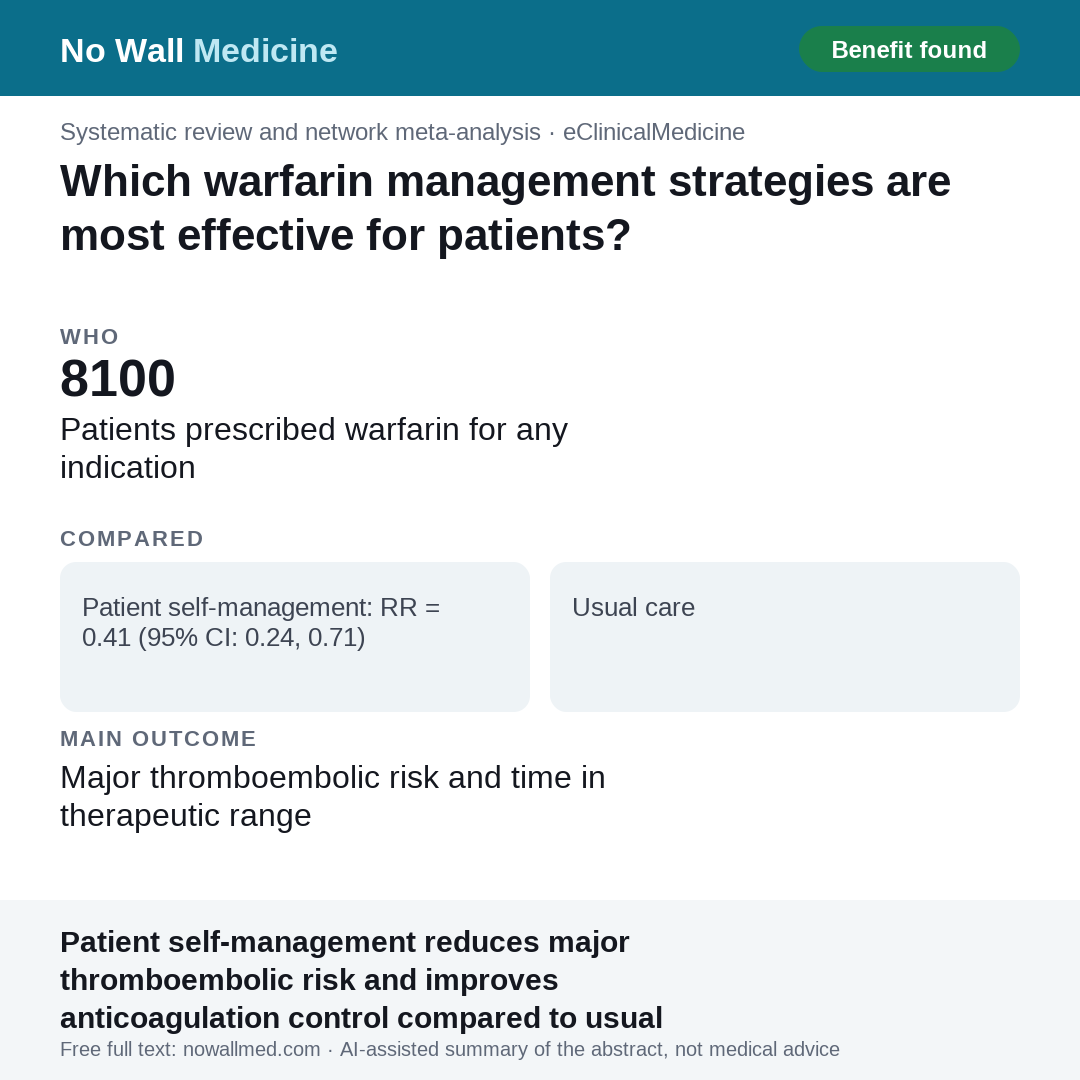
Clinical question: Which warfarin management strategies are most effective for patients?
Key points
- Researchers analyzed 28 randomized controlled trials involving 8100 participants to compare patient self-management, patient self-testing, anticoagulation management services, and usual care.
- Patient self-management was associated with a lower risk of major thromboembolic events compared to usual care (RR = 0.41; 95% CI: 0.24, 0.71).
- No differences were observed between the management strategies regarding all-cause mortality, major bleeding, stroke, transient ischemic attack, or hospitalization.
Headline and key points written with AI from the paper’s abstract, with every number checked against it. Read the paper before relying on them.
Was this summary helpful?
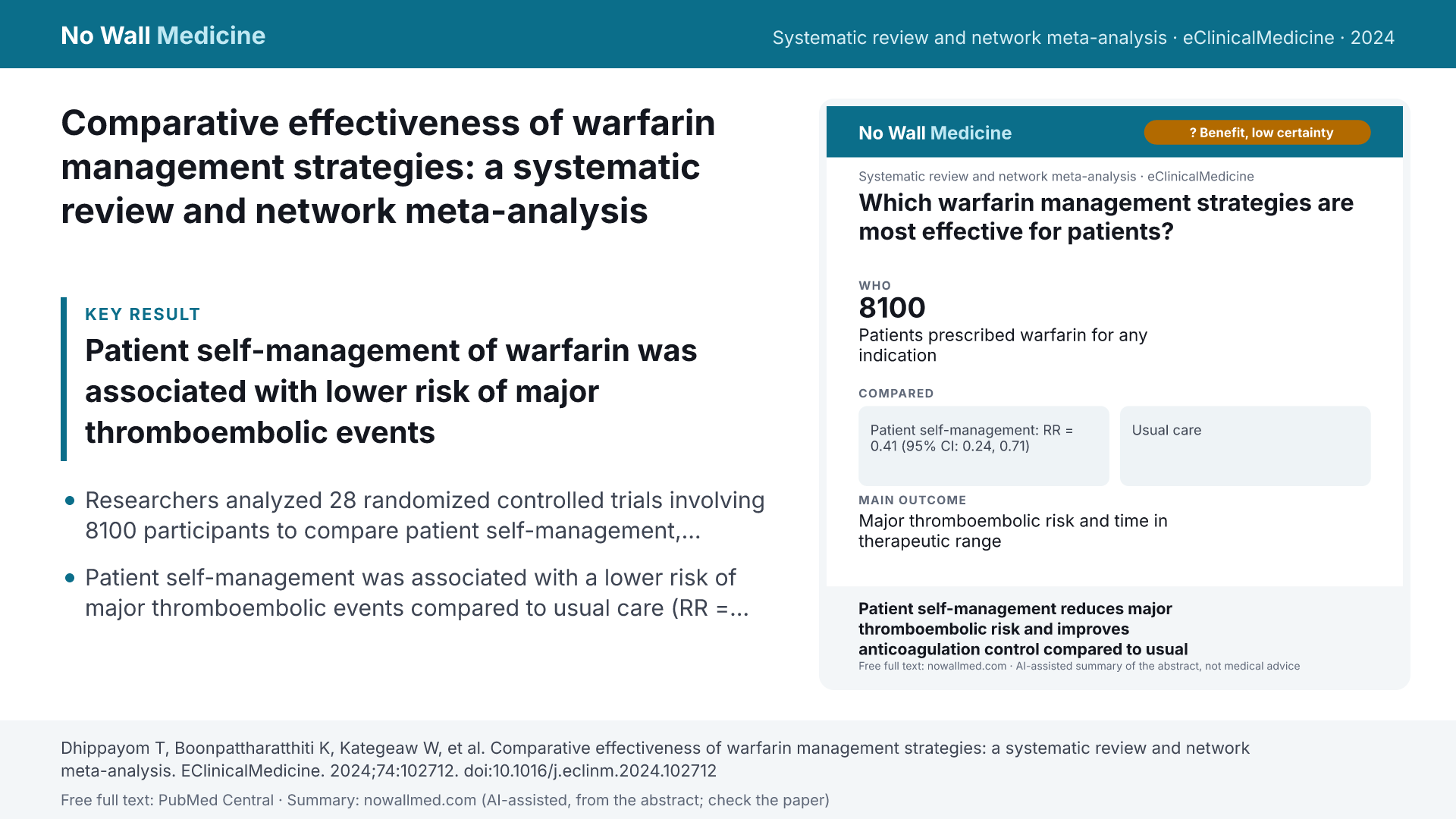
Headline, design, result, key points, caveat and citation as plain text.
Cite this article
Dhippayom T, Boonpattharatthiti K, Kategeaw W, et al. Comparative effectiveness of warfarin management strategies: a systematic review and network meta-analysis. eClinicalMedicine. 2024. doi:10.1016/j.eclinm.2024.102712
Spotted a mistake? Suggest a correction