Comparative Effects of Emerging Lp(a)-Lowering Agents and PCSK9-Directed Therapies on Lipoprotein(a): A Network Meta-Analysis of Randomised Clinical Trials
Network meta-analysisBenefit found
Lp(a) reduction with new therapies
Who
17810
adults with elevated lipoprotein(a)
Compared
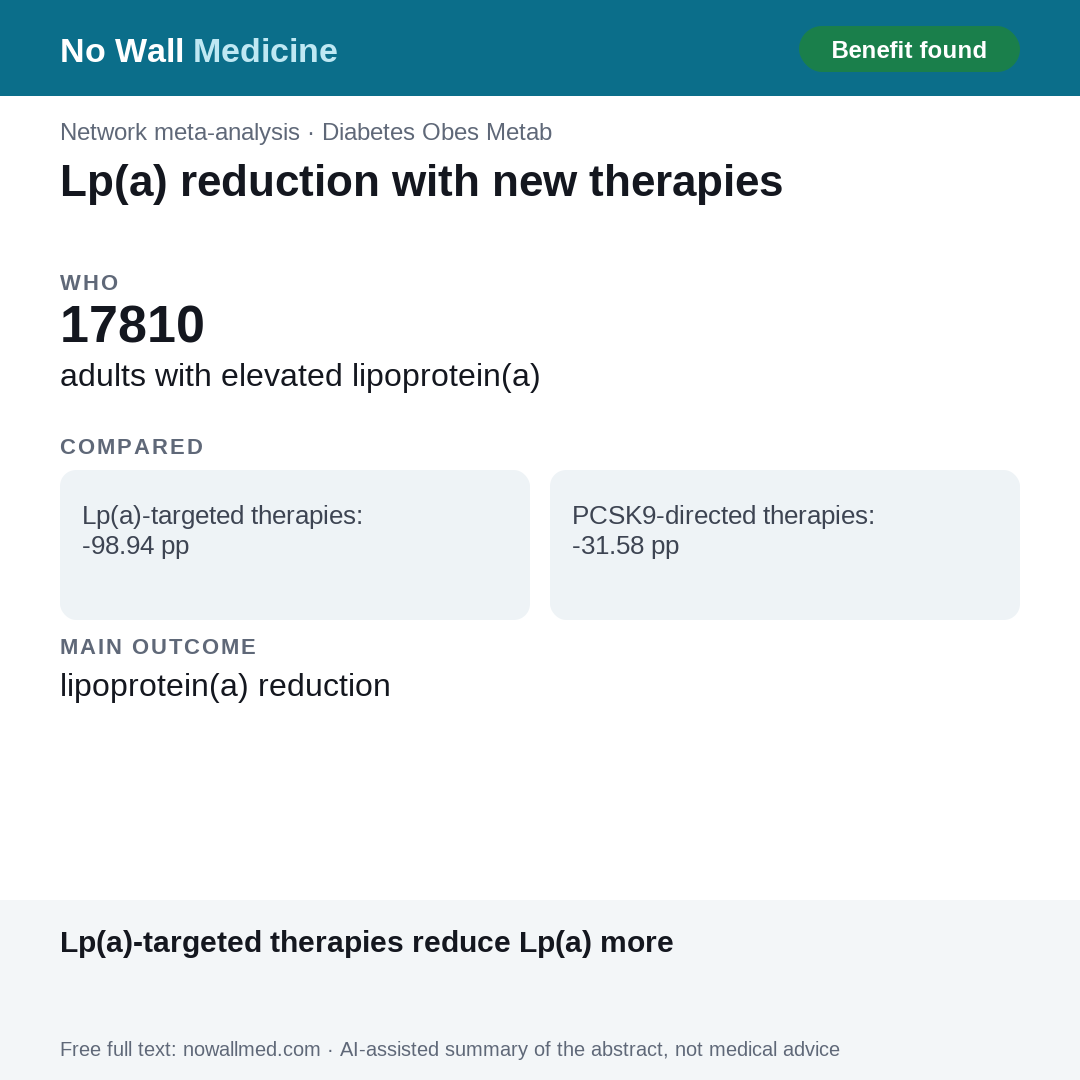
Lp(a)-targeted therapies: -98.94 pp
PCSK9-directed therapies: -31.58 pp
Main outcome
lipoprotein(a) reduction
Bottom line: Lp(a)-targeted therapies reduce Lp(a) more
Diabetes Obes Metab · 2026-06-04Download image
Abstract
Aims
Elevated lipoprotein(a) [Lp(a)] is a genetic ASCVD risk factor that often persists despite intensive LDL-C lowering. We compared the efficacy and safety of emerging Lp(a)-targeted therapies (siRNAs, antisense oligonucleotides and an oral assembly inhibitor) with PCSK9-directed therapies. Materials and methods
We searched PubMed, Embase, Web of Science and Cochrane CENTRAL through December 6, 2025, for randomised trials in adults (≥ 18 years) with ≥ 8-week follow-up reporting Lp(a). The primary outcome was placebo-adjusted mean difference (MD) in percent change from baseline in Lp(a) (percentage points, pp). Secondary outcomes included LDL-C, other lipid parameters and safety outcomes (injection-site reactions, serious adverse events (SAEs), discontinuations). We performed a frequentist random-effects network meta-analysis in R (netmeta) and ranked interventions using P-scores. Results
Fifty-one trials (17 810 participants) formed a 16-node network. Olpasiran 225 mg Q12W was associated with the greatest Lp(a) reduction versus placebo (MD -98.94 pp, 95% CI -114.36 to -83.52); pelacarsen, muvalaplin, zerlasiran and lepodisiran were also associated with large reductions. PCSK9-directed therapies were associated with more modest Lp(a) reductions (evolocumab 140 mg Q2W: MD -31.58 pp), but greater LDL-C lowering. The primary Lp(a) network showed high heterogeneity (I 2 = 90.9%) and funnel plot asymmetry, although treatment rankings remained directionally consistent across sensitivity analyses. No therapy was associated with higher SAEs or discontinuations versus placebo; alirocumab 150 mg was associated with more injection-site reactions. Conclusions
Lp(a)-targeted therapies were associated with larger Lp(a) reductions than PCSK9-directed therapies, while PCSK9-directed therapies had greater LDL-C lowering. Given high heterogeneity, funnel plot asymmetry and low certainty for several estimates, these findings should be interpreted cautiously pending cardiovascular outcome trials.
Topics
Spotted a mistake? Suggest a correction