Liraglutide had the lowest risk of glycemic deterioration, weight gain, and hypoglycemia in type 2 diabetes
Comparative Effects of Randomized Second-line Therapy for Type 2 Diabetes on a Composite Outcome Incorporating Glycemic Control, Body Weight, and Hypoglycemia: An Analysis of the Glycemia Reduction Approaches in Diabetes: A Comparative Effectiveness Study (GRADE)
Comparative effectiveness studyMixed results
How do four second-line therapies compare on a composite outcome of glycemic control, weight, and hypoglycemia?
Who
5,047
Participants with type 2 diabetes treated with metformin
Compared
liraglutide: 19 per 100 participants per treatment year
sitagliptin: 26 per 100 participants per treatment year
glargine: 29 per 100 participants per treatment year
glimepiride: 40 per 100 participants per treatment year
Main outcome
Composite outcome of glycemic deterioration, weight gain, and hypoglycemia
Bottom line: Liraglutide had the lowest risk of the composite outcome, while glimepiride had the highest risk.
Diabetes Care · 2024-01-09Download image
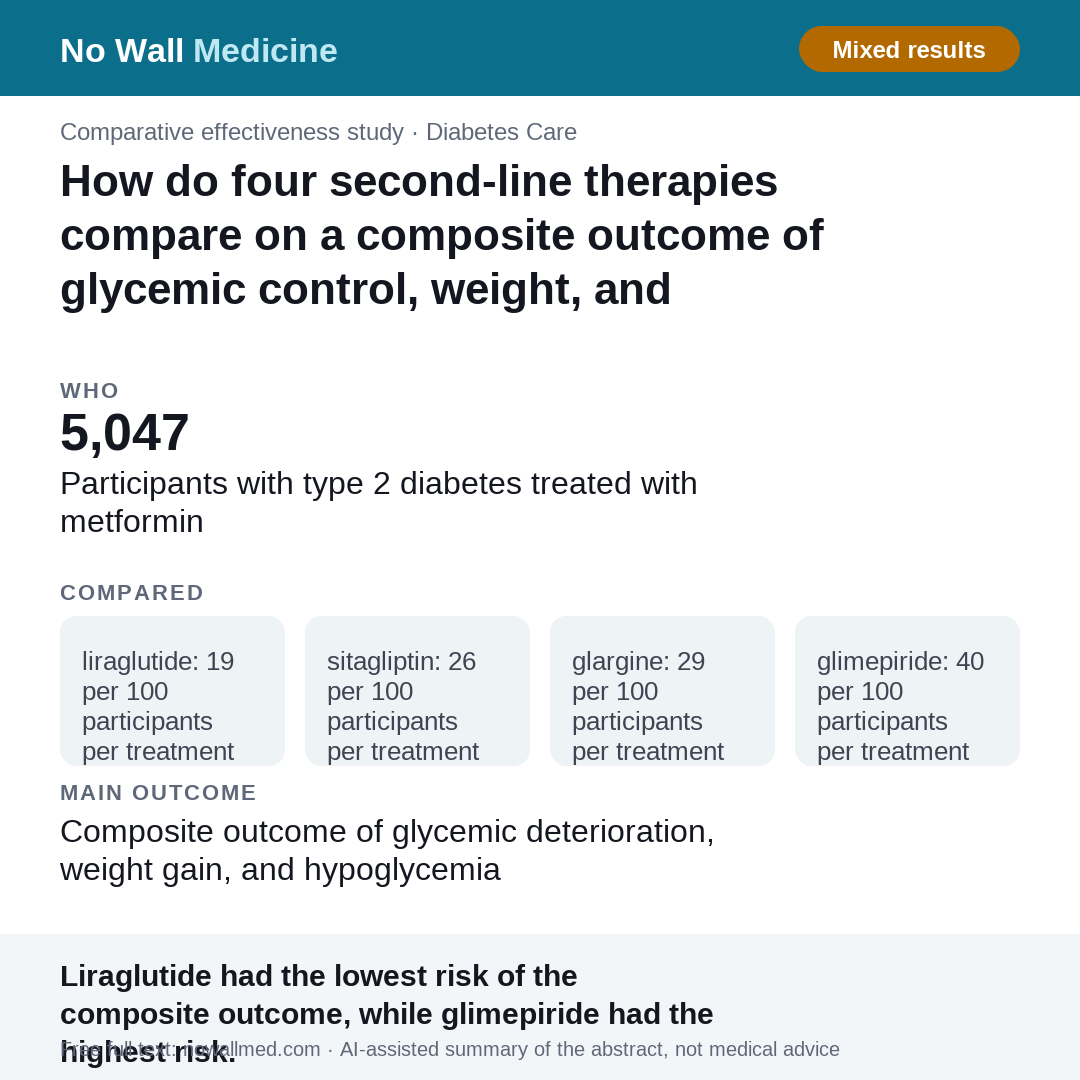
Clinical question: How do four second-line therapies compare on a composite outcome of glycemic control, weight, and hypoglycemia?
Why it matters: It was unknown how different second-line medications for type 2 diabetes compare regarding a combined risk of blood sugar levels, body weight, and low blood sugar.
Key points
- Researchers studied 5,047 participants over a mean follow-up of 5.0 years to compare four medications added to metformin.
- The risk of reaching a composite outcome was 19 per 100 participants per treatment year for liraglutide, 26 for sitagliptin, 29 for glargine, and 40 for glimepiride.
- Participants who reached the composite outcome of high blood sugar, weight gain, or hypoglycemia reported lower treatment satisfaction.
Headline and key points written with AI from the paper’s abstract, with every number checked against it. Read the paper before relying on them.
Topics
Cite this article
Kirkman MS, Tripputi M, Krause-Steinrauf H, Bebu I, AbouAssi H, Burch H. Comparative Effects of Randomized Second-line Therapy for Type 2 Diabetes on a Composite Outcome Incorporating Glycemic Control, Body Weight, and Hypoglycemia: An Analysis of the Glycemia Reduction Approaches in Diabetes: A Comparative Effectiveness Study (GRADE). Diabetes Care. 2024. doi:10.2337/dc23-1332
Spotted a mistake? Suggest a correction
Top studies every Monday
The week’s key trials and guidelines in your specialties, plus any topics you follow. By email, free.
Get the weekly digest