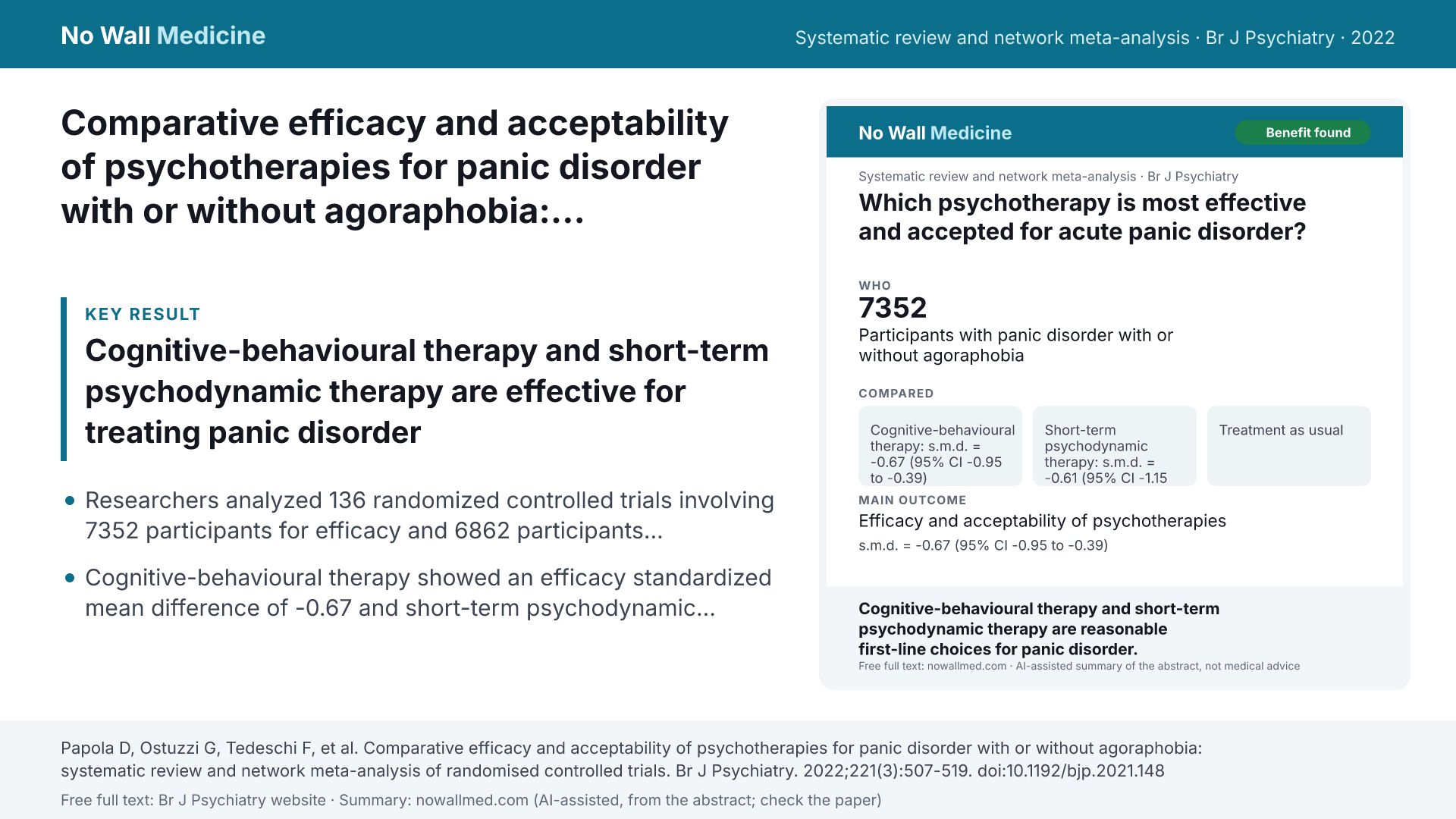
Comparative efficacy and acceptability of psychotherapies for panic disorder with or without agoraphobia: systematic review and network meta-analysis of randomised controlled trials
Key result: Cognitive-behavioural therapy and short-term psychodynamic therapy are effective for treating panic disorder
Key points
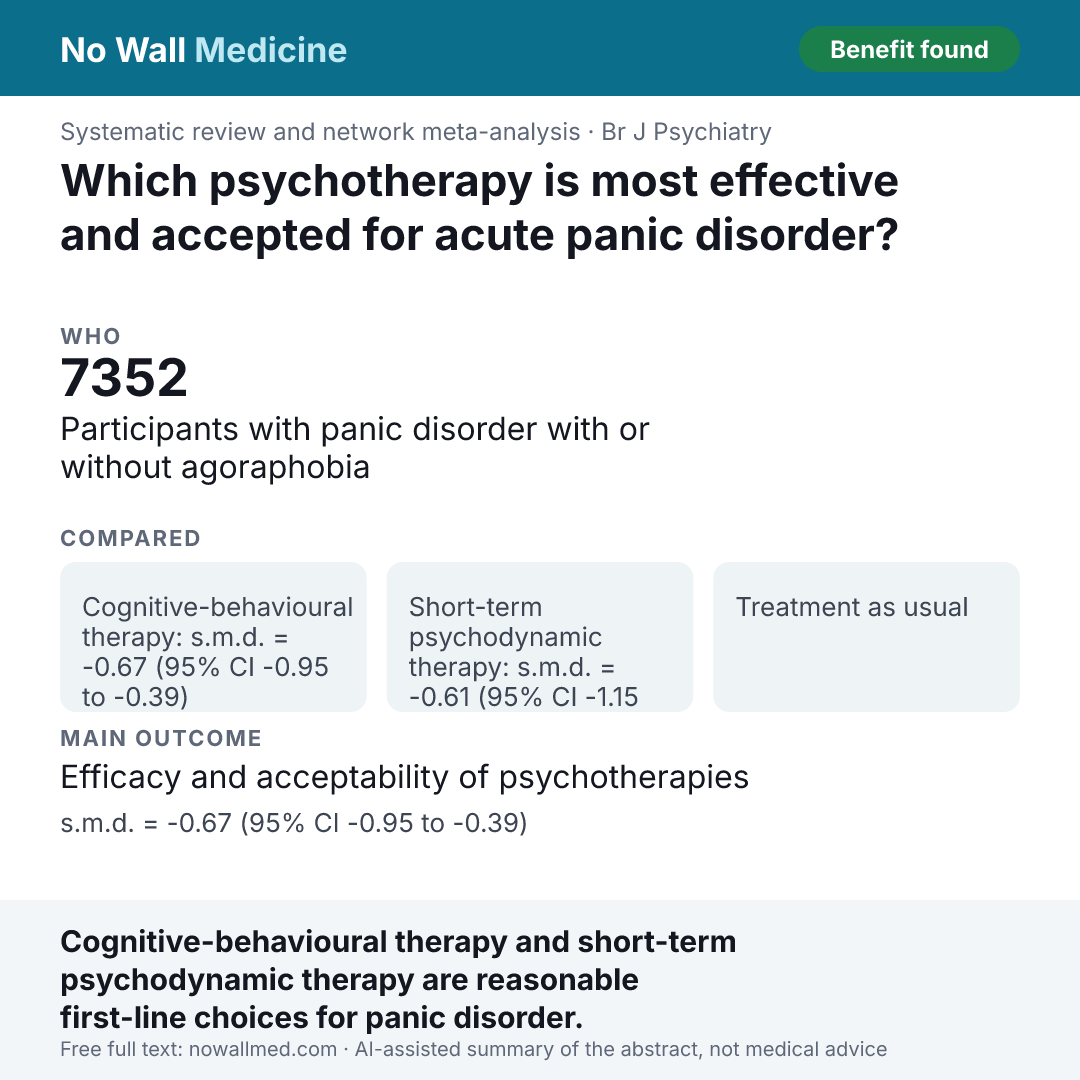
- Researchers analyzed 136 randomized controlled trials involving 7352 participants for efficacy and 6862 participants for acceptability.
- Cognitive-behavioural therapy showed an efficacy standardized mean difference of -0.67 and short-term psychodynamic therapy showed -0.61 compared to treatment as usual.
- When trials with a high risk of bias were removed, only cognitive-behavioural therapy remained more efficacious than treatment as usual.
Limitation the authors note: Studies with a high risk of bias tend to inflate the overall efficacy of treatments.
Discussion prompts
- Would these patients look like yours? Who was left out?
- Is the main outcome one that matters to patients?
- Is the difference large enough to change what you do?
Cite: Papola D, Ostuzzi G, Tedeschi F, et al. Comparative efficacy and acceptability of psychotherapies for panic disorder with or without agoraphobia: systematic review and network meta-analysis of randomised controlled trials. Br J Psychiatry. 2022;221(3):507-519. doi:10.1192/bjp.2021.148
Free full text: Br J Psychiatry website · Summary and visual abstract: nowallmed.com/a/comparative-efficacy-and-acceptability-of-psychotherapies-for-panic-1qi6vtc/ (AI-assisted from the abstract; check the paper before relying on it).