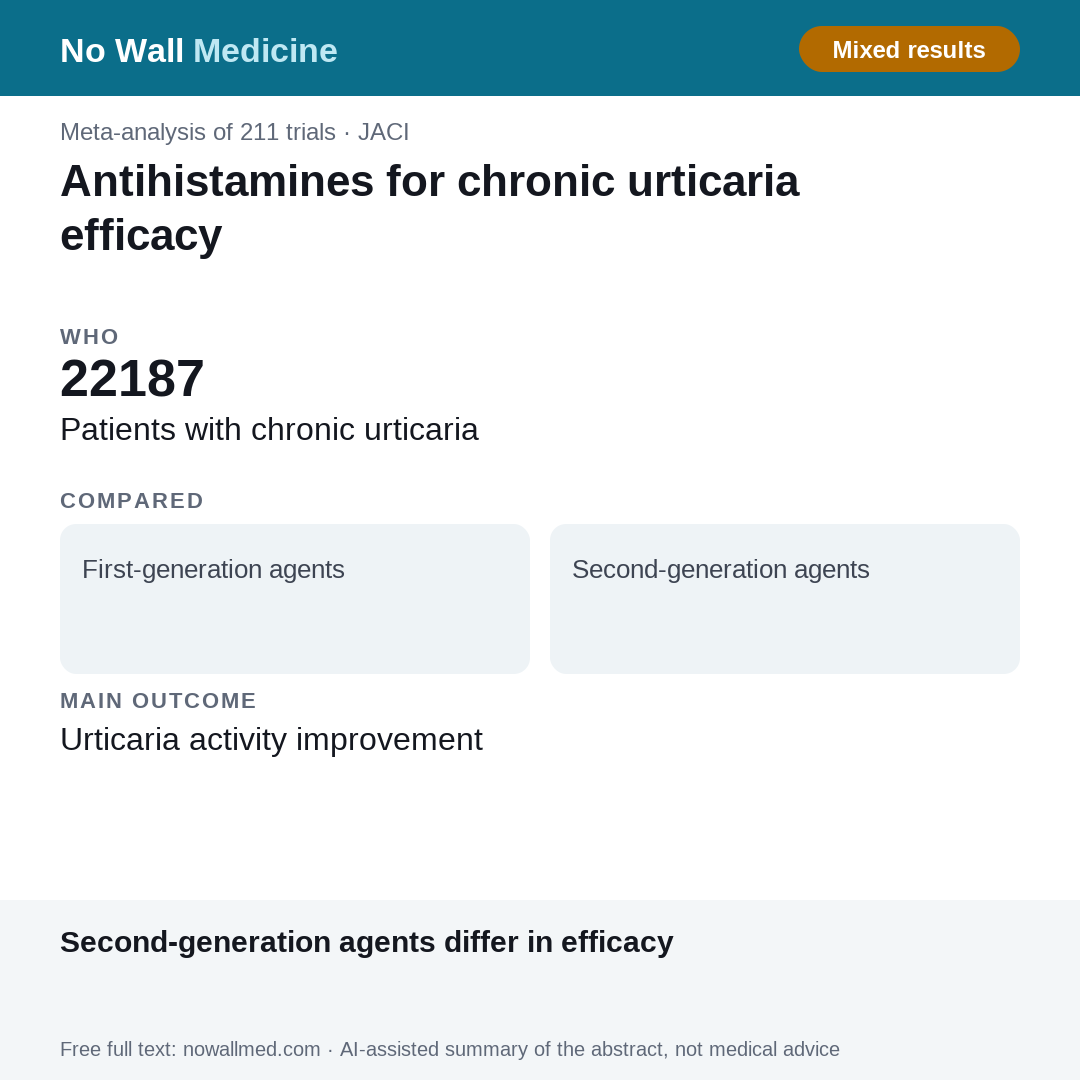
Second-generation antihistamines differ in efficacy and safety for chronic urticaria
Comparative efficacy and safety of antihistamines, increased antihistamine dosing (updosing), and antihistamine adjuncts for chronic urticaria: Systematic review, dose-response, and network meta-analysis of randomized trials
Meta-analysis of 211 trialsMixed results
Antihistamines for chronic urticaria efficacy
Who
22187
Patients with chronic urticaria
Compared
First-generation agents
Second-generation agents
Main outcome
Urticaria activity improvement
Bottom line: Second-generation agents differ in efficacy
JACI · 2026-10-17Download image
Key points
- Researchers analyzed 211 trials with 22,187 participants comparing 55 unique treatments for chronic urticaria.
- Second-generation agents like bilastine and fexofenadine are among the most effective in overall improvement.
- Higher doses of antihistamines may provide additional benefits but likely increase sedation risk.
Headline and key points written with AI from the paper’s abstract, with every number checked against it. Read the paper before relying on them.
Cite this article
Chu AWL, Zhao IX, Rayner DG, Guyatt GH, Liu M, Gao C. Comparative efficacy and safety of antihistamines, increased antihistamine dosing (updosing), and antihistamine adjuncts for chronic urticaria: Systematic review, dose-response, and network meta-analysis of randomized trials. JACI. 2026. doi:10.1016/j.jaci.2026.09.030
Spotted a mistake? Suggest a correction