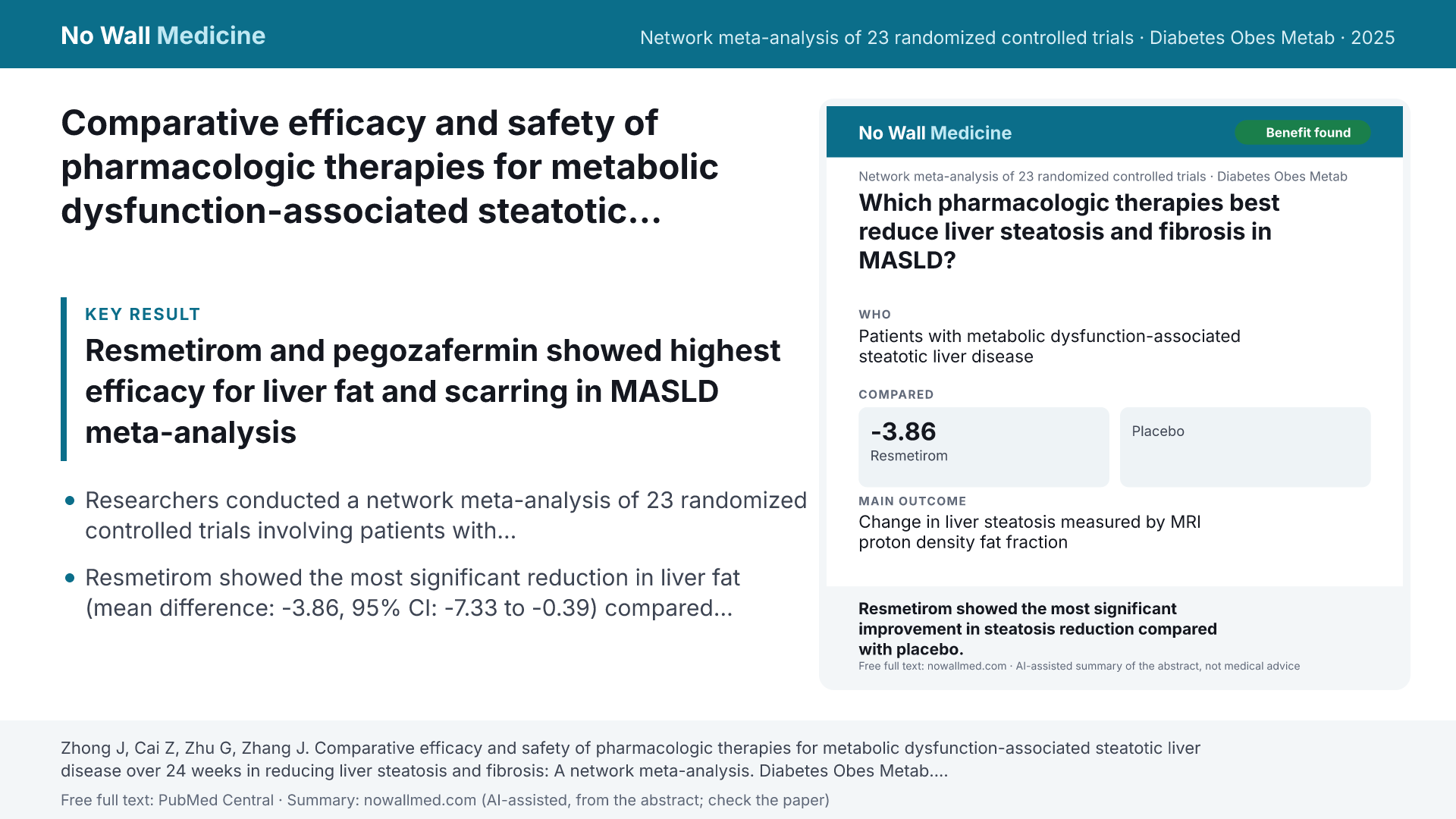
Resmetirom and pegozafermin showed highest efficacy for liver fat and scarring in MASLD meta-analysis
Comparative efficacy and safety of pharmacologic therapies for metabolic dysfunction-associated steatotic liver disease over 24 weeks in reducing liver steatosis and fibrosis: A network meta-analysis
Network meta-analysis of 23 randomized controlled trialsBenefit found
Which pharmacologic therapies best reduce liver steatosis and fibrosis in MASLD?
Who
Patients with metabolic dysfunction-associated steatotic liver disease
Compared
-3.86Resmetirom (95% CI -7.33 to -0.39)
Placebo
Main outcome
Change in liver steatosis measured by MRI proton density fat fraction
Result: mean difference -3.86 (95% CI -7.33 to -0.39)
Bottom line: Resmetirom showed the most significant improvement in steatosis reduction compared with placebo.
Diabetes Obes Metab · 2025-04-10 · Save PNG
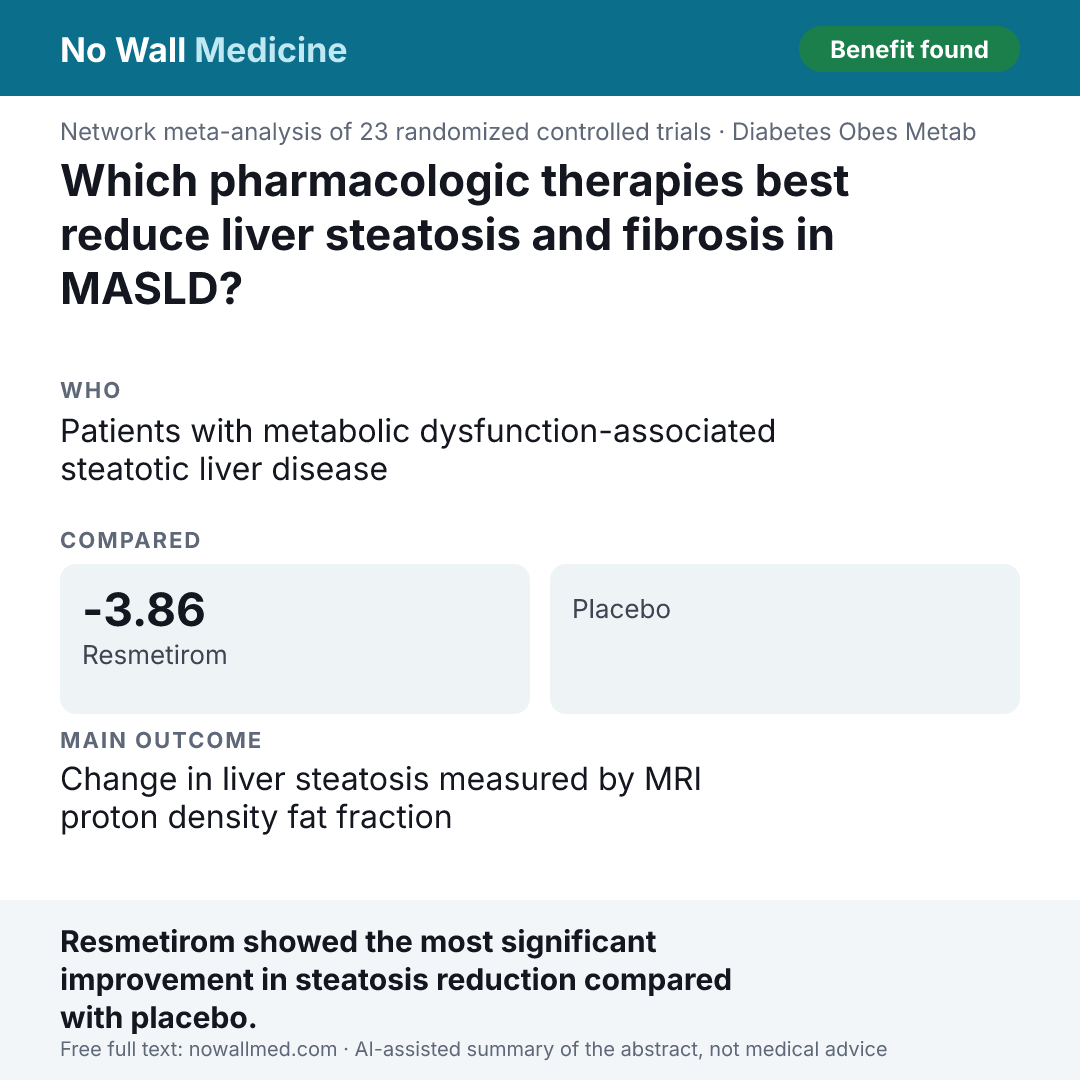
Clinical question: Which pharmacologic therapies best reduce liver steatosis and fibrosis in MASLD?
Why it matters: Effective pharmacological interventions are essential for improving outcomes in patients with metabolic dysfunction-associated steatotic liver disease, but comparative efficacy and safety data are needed.
Key points
- Researchers conducted a network meta-analysis of 23 randomized controlled trials involving patients with metabolic dysfunction-associated steatotic liver disease.
- Resmetirom showed the most significant reduction in liver fat (mean difference: -3.86, 95% CI: -7.33 to -0.39) compared to placebo.
- Pegozafermin demonstrated the greatest effect on liver scarring (mean difference: -4.85, 95% CI: -5.50 to -4.19), while efruxifermin was associated with slightly higher adverse events (0.32, 95% CI: 0.06-0.70).
Headline and key points written with AI from the paper’s abstract, with every number checked against it. Read the paper before relying on them.
Was this summary helpful?
Subject terms
Headline, design, result, key points, caveat and citation as plain text.
Cite this article
Zhong J, Cai Z, Zhu G, Zhang J. Comparative efficacy and safety of pharmacologic therapies for metabolic dysfunction-associated steatotic liver disease over 24 weeks in reducing liver steatosis and fibrosis: A network meta-analysis. Diabetes Obes Metab. 2025;27(6):3309-3323. doi:10.1111/dom.16348
Spotted a mistake? Suggest a correction