Web-based and blended training both improved well-being and work-life balance for flexible workers
Comparing Web-Based and Blended Training for Coping With Challenges of Flexible Work Designs: Randomized Controlled Trial
Randomized controlled trialBenefit found
Are web-based or blended training more effective for workers with flexible work designs?
Who
373
Workers with flexible work designs
Compared
Web-based intervention group
Blended intervention group
Waitlist control group
Main outcome
Psychological detachment, satisfaction with work-life balance, and well-being
Bottom line: Both web-based and blended training effectively improve recovery, work-life balance, and well-being for flexible workers.
J Med Internet Res · 2023-12-19Download image
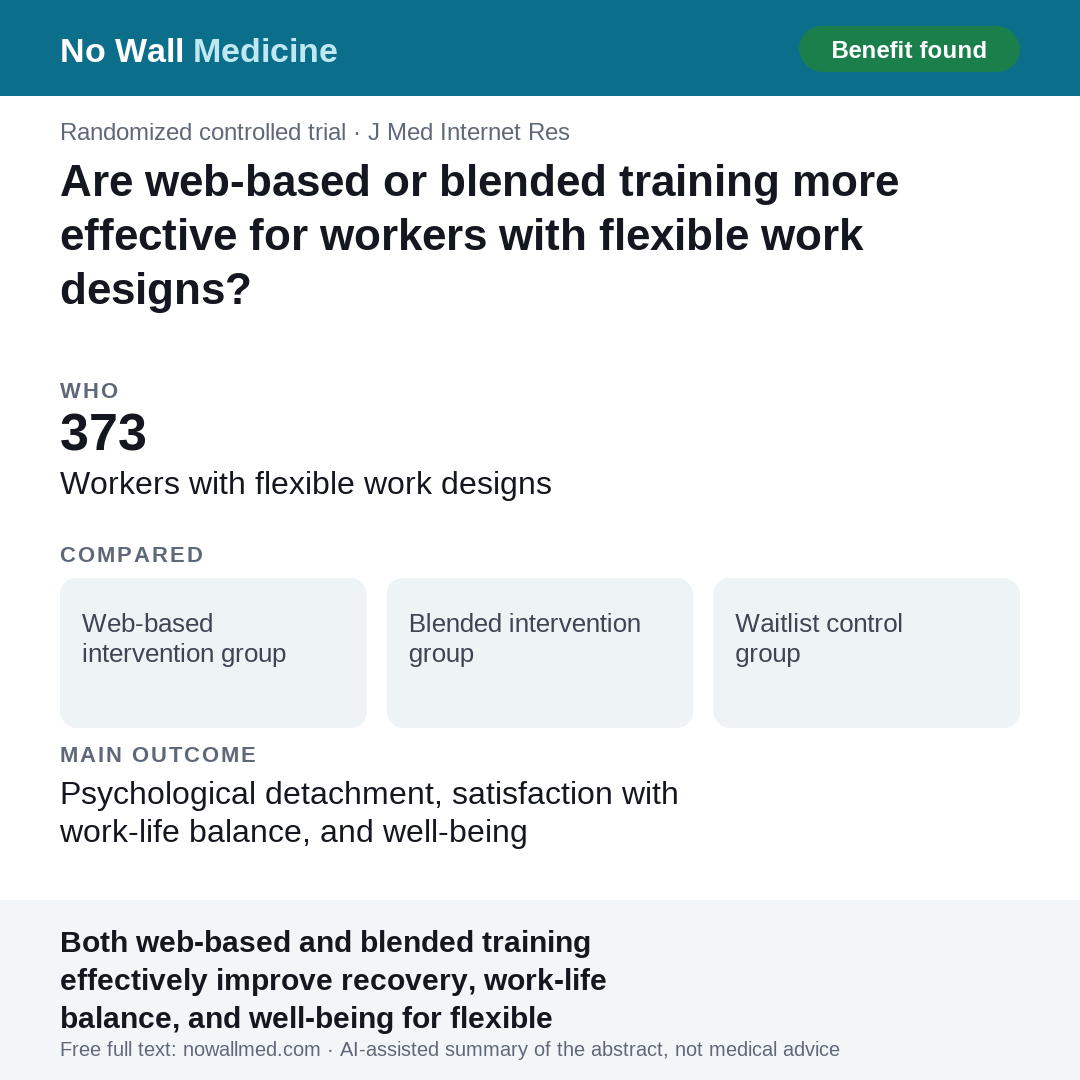
Clinical question: Are web-based or blended training more effective for workers with flexible work designs?
Why it matters: It is unknown whether adding group sessions to web-based modules provides extra benefits for workers managing the challenges of flexible work designs.
Key points
- Researchers studied 373 participants assigned to web-based training, blended training, or a waitlist control group to measure recovery and well-being.
- Both web-based and blended training formats were effective for improving psychological detachment, work-life balance satisfaction, and well-being.
- Blended training participants reported more social exchange and were more likely to adhere to the training than those in the web-based group.
Headline and key points written with AI from the paper’s abstract, with every number checked against it. Read the paper before relying on them.
Topics
Cite this article
Althammer SE, Wöhrmann AM, Michel A. Comparing Web-Based and Blended Training for Coping With Challenges of Flexible Work Designs: Randomized Controlled Trial. J Med Internet Res. 2023. doi:10.2196/42510
Spotted a mistake? Suggest a correction
Top studies every Monday
The week’s key trials and guidelines in your specialties, plus any topics you follow. By email, free.
Get the weekly digest