Three paclitaxel-based chemotherapy regimens showed similar survival rates for esophageal squamous cell cancer
Comparison of 3 Paclitaxel-Based Chemoradiotherapy Regimens for Patients With Locally Advanced Esophageal Squamous Cell Cancer: A Randomized Clinical Trial
Randomized clinical trialNo clear difference
Which paclitaxel-based regimen is best for locally advanced esophageal squamous cell carcinoma?
Who
321
Patients with esophageal squamous cell carcinoma stages IIa to IVa · 11 treatment centers in China
Compared
57.2%Paclitaxel plus fluorouracil
60.1%Paclitaxel plus cisplatin
56.5%Paclitaxel plus carboplatin
Main outcome
Overall survival
Result: hazard ratio 1.06 (95% CI, 0.71-1.60) for fluorouracil vs cisplatin
Bottom line: Three paclitaxel-based regimens showed similar overall survival, but cisplatin caused more grade 3 or 4 adverse events.
JAMA Netw Open · 2022-02-01Download image
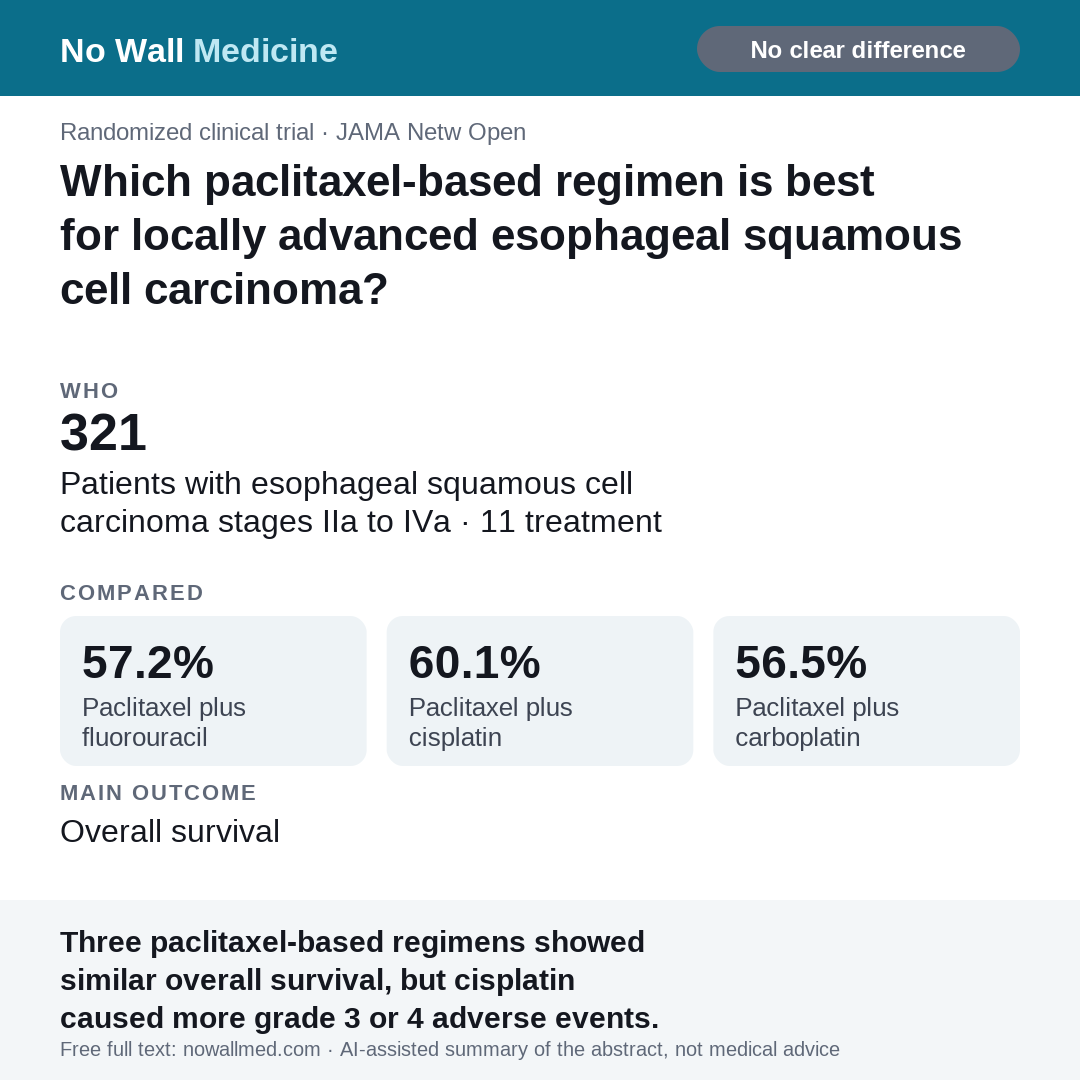
Clinical question: Which paclitaxel-based regimen is best for locally advanced esophageal squamous cell carcinoma?
Why it matters: It is unknown which paclitaxel-based chemotherapy regimen provides the best prognosis and minimum adverse events for patients with locally advanced esophageal squamous cell carcinoma.
Key points
- Researchers randomized 321 patients with esophageal squamous cell carcinoma to receive paclitaxel combined with either fluorouracil, cisplatin, or carboplatin during chemoradiotherapy.
- The 3-year overall survival rates were 57.2% for fluorouracil, 60.1% for cisplatin, and 56.5% for carboplatin, showing no significant difference between groups.
- The cisplatin group had significantly higher rates of grade 3 or 4 neutropenia (60.8%), thrombocytopenia (13.1%), fatigue (10.3%), and vomiting (15.9%) compared to other groups.
Headline and key points written with AI from the paper’s abstract, with every number checked against it. Read the paper before relying on them.
Was this summary helpful?
Subject terms
Cite this article
Ai D, Ye J, Wei S, Li Y, Luo H, Cao J. Comparison of 3 Paclitaxel-Based Chemoradiotherapy Regimens for Patients With Locally Advanced Esophageal Squamous Cell Cancer: A Randomized Clinical Trial. JAMA Netw Open. 2022. doi:10.1001/jamanetworkopen.2022.0120
Spotted a mistake? Suggest a correction
Top studies every Monday
The week’s key trials and guidelines in your specialties, plus any topics you follow. By email, free.
Get the weekly digest